Apollo and Aurora by Gerard de Lairesse
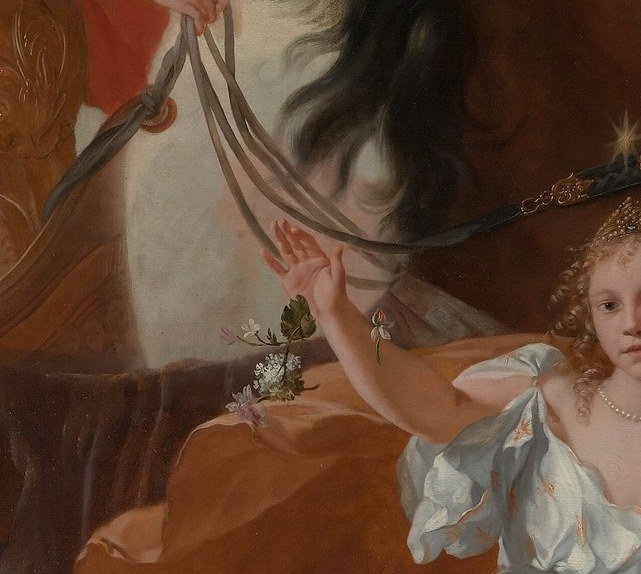
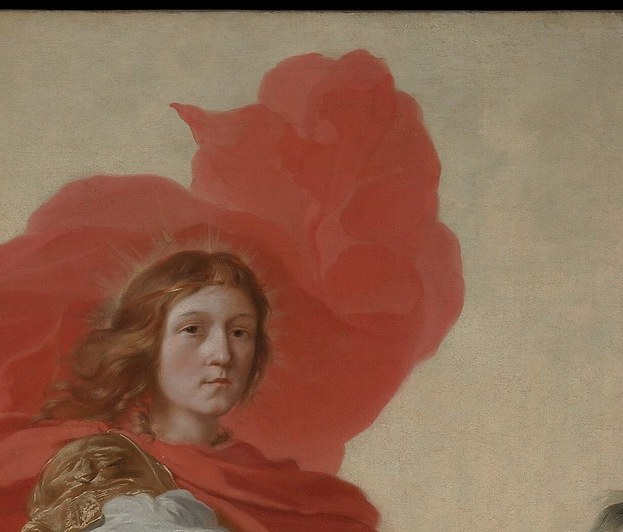
Aurora spills flowers across the sky to announce the sun. Her face, turned toward us, is the most human thing in Gerard de Lairesse's 'Apollo and Aurora,' painted in 1671 and now at The Metropolitan Museum of Art.
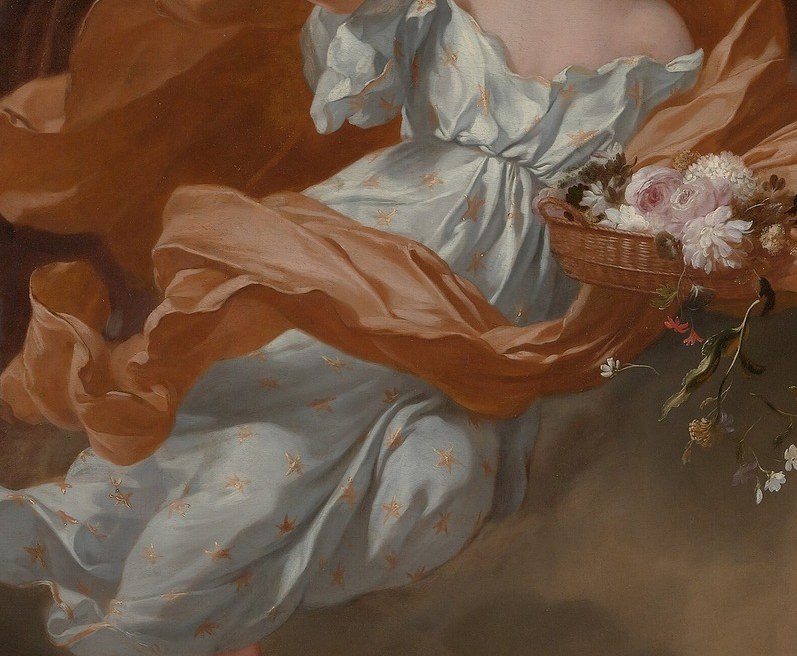
Start with Aurora's expression. The dawn goddess looks out with a soft, almost intimate directness, her skin luminous against the cool white and blue of her drapery. The flowers in her arms are her attribute from Ripa's Iconologia, the visual dictionary de Lairesse relied on. They mark her as the one who goes ahead, scattering blossoms, making way for the greater light behind her.
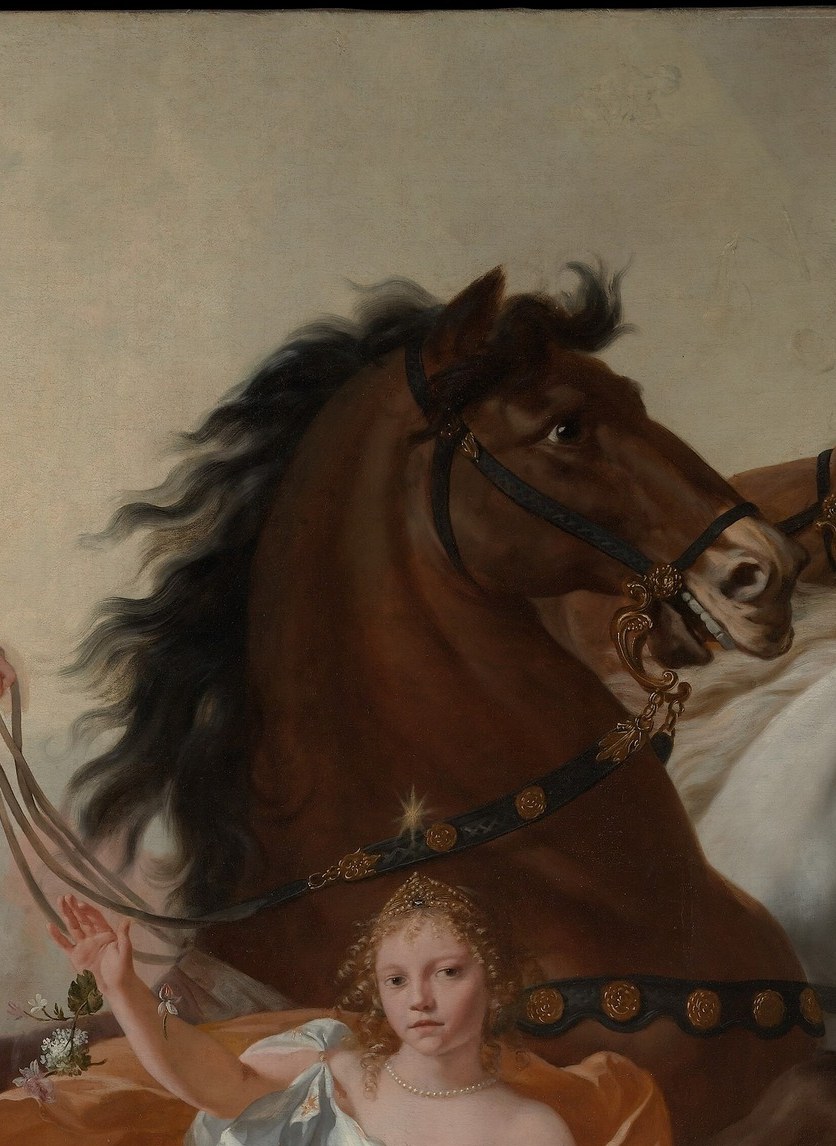
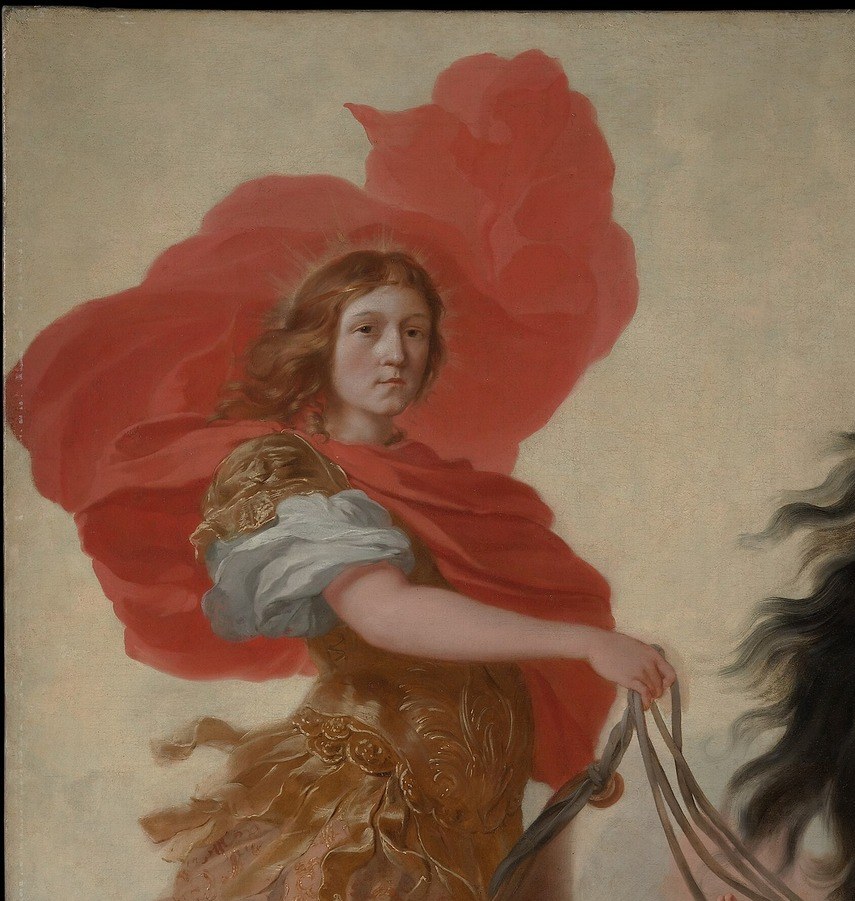
Apollo follows in a chariot pulled by a dark horse and a pale one, their lunging foreshortened forms showing de Lairesse's command of animal dynamism in the French academic tradition. The red cloak sweeping across the upper left is pure Baroque energy, the golden sky in the upper right tells you the sun is just breaching the horizon.
Gerard de Lairesse was a polymath: painter, musician, poet, and eventually the most important art theorist in Holland after Rembrandt's death. By the time he wrote his influential treatises, he was completely blind. He dictated them. This painting, made when he was around thirty, may already carry the weight of that knowledge. A man who knew his sight was leaving painted the arrival of light.
Details
Transcript
Before the sun appears, someone must lead the way. This is Aurora, goddess of the dawn. She spills flowers across the sky to announce the morning. Behind her, Apollo's horses surge forward with the sun itself. The painter, Gerard de Lairesse, was a celebrated Dutch classicist. He painted this luminous dawn while his own sight was failing. He would not see his next decade. But he painted the light.