Jalais Hill, Pontoise by Camille Pissarro
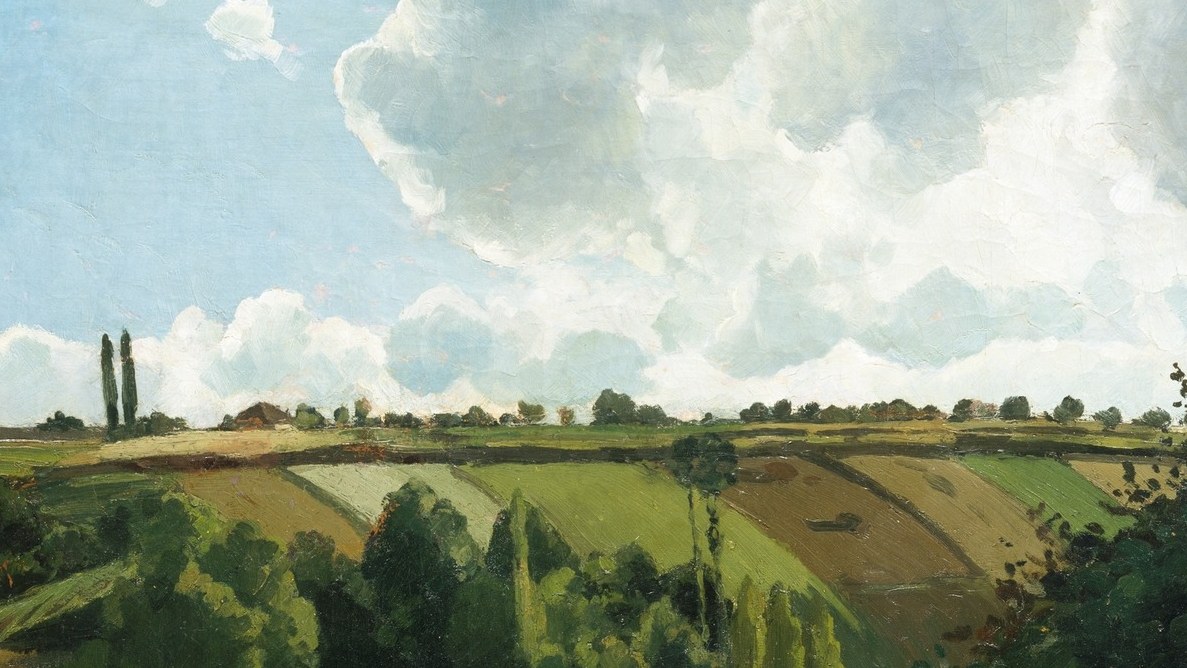
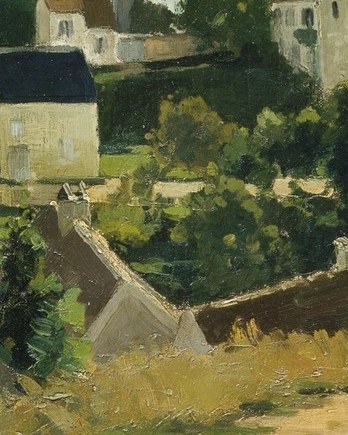
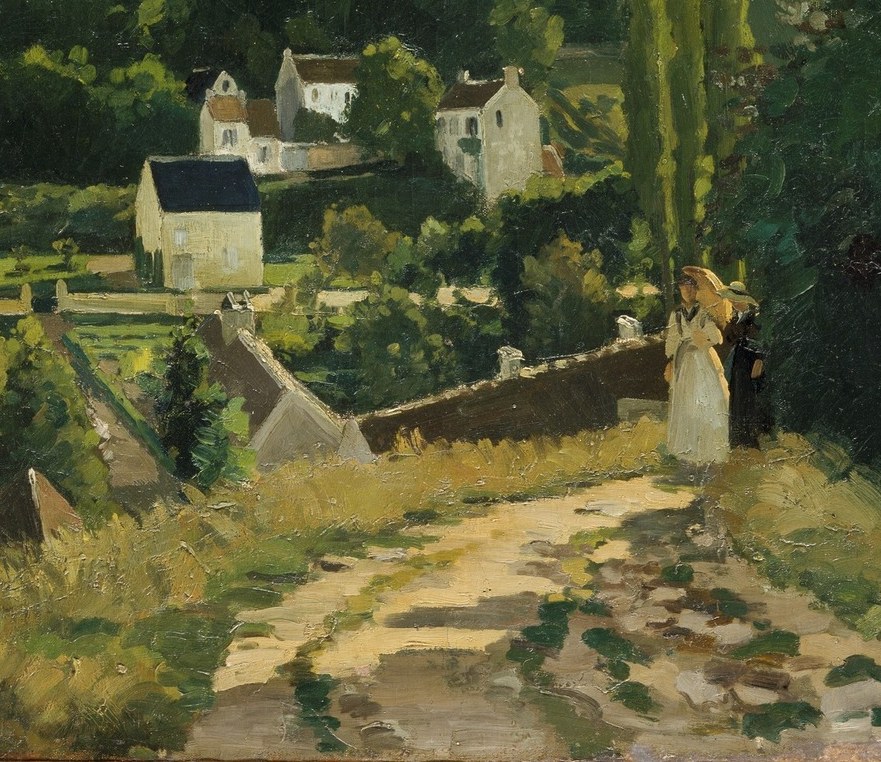
This is Camille Pissarro's 'Jalais Hill, Pontoise', painted in 1867 and housed at The Metropolitan Museum of Art. Most viewers follow the curved road to the village, but the painting's real subject is the surface itself.
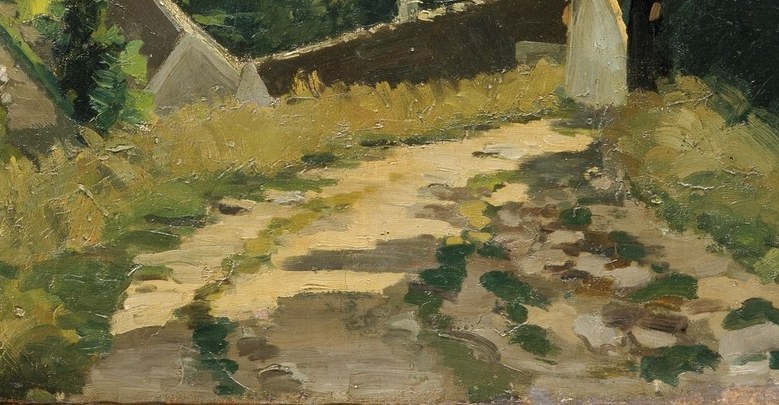
Look closely at the grassy hill. Pissarro applied the paint with a loaded brush, leaving thick, directional strokes that call attention to the canvas as a physical object. The paint is not trying to disappear. This insistence on the flat surface, and on the materiality of paint, directly anticipates what Cézanne would become famous for decades later.
Painted in Pontoise, a rural commune northwest of Paris, this work comes from a pivotal moment. Pissarro was the oldest of the Impressionists and the group's anchor. Paul Cézanne called him 'a father for me. A man to consult and a little like the good Lord.' Pierre-Auguste Renoir called his work 'revolutionary.' At the time of this painting, Pissarro was moving beyond the lessons of Corot and Courbet, building a new kind of landscape where the mark-making carried as much meaning as the meadow.
The two figures on the road, a woman in white and a darker-clad companion behind her, are barely resolved. They are not portraits. They are a pulse of daily life moving through a landscape built of paint, color, and air.
Details
Transcript
A country road winds toward a village. But Pissarro's brush is already doing something radical. He loads the hill with thick, visible strokes. This heavy physical paint flattens the landscape. Decades before Cézanne would do the same. The woman in white shows you the true scale. She and her companion are walking through the paint itself.