The Return of the Holy Family to Nazareth by Nicolas Poussin
Nicolas Poussin's "The Return of the Holy Family to Nazareth," painted in 1627, captures a pivotal biblical moment with a blend of earthly and celestial elements. This oil painting, held at The Cleveland Museum of Art, showcases the artist's early mastery of religious themes.
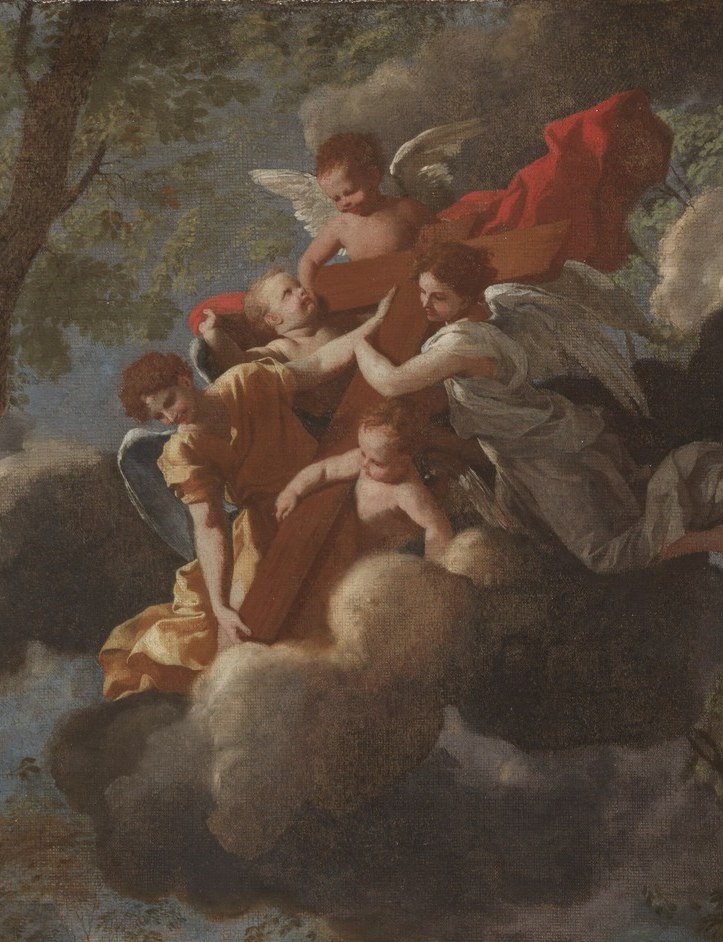
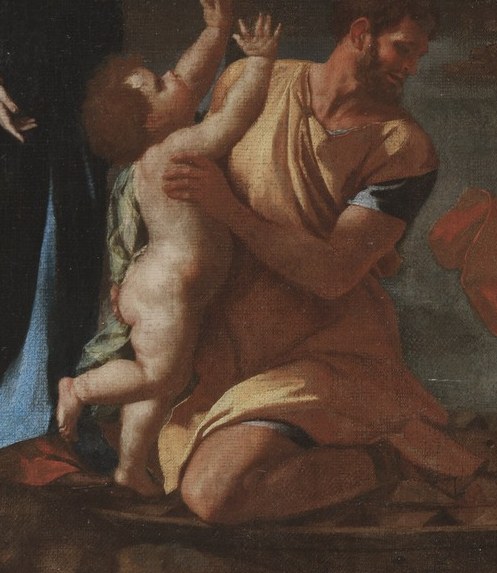
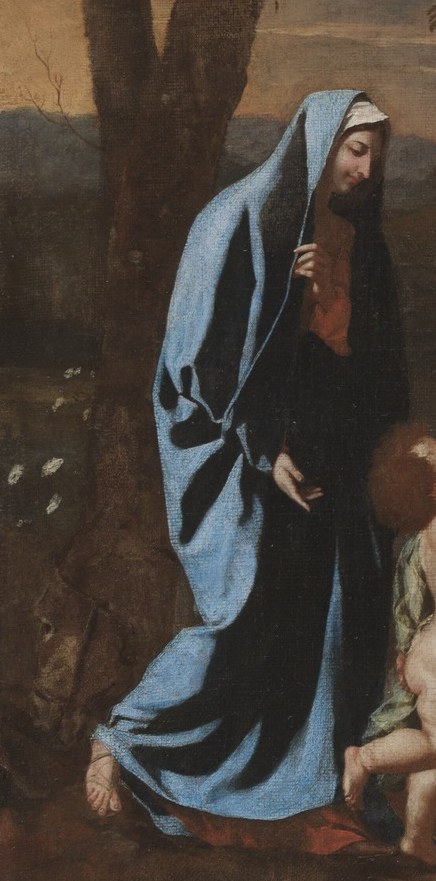
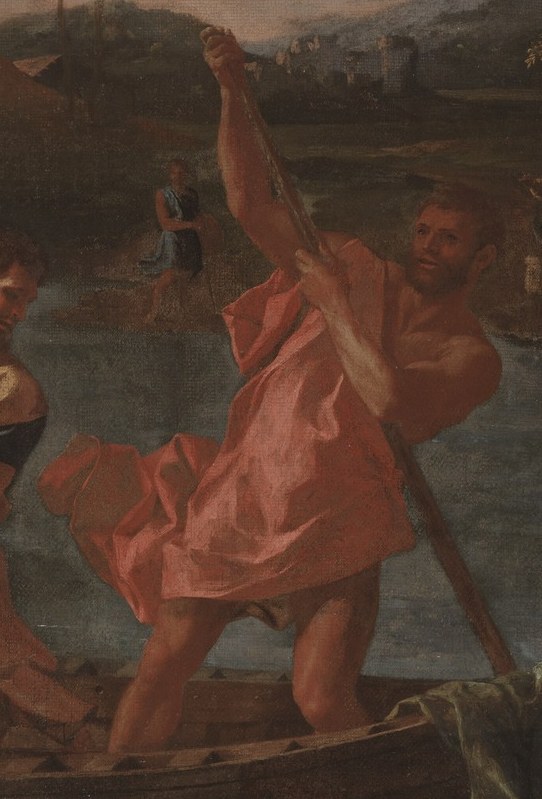
Look closely at the figures: the serene Virgin Mary, the man protectively carrying the Christ Child, and the determined man poling the boat. Above them, a host of angels descends from dramatic cloud formations, suggesting divine guidance on their journey.
Poussin, a leading figure of the French Baroque style, spent most of his working life in Rome, drawing inspiration from Renaissance masters like Raphael. His work is known for its clarity, logic, and order, favoring line over color, which is evident in the sculptural quality of the figures here.
This painting not only tells a sacred story but also represents an important piece of art history, meticulously preserved for centuries. What details in the landscape draw your eye?
Details

Transcript
This painting shows a divine moment from the biblical narrative. Poussin completed this work in 1627, early in his career. The angels above signify divine intervention and guidance. The Christ Child reaches up, connecting earth to the divine. This work is a significant example of Poussin's early religious output. It is preserved today at The Cleveland Museum of Art.