A Goldsmith in His Shop by Petrus Christus
View the artwork: A Goldsmith in His Shop →
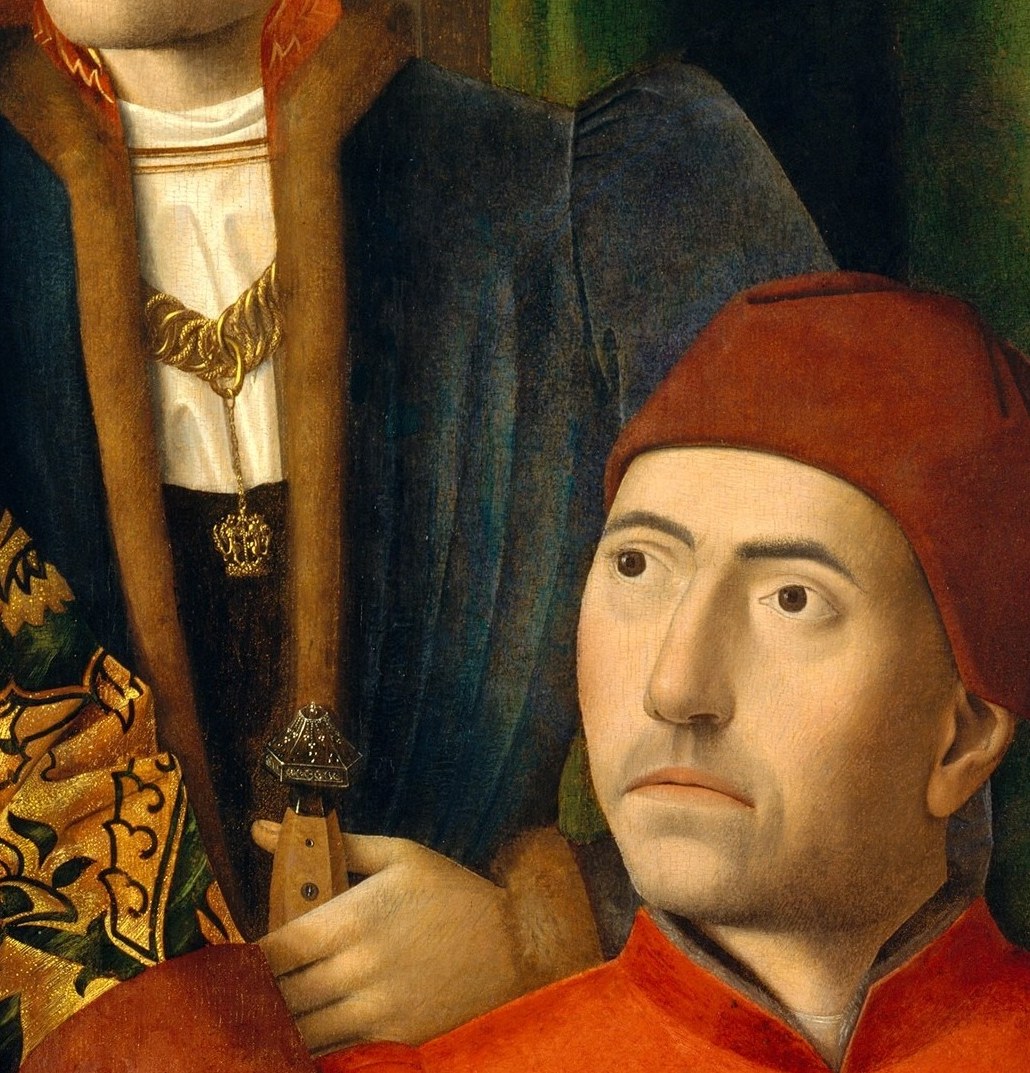
Petrus Christus painted A Goldsmith in His Shop in 1449, and it now hangs in the Metropolitan Museum of Art. It was very likely commissioned by the goldsmiths' guild of Bruges as a kind of advertisement for their craft and their values. For centuries a halo was painted over the goldsmith's head, so people read it as Saint Eligius, the patron saint of goldsmiths. The halo was removed in the 20th century: this was always meant to be a real shop, a real transaction, and a real argument about honest commerce.
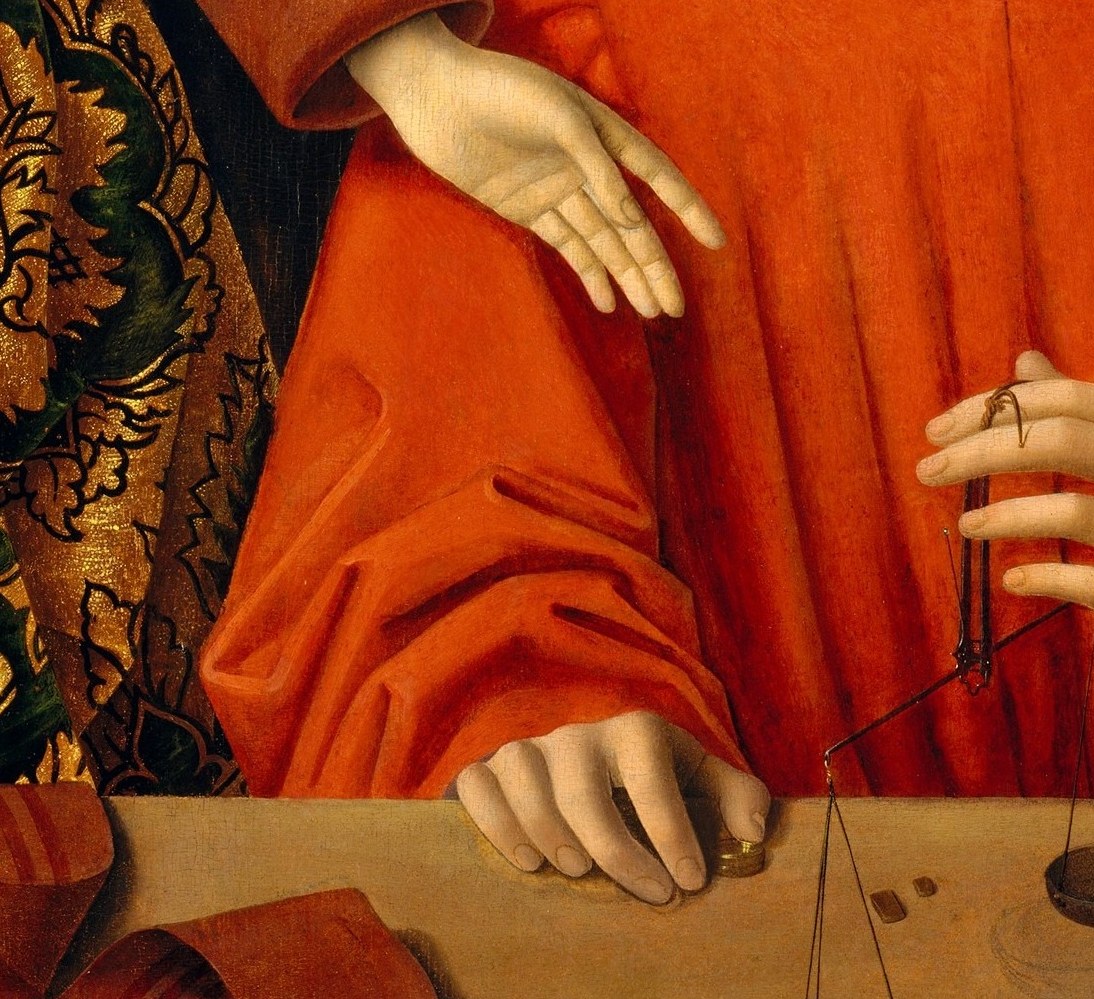
Look at the objects. The balance scale sits exactly between the goldsmith and his customer, perfectly level. In the 15th century, scales were the emblem of fair dealing. The red coral branches on the upper shelf were a luxury import from the Mediterranean, believed to ward off evil. And the convex mirror on the counter edge reflects two figures in the street outside, a trick Petrus Christus learned from Jan van Eyck. Every surface is a statement.
Christus was the leading painter in Bruges after Van Eyck died. He signed this panel prominently at the bottom edge: Master Petrus Christus made me in the year 1449. He also included his personal emblem, a clock linked to a mechanical heart. About thirty paintings are confidently attributed to him today; for a long time he was nearly forgotten.
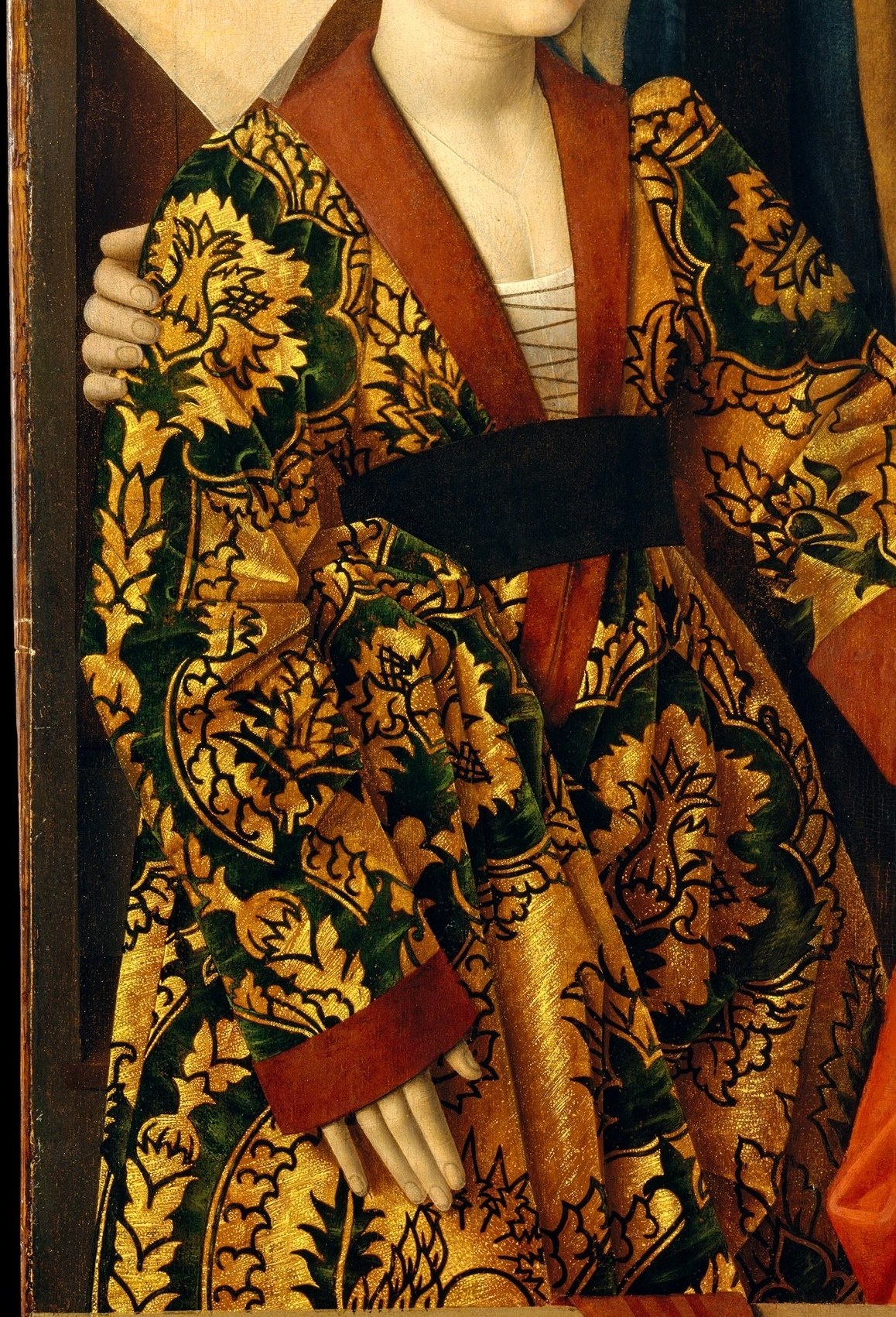
The painting is a moral argument built out of objects. The scales say: this transaction is honest. The coral says: this shop is protected. The ring and the careful hands say: this craft is sacred. Everything on that counter was put there to persuade you.
#arthistory #northernrenaissance #petruschristus
Details


Transcript
A goldsmith hands a ring to a young woman. Between them: a balance scale, perfectly level. Scales were the emblem of honest dealing and the goldsmiths' patron saint. Red coral on the shelf above was believed to protect against evil. The Latin inscription below bears the painter's name, and his emblem: a clock linked to a heart. A halo was added to the goldsmith later, then removed. This was never a saint. The code adds up to one idea: honest craft, protected by integrity, not miracles.