Artwork
A Goldsmith in His Shop
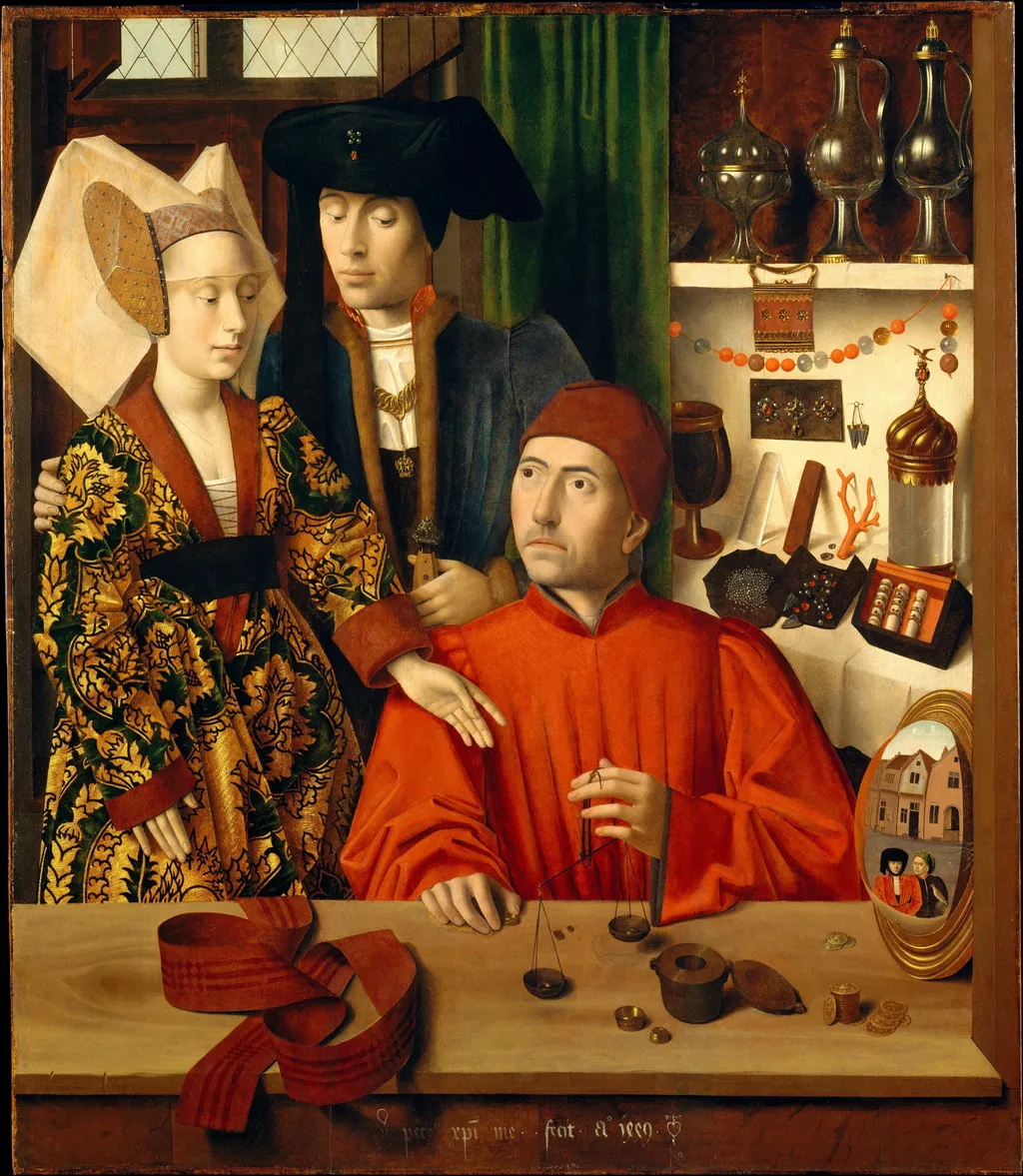
A Goldsmith in His Shop is an oil painting by the Northern Renaissance artist Petrus Christus. It dates from 1449 and is held in the collection of the Metropolitan Museum of Art.
About this work
Subject & Meaning
The painting likely functioned as an advertisement for the Bruges goldsmiths' guild, showcasing their materials and moral integrity.
Painted in 1449, this work depicts a goldsmith weighing a wedding ring for an elegantly dressed couple within his shop. While long identified as Saint Eligius, the patron saint of goldsmiths, due to a halo visible in earlier centuries, technical analysis in 1993 revealed the halo to be a later addition and it was removed. Scholars now interpret the figure as a specific contemporary craftsman, possibly Willem van Vlueten, serving noble clients.
The composition is rich with symbolism: shark teeth and coral on the shelves were believed to detect poison and ward off evil, while a convex mirror reflects two men outside, one holding a falcon representing the sins of pride and greed. This reflection contrasts the vanity of the external world with the virtue and industry inside the shop. The painting likely functioned as an advertisement for the Bruges goldsmiths' guild, showcasing their materials and moral integrity.
Technique & Style
The work is executed in oil on a thin oak panel (overall 100.1 × 85.8 cm; painted surface 98 × 85.2 cm). Christus applies fine, naturalistic brushwork and layered glazes to render the textures of metal, glass, coral, and stone with meticulous detail. The composition combines a goldsmith at his workbench with an elegantly dressed couple, a convex mirror, and assorted symbolic objects such as fossilized shark teeth, coral, crystal vials, and a silver-mounted coconut cup, each rendered with precise tonal variation.
The surface remains largely stable; the halo once present above the goldsmith's head was identified as a later addition and removed during conservation.
History & Provenance
Petrus Christus signed and dated the panel along the front of the workbench with the inscription "m petr[us] xpi me fecit a⁰ 1449" (Master Petrus Christus made me in the year 1449), accompanied by his emblem of a heart linked to a clock. The work is generally thought to have been commissioned by, or to advertise the services of, the goldsmiths' guild of Bruges, possibly intended for public display on or near the guild premises. In the early nineteenth century it passed through the hands of the German dealer Merli, who reportedly acquired it from the last survivor of the Antwerp goldsmiths' guild; later owners included Albert von Oppenheim and Yves Perdoux.
The painting subsequently entered the Robert Lehman Collection and was acquired by the Metropolitan Museum of Art, New York, in 1975, where it is held. During a 1993 conservation treatment the overlying halo was identified as a later addition and removed. The panel was shown at the 1902 Exposition des primitifs flamands in Bruges and in the Metropolitan Museum's 1994 exhibition "Petrus Christus: Renaissance Master of Bruges."
Context
Contemporary scholarship views the work as a sophisticated guild advertisement rather than a saint portrait; the halo was removed after 1993 analysis, supporting identification with a real Bruges goldsmith such as Willem van Vlueten. The painting exemplifies Northern Renaissance mastery, noted for its precise inscription, symbolic objects, and large scale indicating public display. Petrus Christus, a citizen of Bruges who joined the painters' guild after Jan van Eyck's death, rose to become the city's leading painter.
The work's detailed depiction of materials, mirrors, and moral motifs situates it within fifteenth-century Flemish art, illustrating how portraiture served commercial and civic functions.
Legacy
Since its restoration removed the later halo in 1993 and scholarly reassessment by Hugo van der Velden in 1998, the painting has been recognized as a vocational portrait rather than a saint's image, yet it endures as a touchstone of Early Netherlandish art. Exhibited at the 1902 Exposition des primitifs flamands à Bruges and now permanently in the Metropolitan Museum of Art, the work's meticulous detail and emblematic program, from the guild-inscribed Burgundian script to the coral, shark's teeth, and convex mirror, cemented Christus's reputation as a successor to Jan van Eyck. Modern scholarship underscores its function as a public advertisement for the Bruges goldsmiths' guild, a role that influenced later genre scenes by blending moral allegory with mercantile display.
Its layered symbolism and technical precision continue to inform studies of Northern Renaissance material culture and workshop practice.
Overview
Petrus Christus's "A Goldsmith in His Shop," painted in 1449, is an oil on oak panel work housed at the Metropolitan Museum of Art. This piece, measuring approximately 100 x 86 cm, features the artist's signature and emblem. Christus was a prominent painter in Bruges, active from 1444 until his death around 1475. The painting is recognized as one of his significant contributions to Northern Renaissance art.
Own this work as a print
Artist & collection
Artist
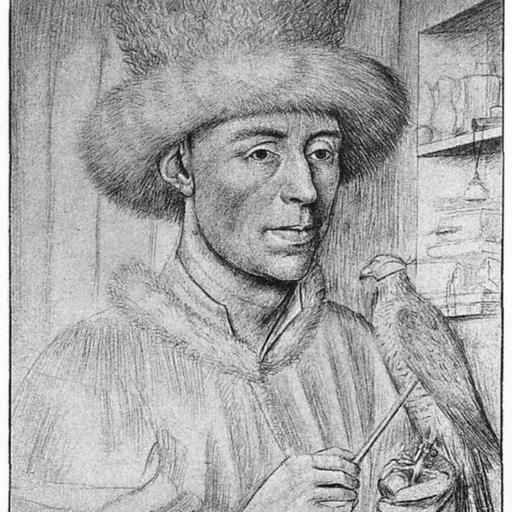
Petrus Christus (Dutch:; c. 1410/1420 – c. 1475/1476) was an Early Netherlandish painter active in Bruges from 1444, where, along with Hans Memling, he became the leading painter after the death of Jan van Eyck. He was…



- The Banker and his Wife
 The Moneylender and His Wife
 The Queen of Sheba before Solomon
 The Tax Collector and His Wife
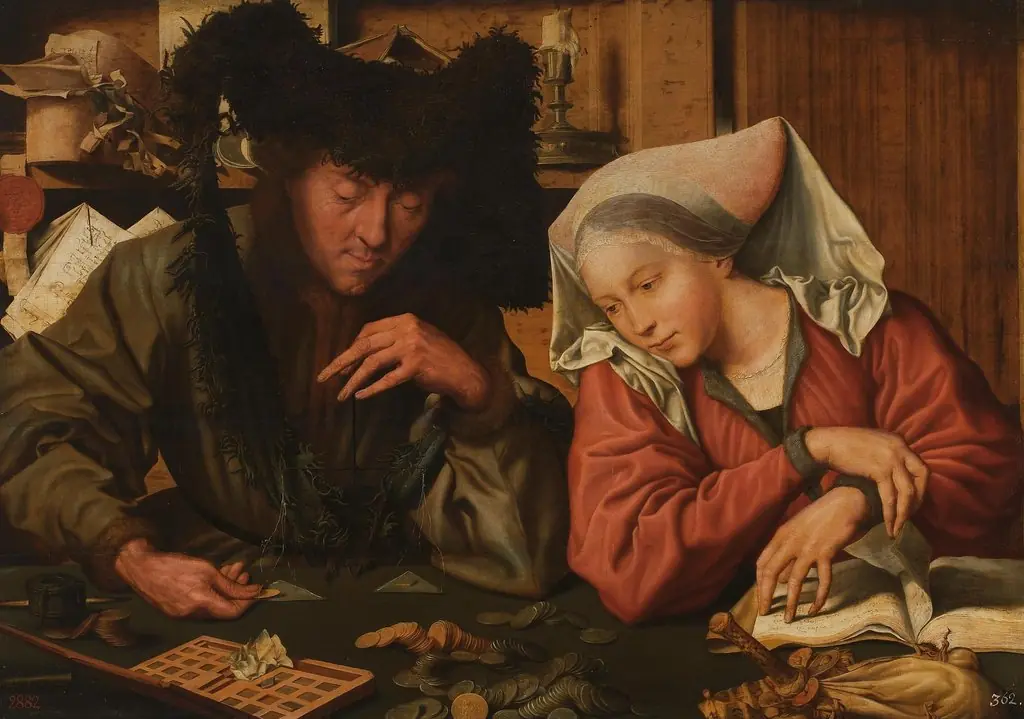 The Moneychangers
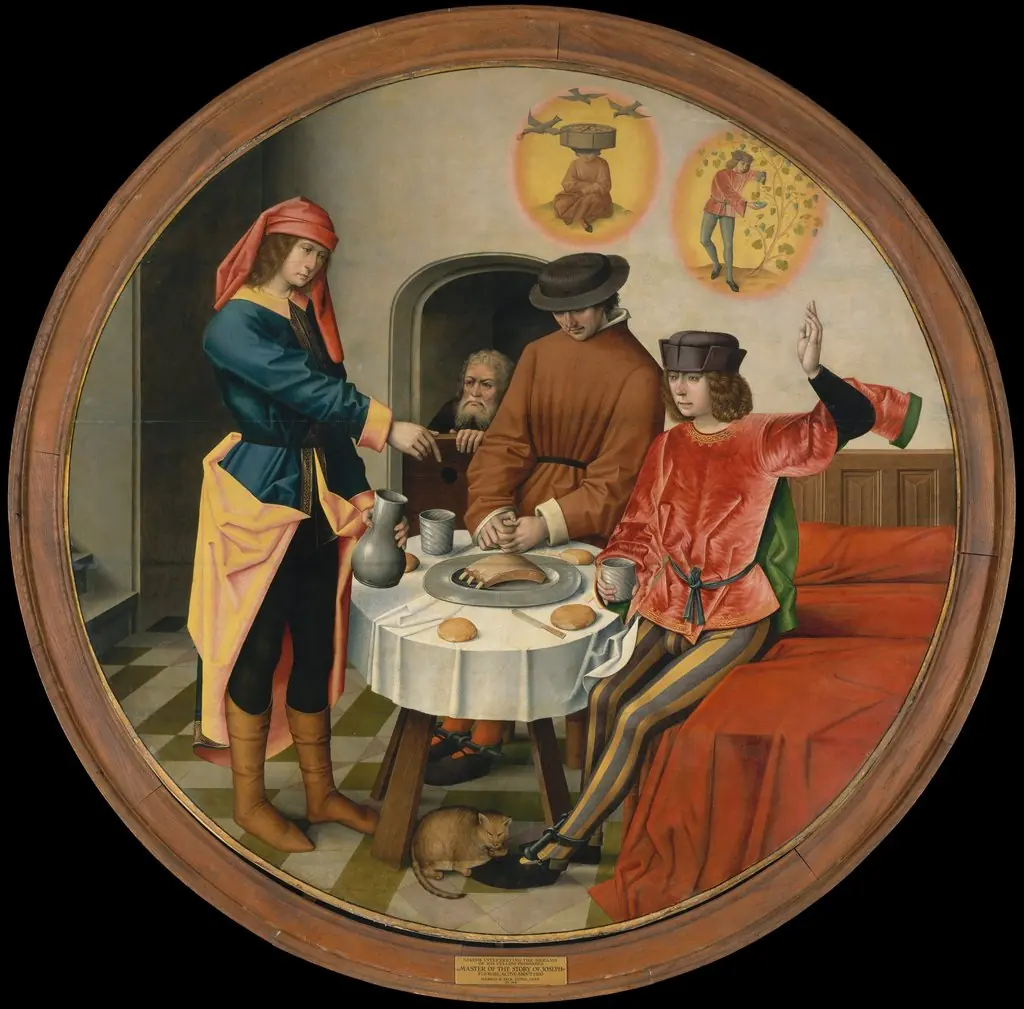 Joseph Interpreting the Dreams of His Fellow Prisoners
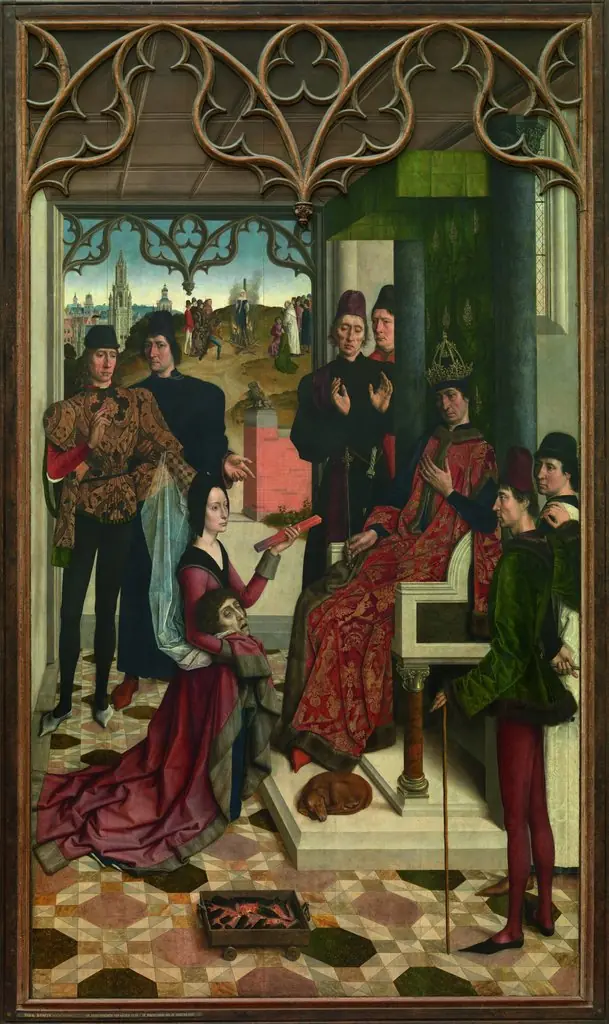 Justice of Emperor Otto III: The Trial by Fire
 The Merchant and his Wife
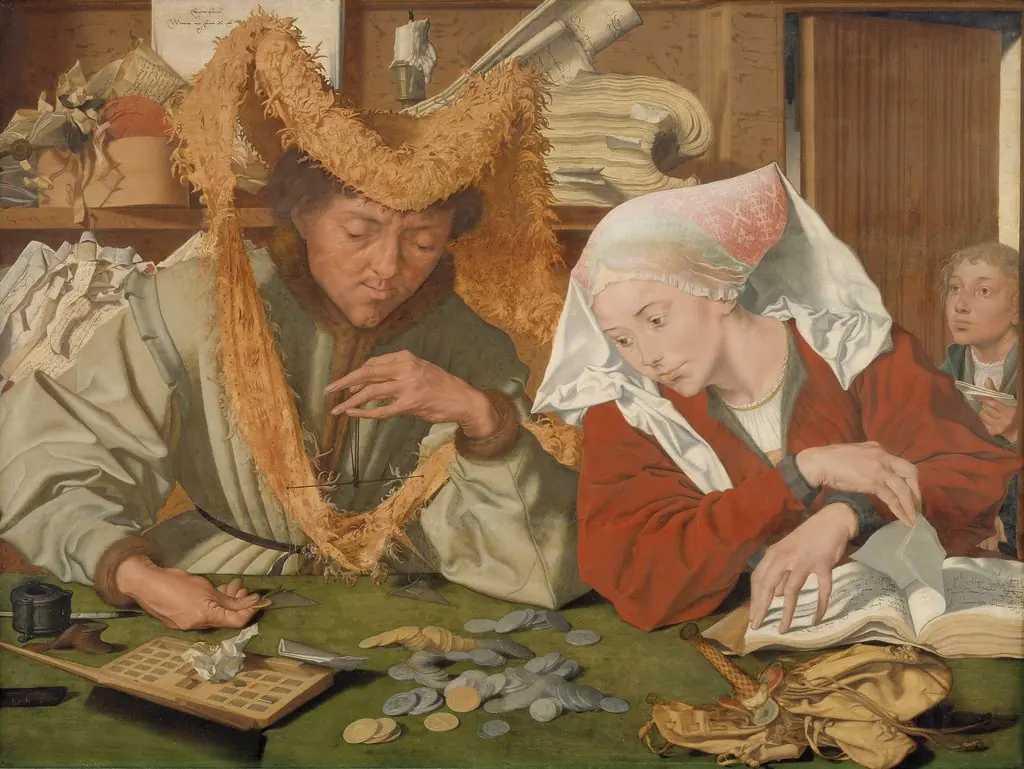 The Merchant and his Wife
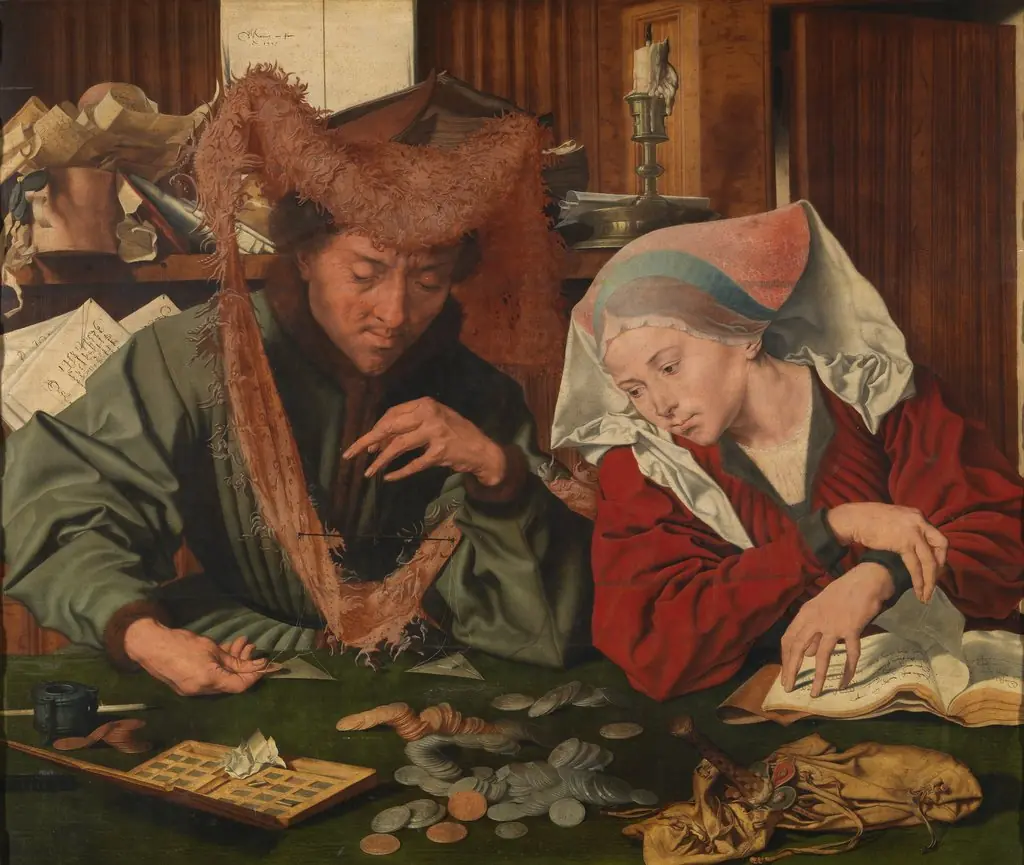 The Moneychanger and His Wife
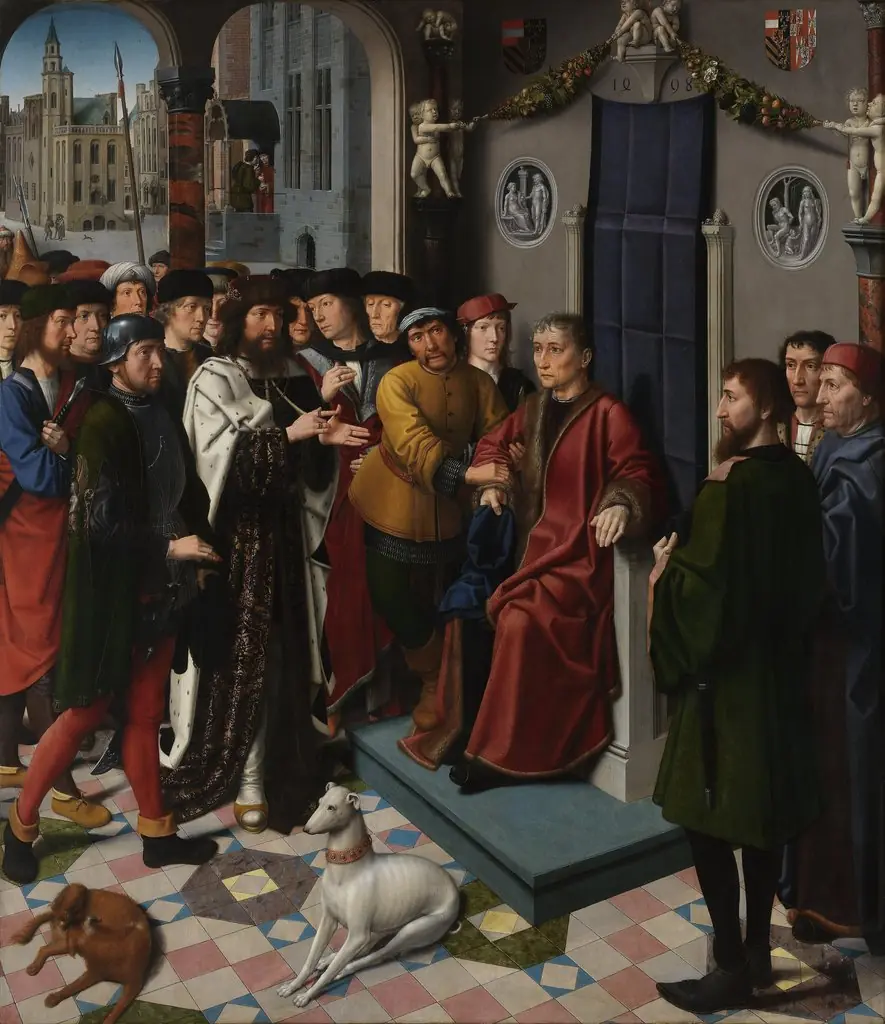 Judgement of Cambyses: The Arrest of Sisamnes
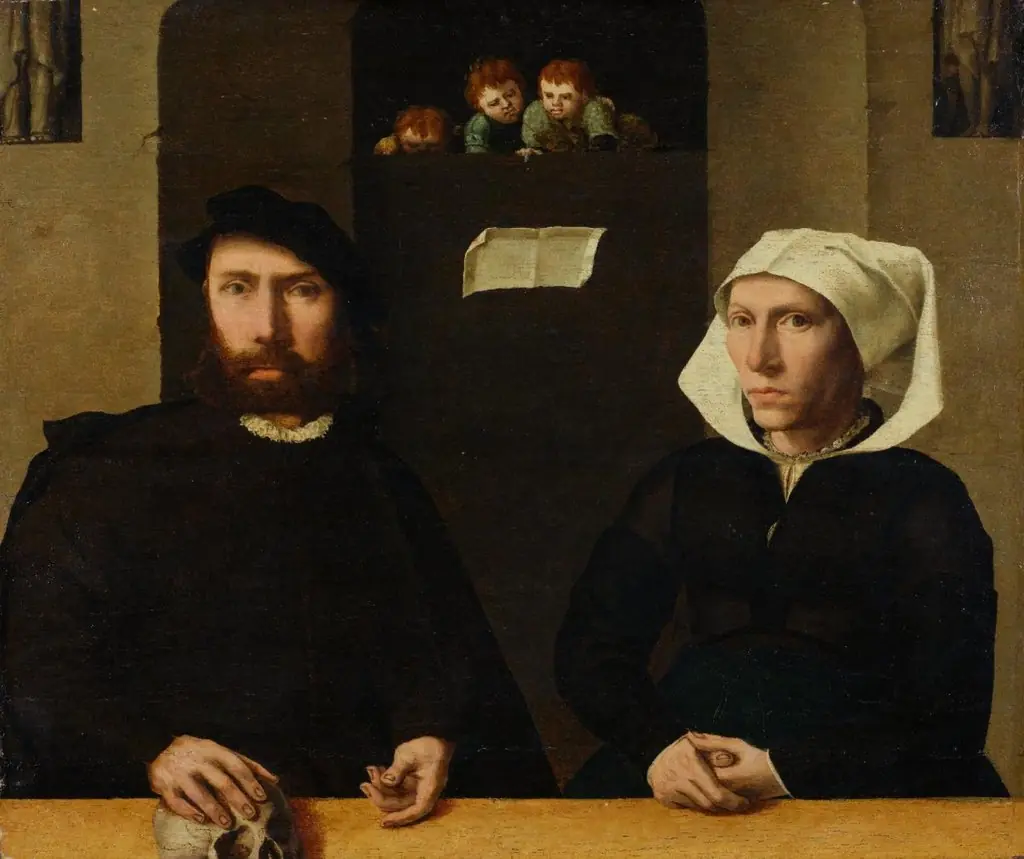 Pieter Coecke van Aelst, his Wife Mayken Verhulst and Their Children