Concert Champêtre by Jean-Baptiste Pater
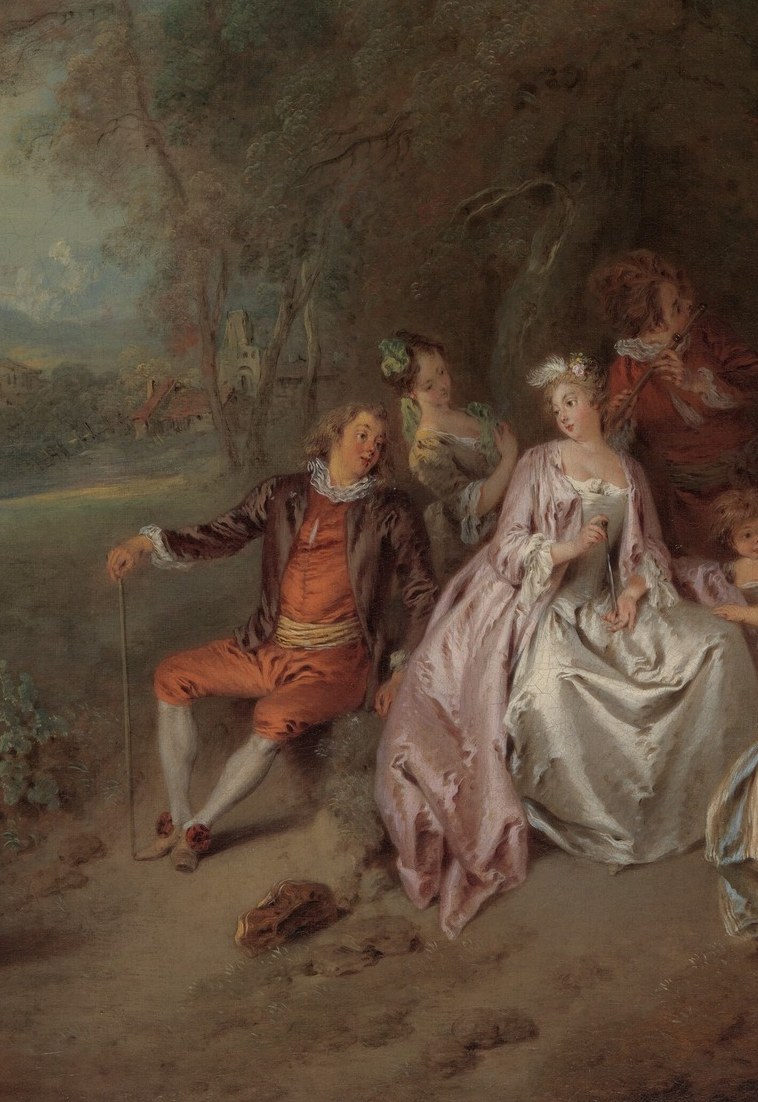
This is Concert Champêtre (1734) by Jean-Baptiste Pater, a French Rococo painter who claimed he learned everything he knew during a single month with his dying master, Antoine Watteau.
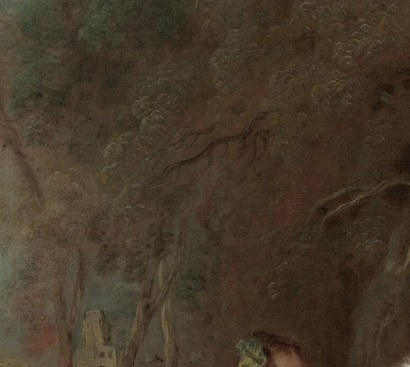
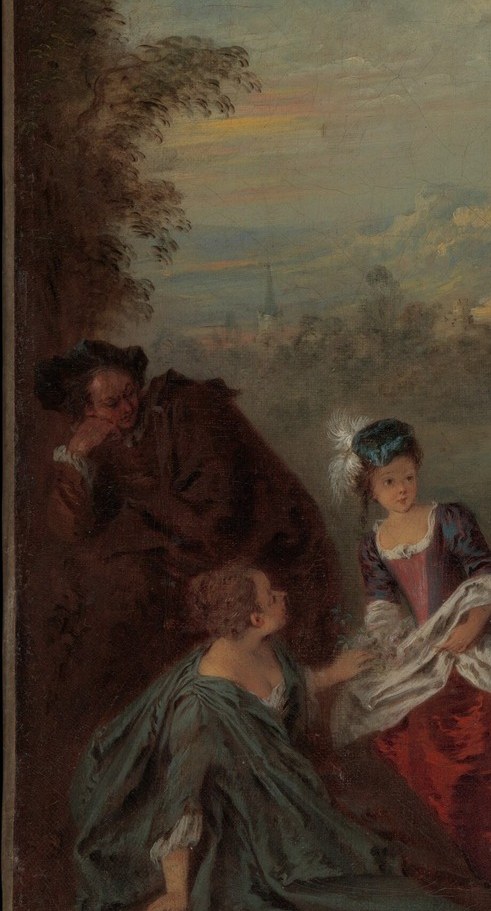
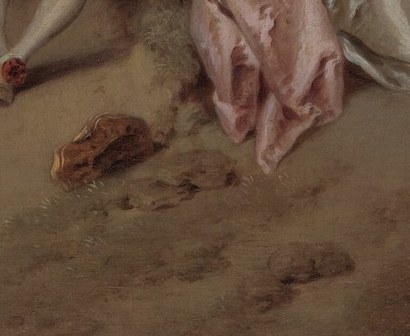
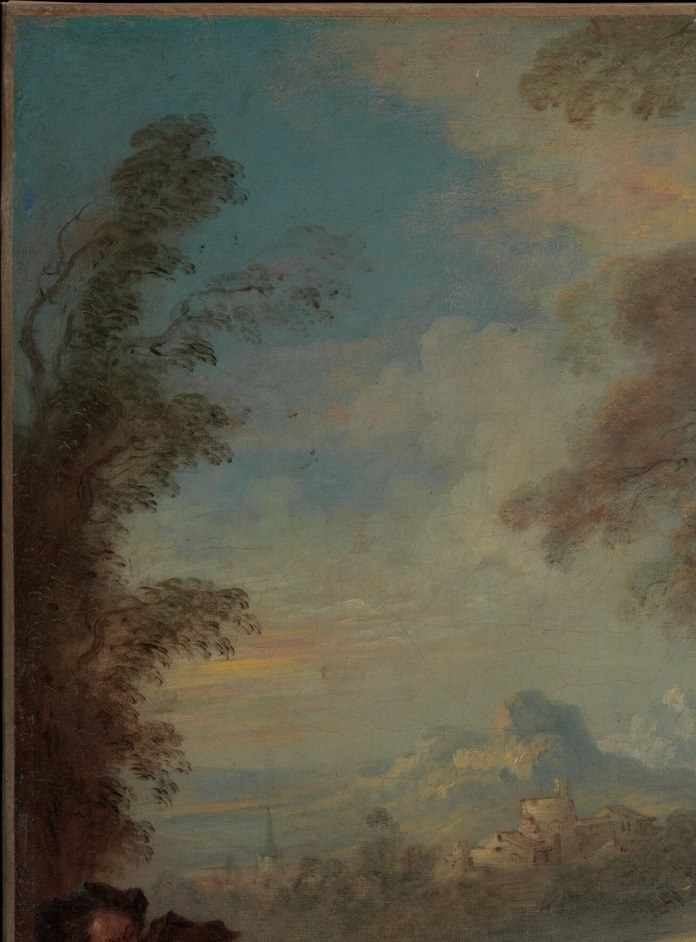
The central woman in luminous white-silver anchors the scene, but the painting rewards a slow scan. At the far left margin sits a woman in darker dress, an observer almost absorbed into the trees. Hidden in the lower quarter, near the hem of the white gown, is a tiny lapdog: a symbol of fidelity and aristocratic leisure that most viewers flick right past.
Pater and Watteau had a difficult relationship. They quarreled early, and Pater left Paris for two years. They reconciled only in 1721, when Watteau was already terminally ill. Pater spent those final weeks at his side, then built a career on Watteau’s fête galante formula, sometimes copying his figures directly.
The painting lives in the Louvre. Next time you see a Pater, slow down at the edges: the small, quiet choices are where the story actually lives.
Details
Transcript
They look like a pleasant afternoon in the country. The painter studied under Watteau for only one month. He spent the rest of his life copying him. Her downcast face is pure Watteau. But check the margins. This woman at the edge is almost invisible. And hidden at the hem of the white dress: a tiny dog. The dog signals fidelity. Pater hid it where we scroll past.