Joris Vezeleer by Cleve, Joos van
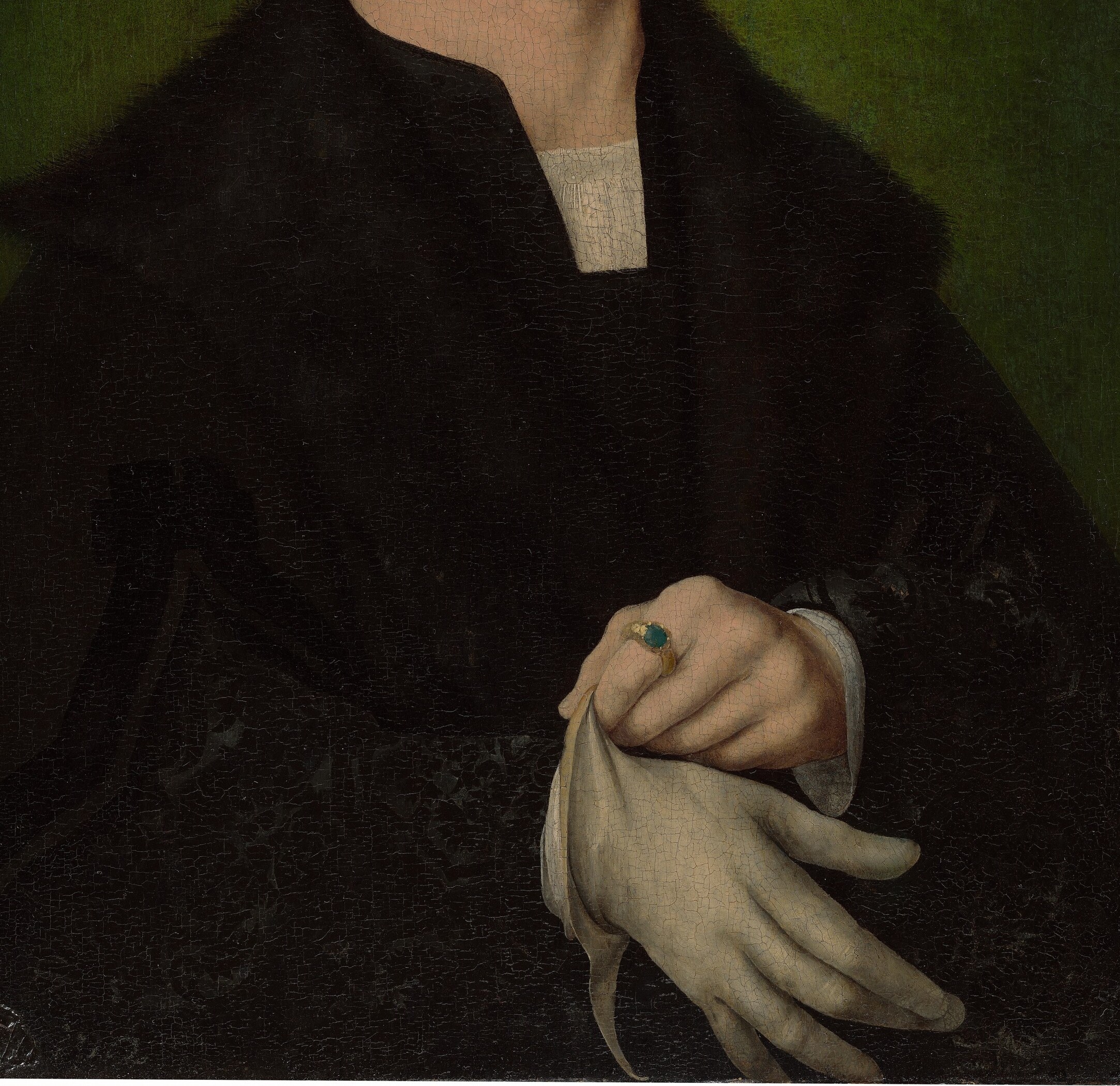
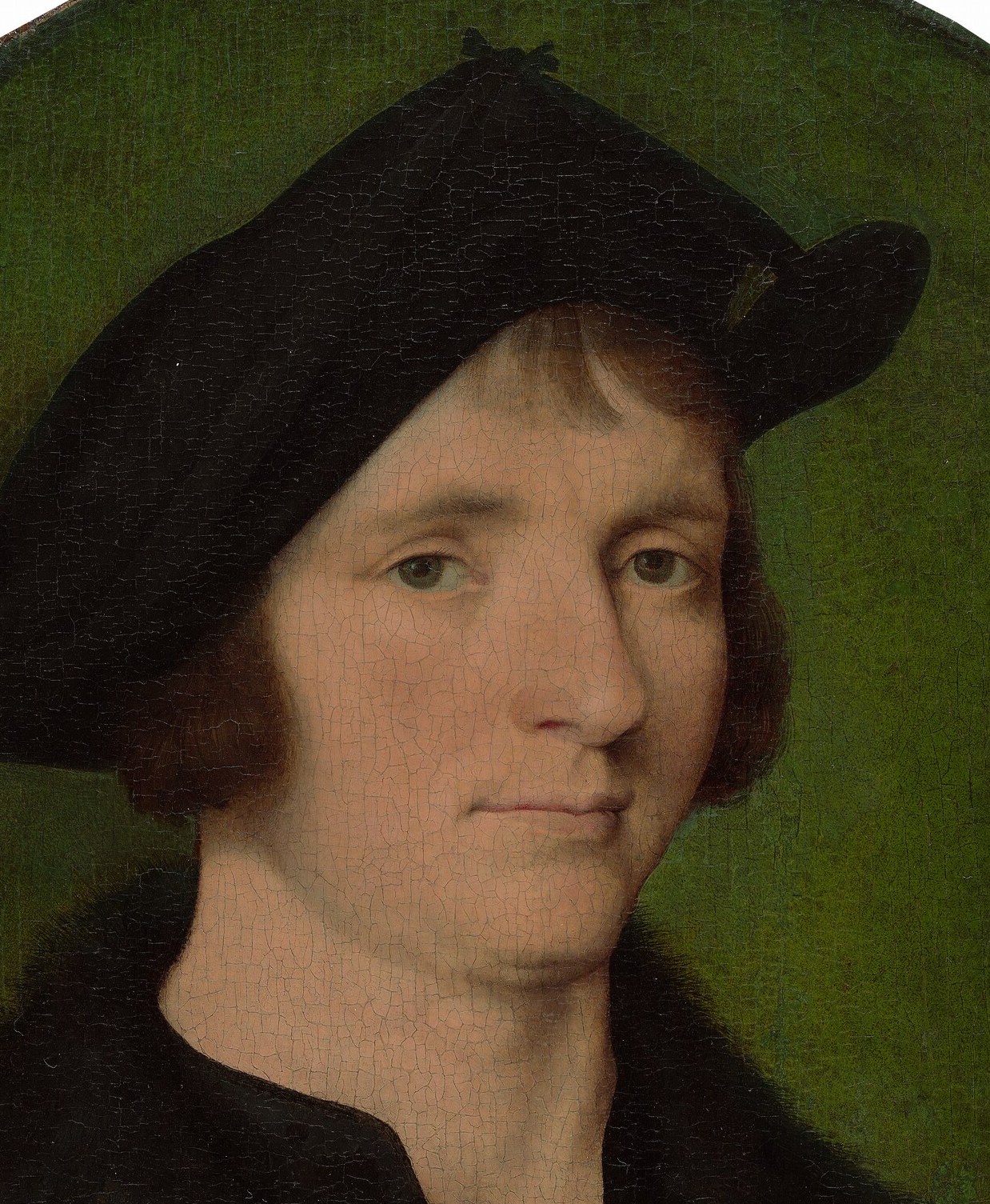
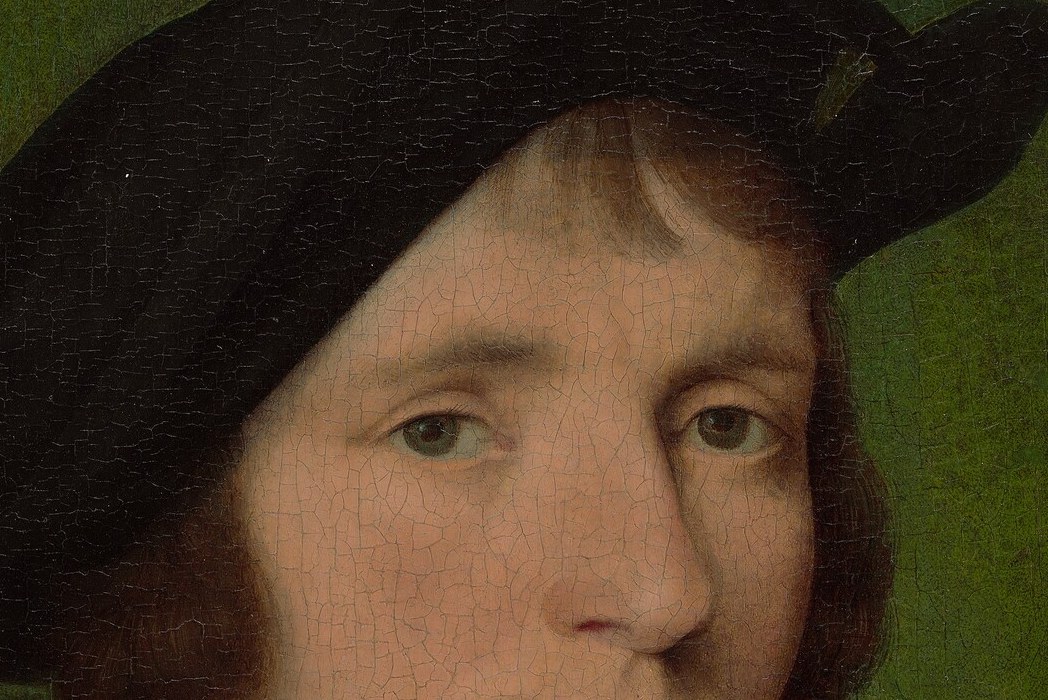
Joris Vezeleer, painted by Joos van Cleve around 1518, is a masterclass in Flemish oil technique hiding in plain sight. The painting lives at the threshold where a man emerges from total darkness, built entirely from thin layers of translucent pigment over a pale chalk ground.
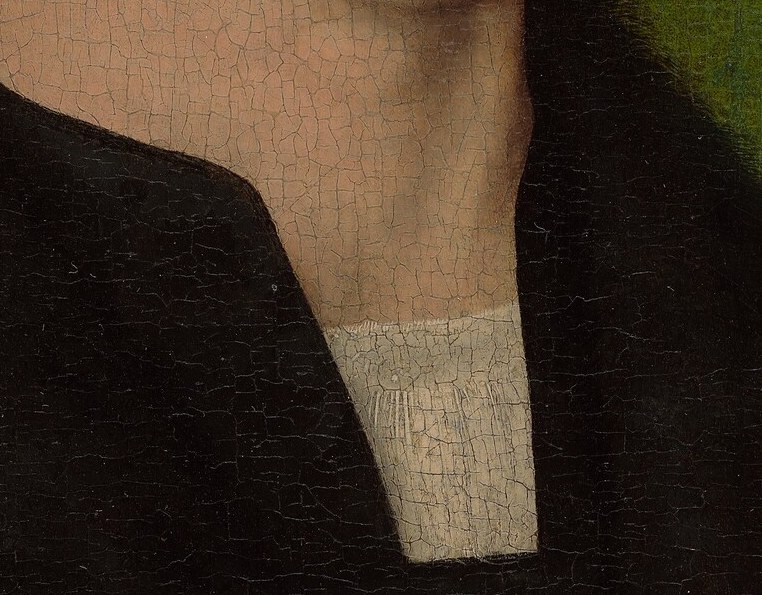
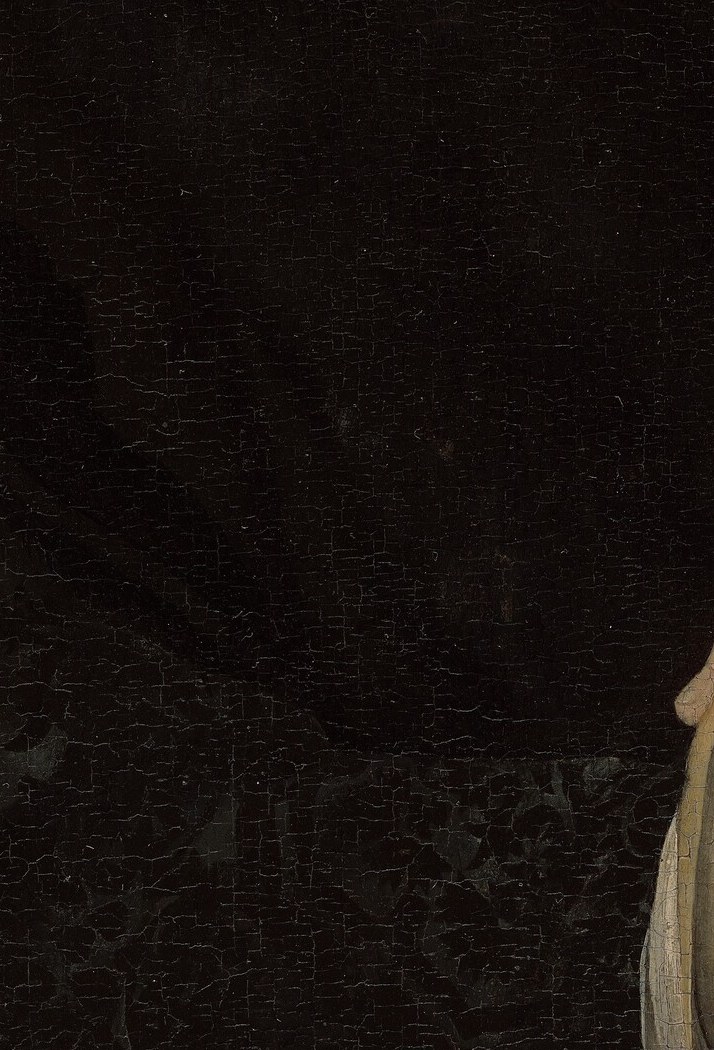
Look at the face first. The flesh is not painted opaquely; it is glazed in successive veils of color, letting the white ground shine through to create an inner light that heavy body color cannot replicate. Beneath the face, the robe swallows almost all illumination, a near-uniform black that forces your eye upward. The single slash of white linen at the collar is the only structural break in the silhouette.
Joos van Cleve was a co-deacon of Antwerp's Guild of Saint Luke and ran one of the largest workshops in the city. He trained at least five pupils, and this portrait shows the technical discipline he would have demanded. The bare left hand cradling the white glove is his signature flourish, a display of anatomical confidence that separates him from stiffer Flemish contemporaries.
Next time you see a black robe in a Renaissance portrait, look closer. The darkness is never empty; it is a deliberate frame, built to make the face inevitable.
Details
Transcript
It begins as a silhouette against green darkness. The robe absorbs nearly all the light. But from that black, a face builds itself out of thin glazes. Oil paint, layered in translucent skins over a pale ground. A single white collar anchors the neck. It is the only flash of linen in the whole composition. Amsterdam, 1518. Joos van Cleve co-runs the Guild of Saint Luke. His real trick: the bare hand. Look at the knuckles.