高橋草坪筆 牡丹図|Peony by Takahashi Sōhei
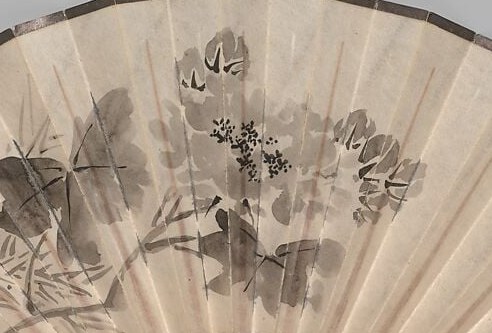
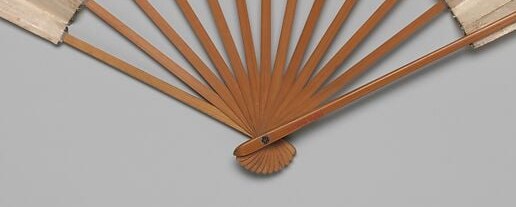
This isn't just a beautiful ink painting, it's a piece of functional art, painted on a folding fan. Takahashi Sōhei's "Peony," created in 1819, is a masterclass in subtlety and observation, now held at the Minneapolis Institute of Art.
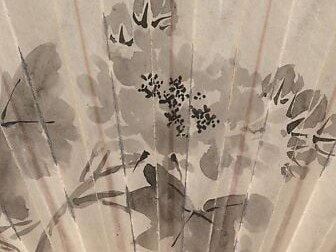
The artist employed swift, dark lines and varied ink washes to give the peony petals their soft, full appearance. Look closely, and you can see how intersecting lines build up tonal variations, creating a sense of volume and shadow without any color.
Sōhei’s work often focused on natural forms, and here, the peony fills the fan's surface. He used minimal, lighter strokes for the stem and leaves, ensuring the flower remained the star. This economy of means highlights the flower's form and vitality.
It’s a wonderful example of how everyday objects can become canvases for exquisite art, and how much depth can be found in simplicity. What details do you notice first?
Details

Transcript
This isn't just a painting, it's a folding fan. The artist used ink on paper, but look closer. Notice how the ink washes vary in density. These subtle lines create volume and shadow. Even the paper itself lends to the texture. It's a delicate balance of art and material.