Self-Portrait by Thayer, Abbott Handerson
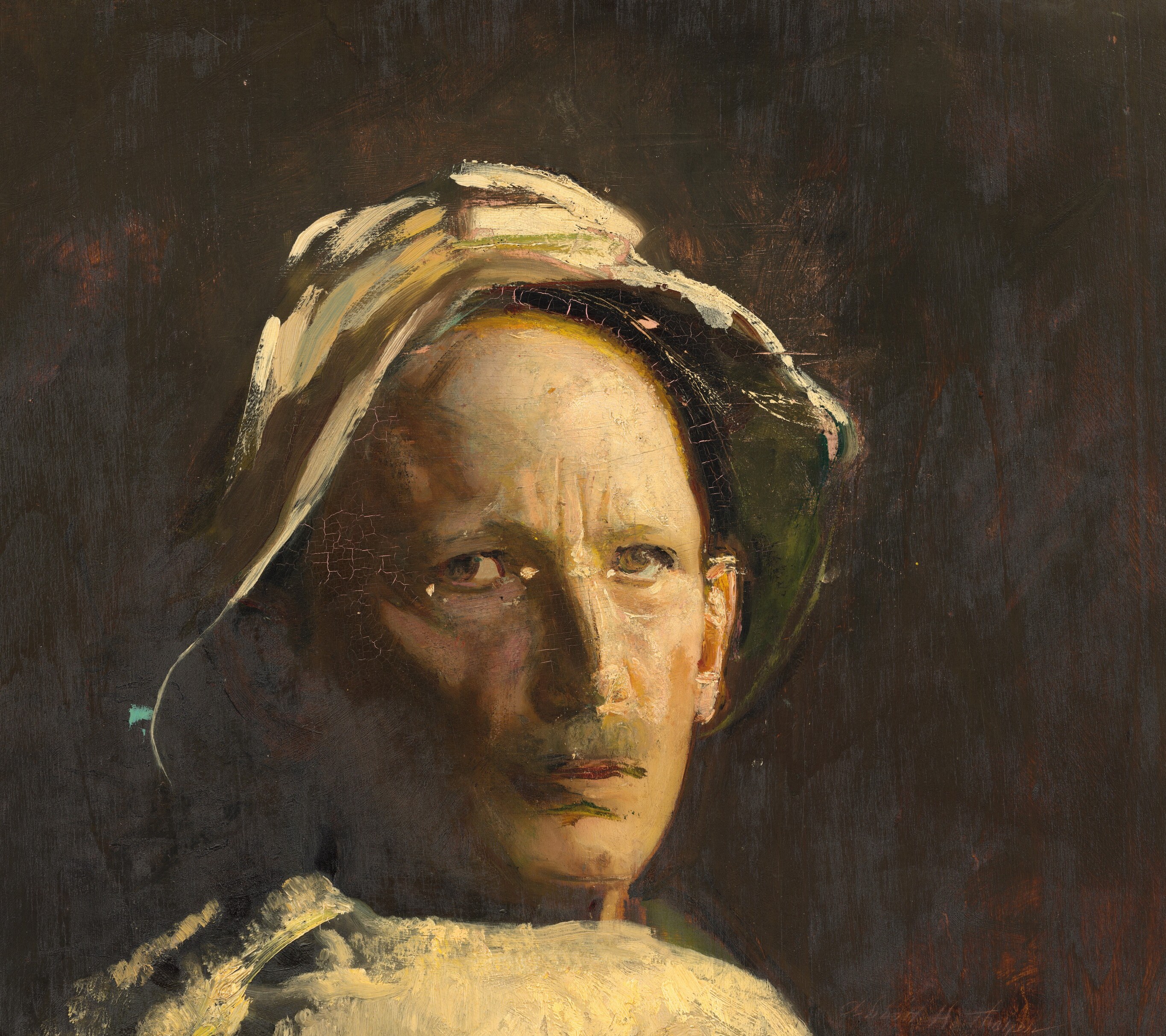
This is Abbott Handerson Thayer's *Self-Portrait*, painted in 1919 and now held at the Smithsonian American Art Museum. Thayer was then nearly seventy, and he turned a mirror on himself with an honesty that is almost uncomfortable. This is the same artist who painted ethereal angels using his own children as models. Here, there are no wings, no narrative, and no flattery.
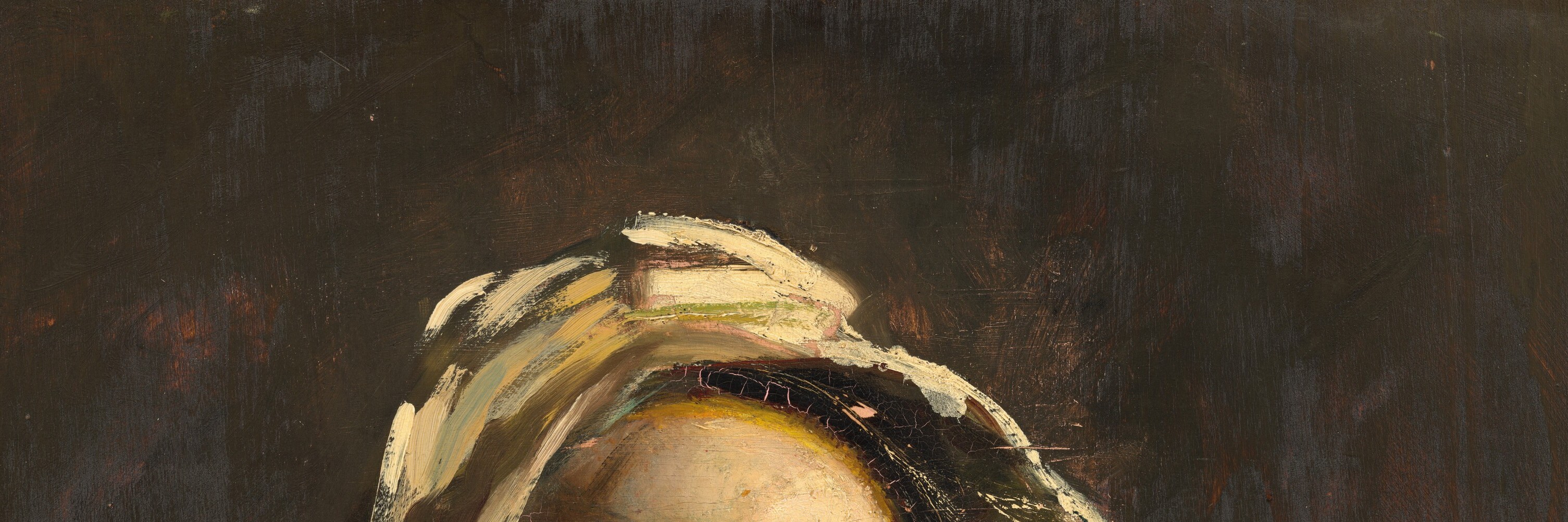
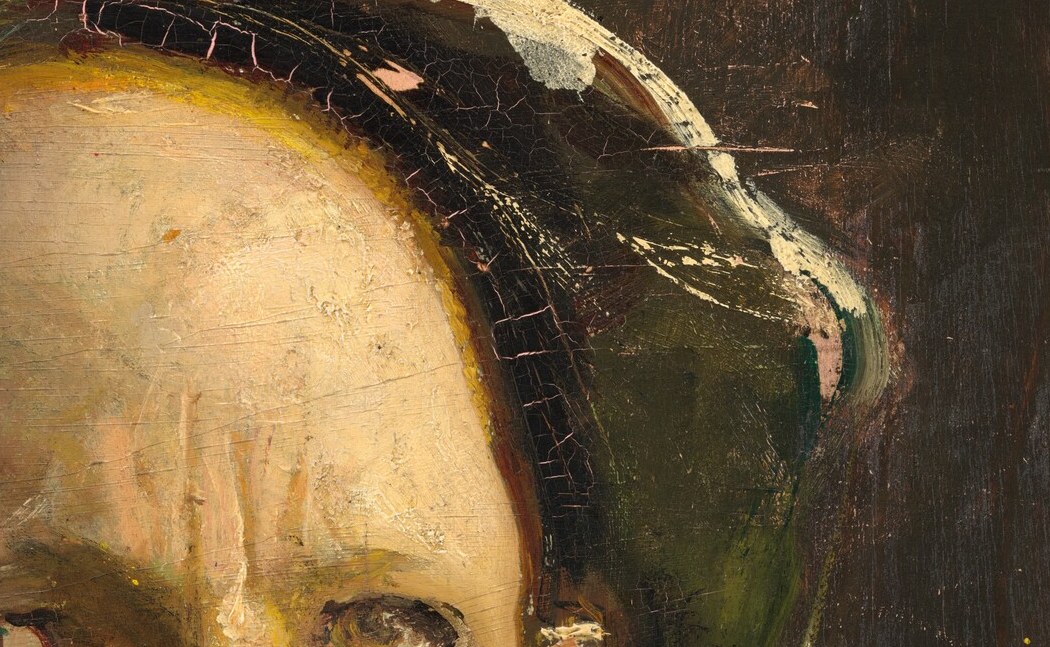
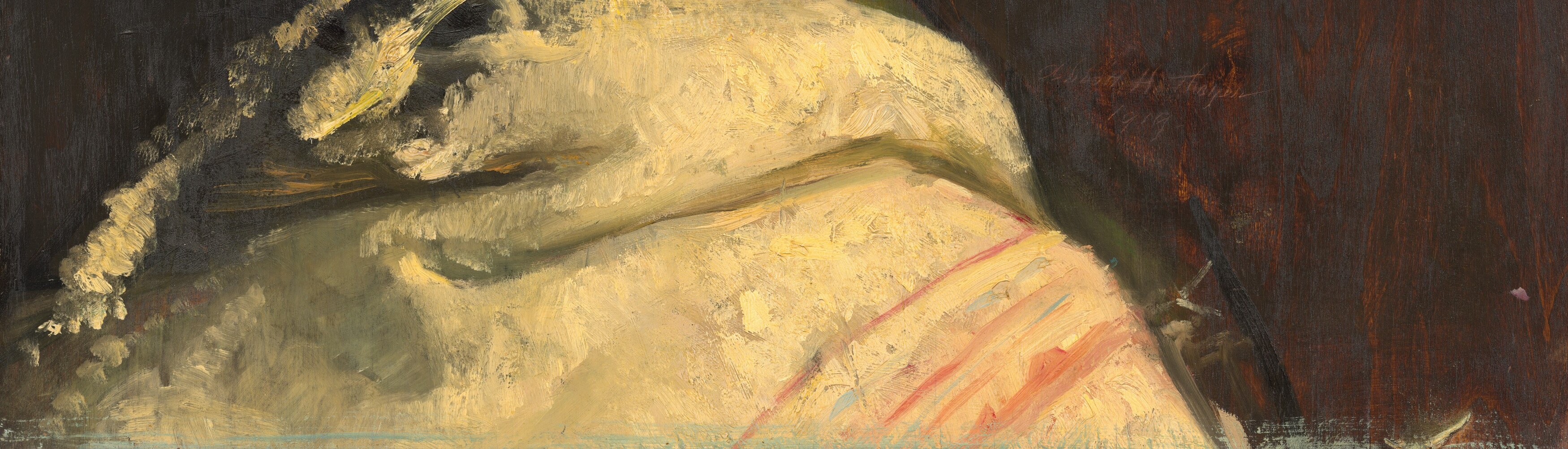
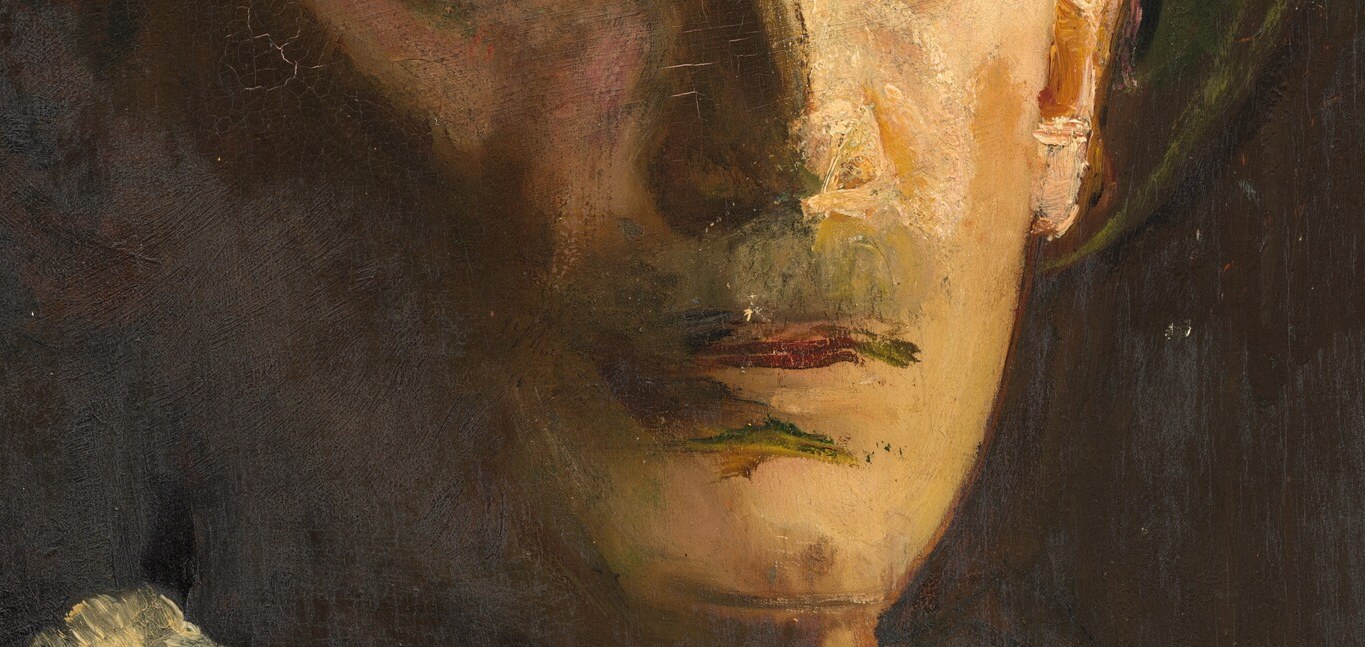
Look at the details: the white cloth wrapped around his head is likely a painter's working cap, a linen cloth he wore in the studio. It flattens his silhouette against the dark background and makes his face inescapable. The eyes are asymmetrical, his left eye catches the light directly while the right falls into shadow, and that slight imbalance is where the portrait's searching, unsettled quality lives. The mouth is firmly set, thin-lipped, and severe. Meanwhile, the white garment across his shoulders is painted with broad, almost unresolved strokes that contrast sharply with the tightly finished face. Thayer was showing you exactly where his attention went.
Thayer was a fascinating figure beyond painting. During the last third of his life, he worked obsessively with his son Gerald on a book about animal camouflage, *Concealing-Coloration in the Animal Kingdom*, arguing that all animal coloration is cryptic. Teddy Roosevelt publicly mocked the theory, but it may have influenced military camouflage in World War I. Thayer's own life was marked by profound loss, his first wife died young, and two of his children also predeceased him. By 1919, when he painted this stark, unadorned self-portrait, he had endured more grief than most.
This is the face of a man who has stopped performing. He painted it on a wood panel, letting the warm ochre ground show through at the edges. Two years later, he was dead. What do you see in his eyes?
Details
Transcript
Most self-portraits flatter. This one doesn't. Painted in 1919. Abbott Thayer was nearly seventy. Look at the white cloth wrapped around his head. Probably a painter's working cap. He came to the mirror as he was. The face is built with unsparing detail. But his collar and shoulders dissolve into broad, sketchy strokes. Thayer was known for painting his children as angels. Here, no props. No story.