Still Life: Fish by William Merritt Chase

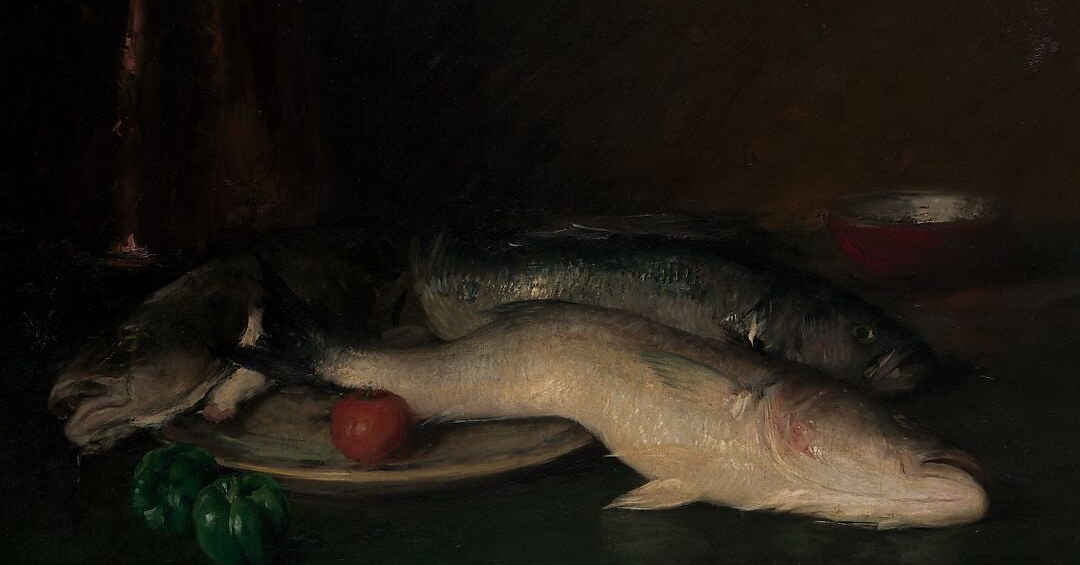
William Merritt Chase painted Still Life: Fish around 1908, and the whole thing turns on a single confident stroke of paint.

The painting shows a dead fish on a wet tabletop, its mouth agape and eye glazed. But look at the belly, right where the light hits: a single dragged streak of near-white paint, applied wet over dry and never touched again.

Chase was the leading American Impressionist and founder of the school that became Parsons. He taught a generation of painters to work fast and look hard. Here, he proves he could do both at once.

That highlight is a one-shot trick that can't be corrected. Lay it wrong and you lose the fish. Lay it right and the fish stays wet forever.

Details
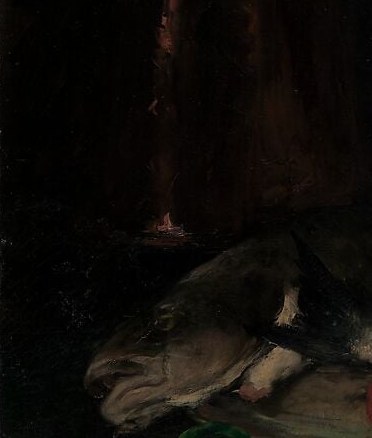
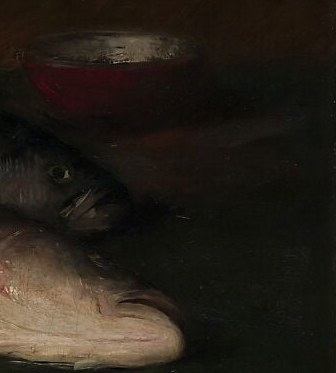
Its eye is dead. The mouth hangs open.
Now look at the belly.
The primary subject , its silvery-pale belly and dark dorsal surface demonstrate Chase's bravura brushwork capturing fish scales and wet sheen with minimal strokes
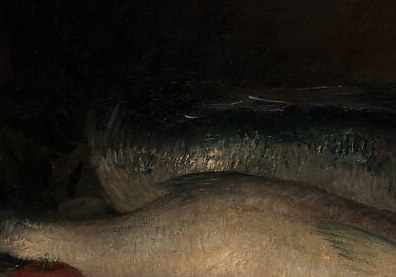
The translucent fan of the tail fin shows Chase's impressionist handling , thin paint over dark ground creates the illusion of membrane and light simultaneously
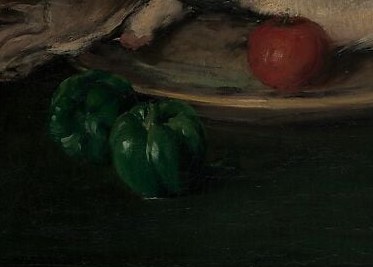
The grape cluster introduces texture contrast , small round forms against the long flat fish , and is a classical still-life symbol of abundance and transience
Transcript

This fish looks wet, heavy, and cold. Its eye is dead. The mouth hangs open. Now look at the belly. That shine is a single stroke of unmixed near-white paint. Chase put it down once. No blending, no second try. One confident flick makes a dead fish feel wet for a hundred years.