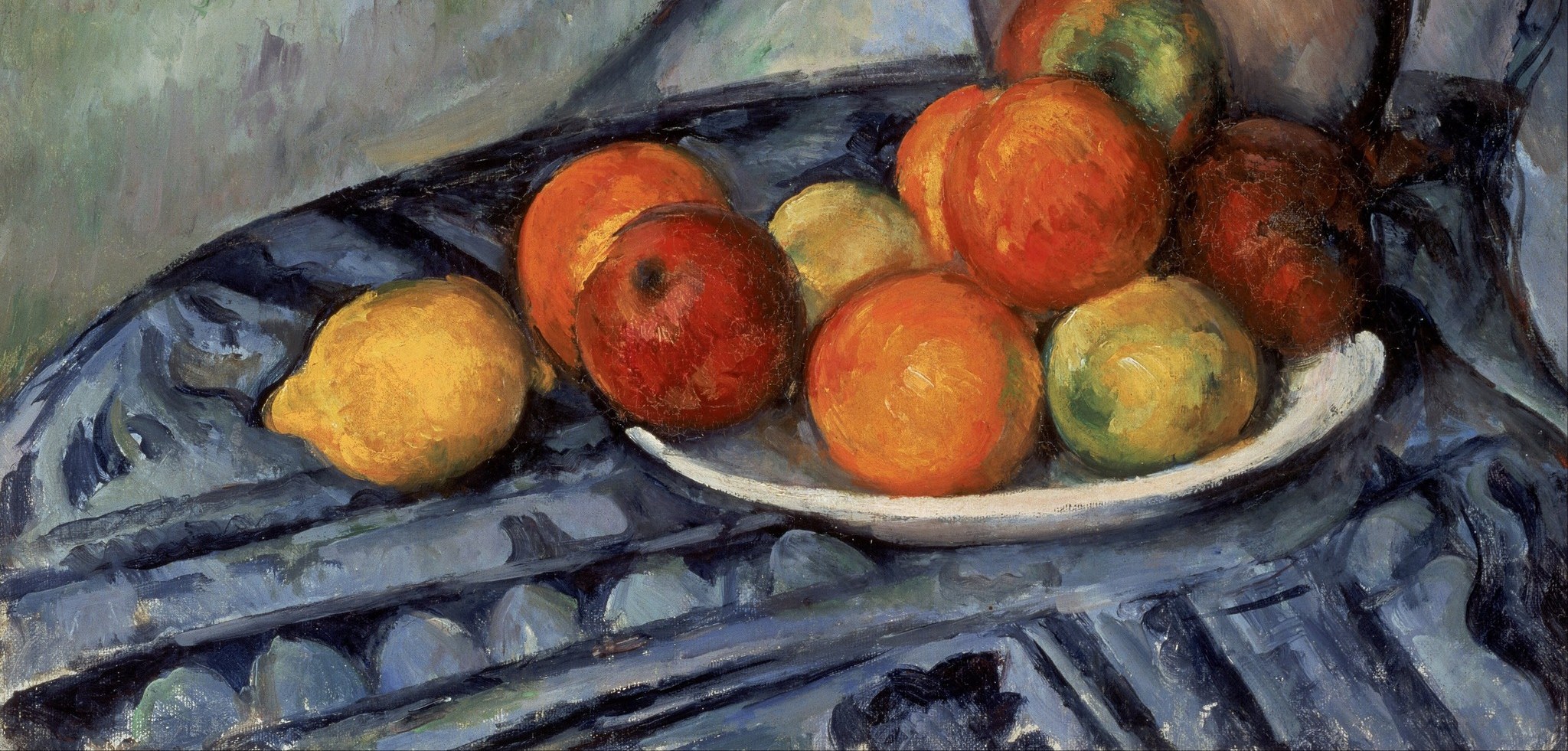
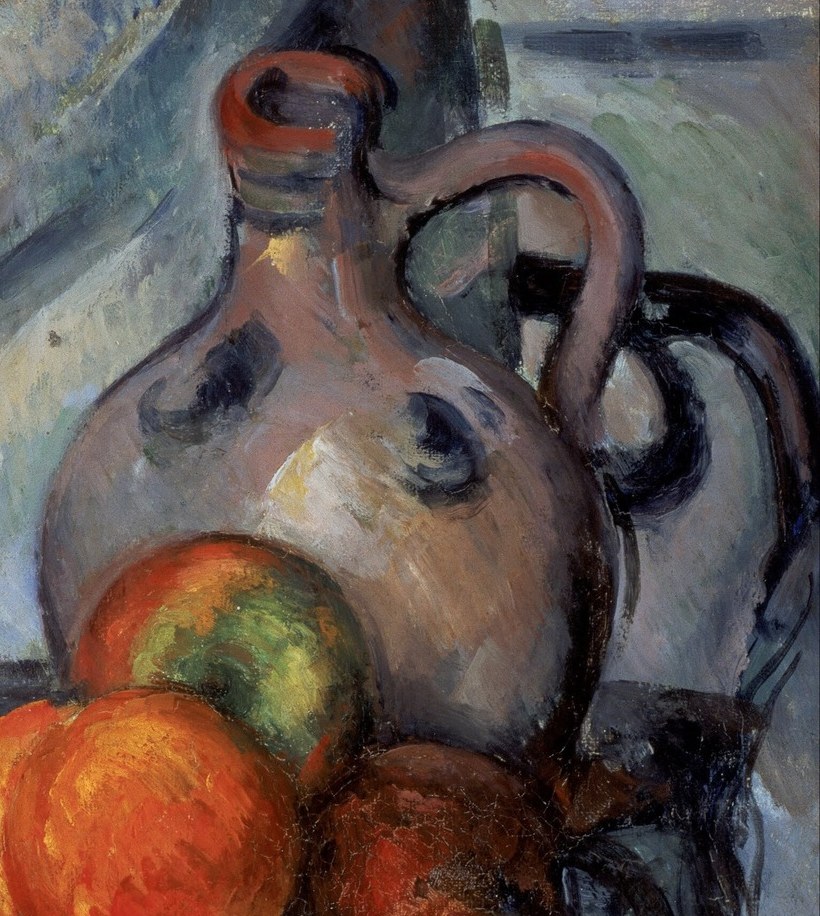
Fruit and a Jug on a Table by Paul Cézanne
Paul Cézanne's "Fruit and a Jug on a Table," painted in 1896, is more than just a still life; it's a bridge between artistic movements, held at the Museum of Fine Arts Boston.
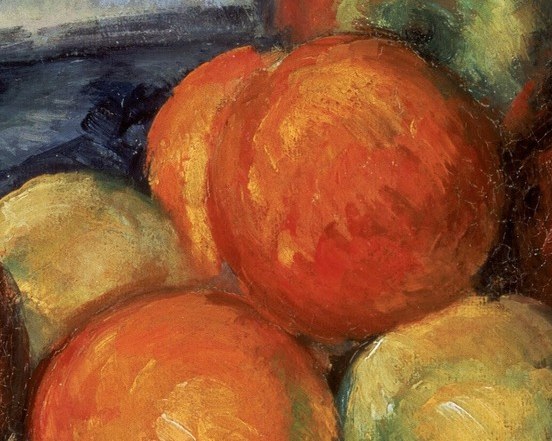
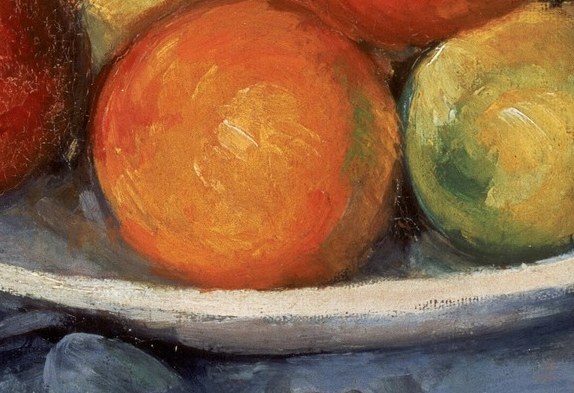
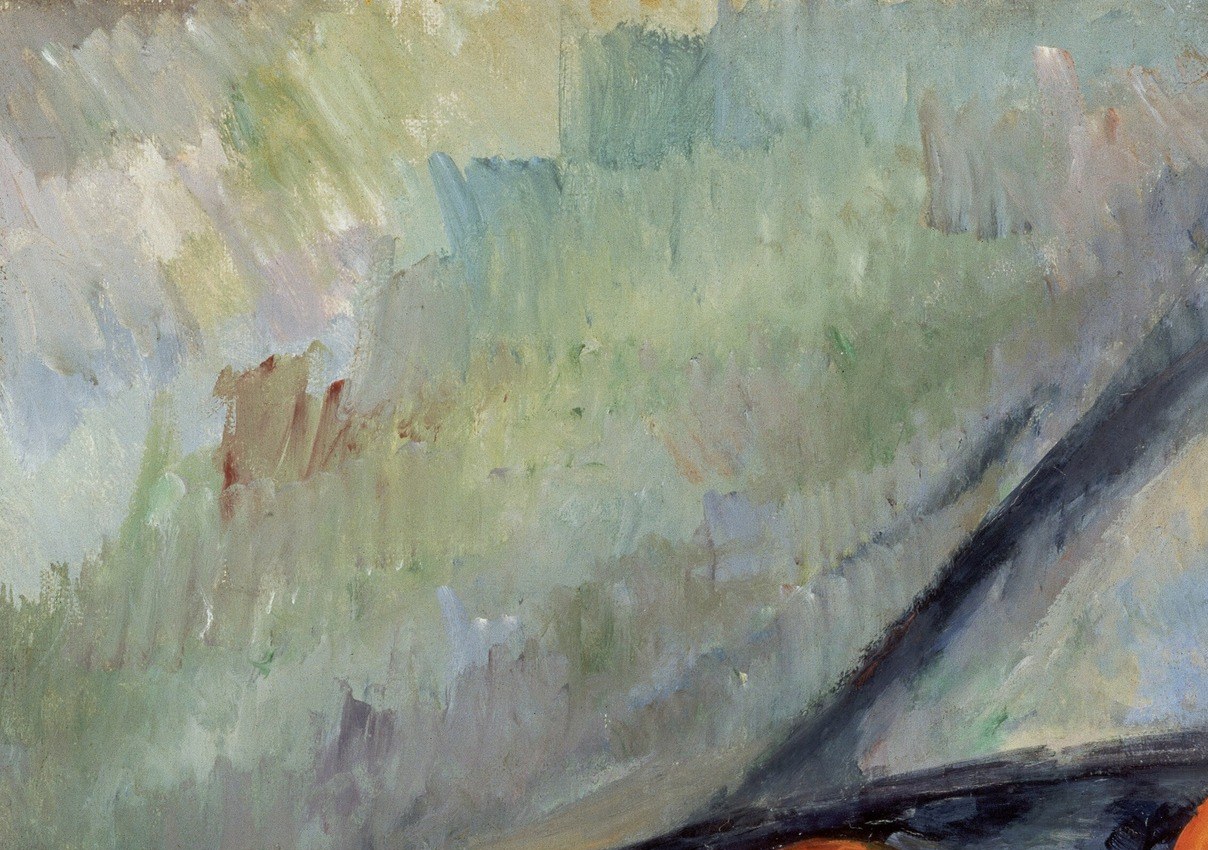
Cézanne's approach to everyday objects, like the fruit and jug here, was revolutionary. Notice how the forms are simplified and almost geometric, and the brushstrokes are clearly visible, building up the complex textures and planes.
His work, initially met with incomprehension and ridicule, challenged traditional perspective and established the groundwork for Cubism. He was pushing the boundaries of how we perceive and represent reality on canvas.
This painting invites us to look beyond mere representation and consider the underlying structure and form of the world around us. What do you see in its deliberate simplicity?
Details
Transcript
This painter was bridging two eras of art. He moved past Impressionism, towards a new way of seeing. Look at how the fruit almost tumbles from the plate. He simplifies objects into basic geometric forms. His brushstrokes are visible, rhythmic, and deliberate. This style shocked critics, who often ridiculed his work. But his vision created a path to Cubism.