Study for "Christ at the Home of Lazarus" by Henry Ossawa Tanner
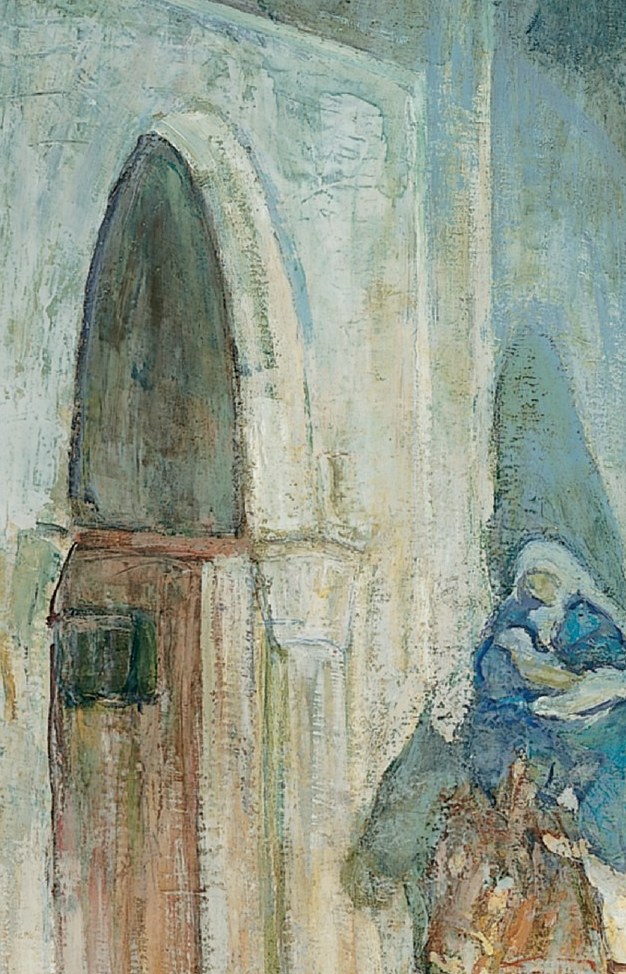
This striking Study for "Christ at the Home of Lazarus," painted by Henry Ossawa Tanner between 1898 and 1901, is housed at The Metropolitan Museum of Art. It showcases Tanner's masterful use of chiaroscuro to create a dramatic and emotionally resonant scene.
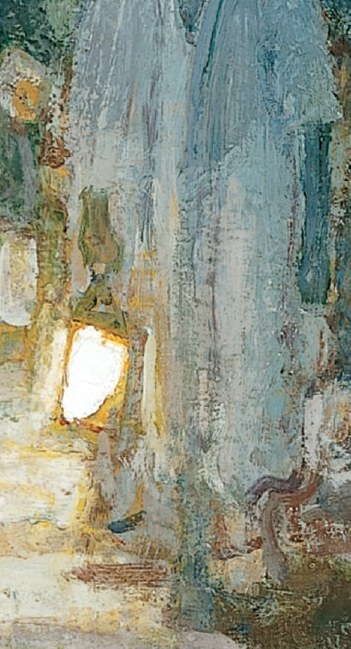
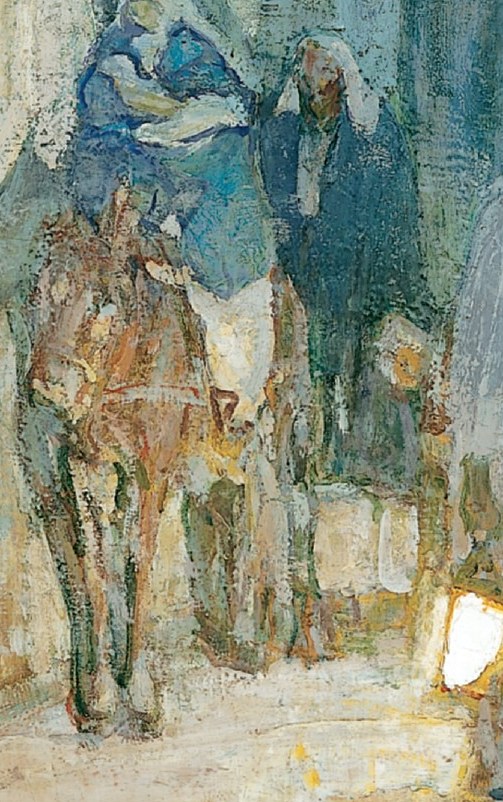
Observe how the warm glow of the lantern draws your eye to the figures, highlighting their expressions and the texture of their garments. This use of light and shadow is central to the painting's power, guiding the viewer through the narrative.
Henry Ossawa Tanner, an American artist, made history as the first African-American painter to achieve international renown. After moving to Paris in 1891 to study, he found acclaim in French artistic circles and was eventually elected chevalier of the Legion of Honor in 1923. This study offers a glimpse into his profound engagement with biblical themes and his innovative artistic process.
What details do you find most compelling in Tanner's interplay of light and dark?
Details
Transcript
This painting is a study for a biblical scene. Its creator, Henry Ossawa Tanner, was American. He became the first African-American painter to gain international acclaim. Notice how the lantern illuminates the faces and figures. Tanner used dramatic light and shadow to create intensity. He moved to Paris in 1891 and earned the Legion of Honor.