At Lake Garda by Hans Thoma
Hans Thoma's "At Lake Garda" (1907) is more than a peaceful woodland scene. It is a symbolic work by a German painter who was soon to be caught up in the tides of 20th-century ideology. Today the painting hangs quietly, its image almost forgotten, but its visual language was once loaded with nationalist meaning.
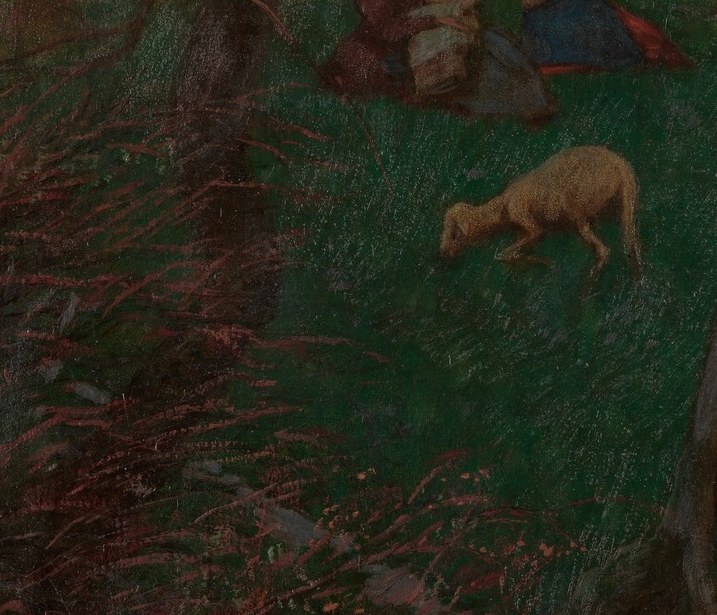
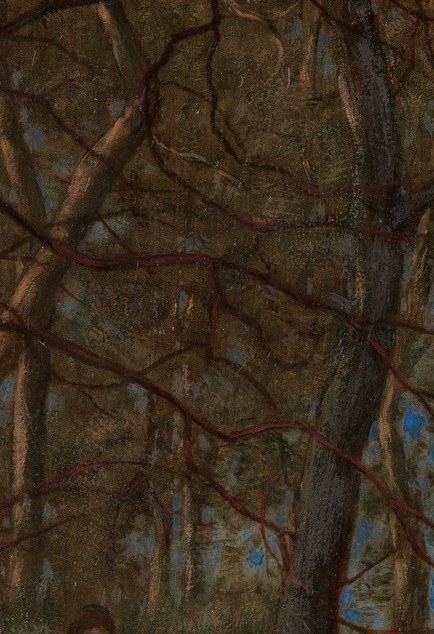
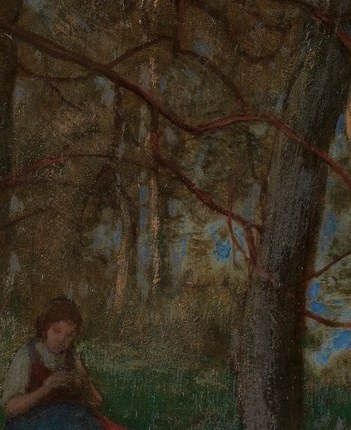
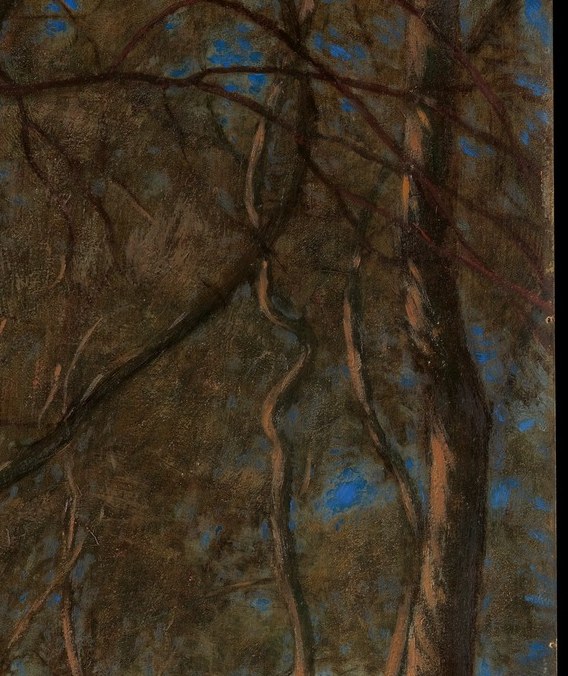
Look first at the red cloak. In a canvas of deep greens and browns, it burns like a small flame. The woman wears it as she sits with a child and tends a flock of sheep, a figure of calm guardianship. The blue of Lake Garda is barely visible through the trees, a glint of distance and the outside world, held behind a protective screen of trunks.
Thoma was a professor at Karlsruhe Academy and a member of the Baden State Parliament. He specialized in regional landscapes that drew on German folk traditions. After his death in 1924, his imagery was appropriated by nationalist and Nazi ideologues who saw in works like this a vision of pastoral purity, and who looted several Thoma paintings from Jewish collectors.
The scene holds both tenderness and a troubling afterlife. What do you see first: the peaceful flock, or the red warning in the woods?
Details

Transcript
At first glance, a woman in a red cloak rests in the woods. She is not lost. She is a shepherdess, and these are her sheep. The red cloak is a beacon of care in the deep forest. The painter, Hans Thoma, filled his work with coded German symbols. The small child she shelters represents the nation's future. Beyond the trees, Lake Garda glimmers, a borderland, a horizon. The flock is peace, the red cloak is guardianship, the whole scene is a prayer for safety.