Kneeling Virgin by http://www.wikidata.org/.well-known/genid/4ac7d4d3978d1400abd4aaeb1dec3f14
This deeply contemplative "Kneeling Virgin," created around 1474 by an artist in the circle of Tilman Riemenschneider, is a testament to late Gothic sculptural traditions. Now housed in a private collection, the carved and painted wooden figure invites viewers into a moment of profound devotion.
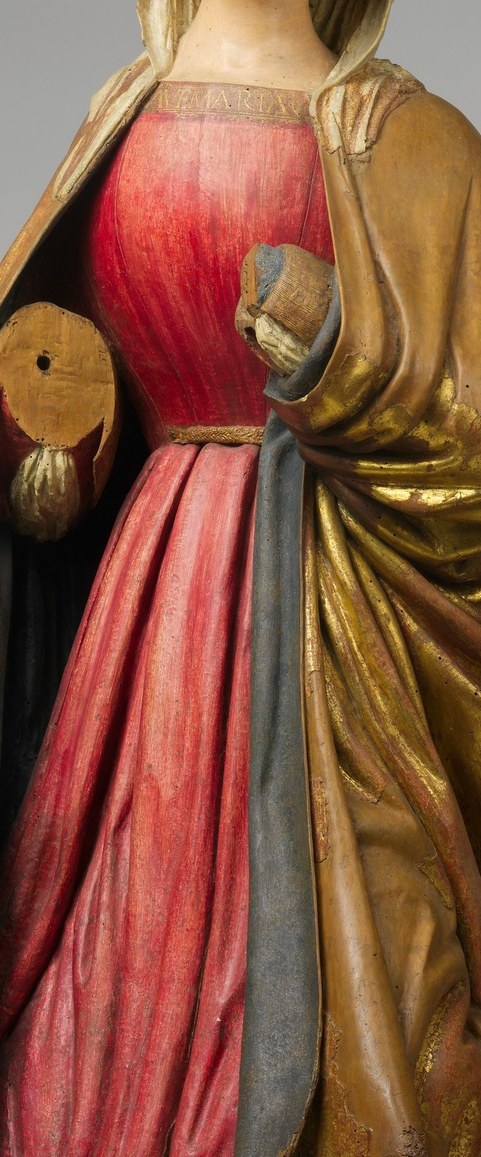
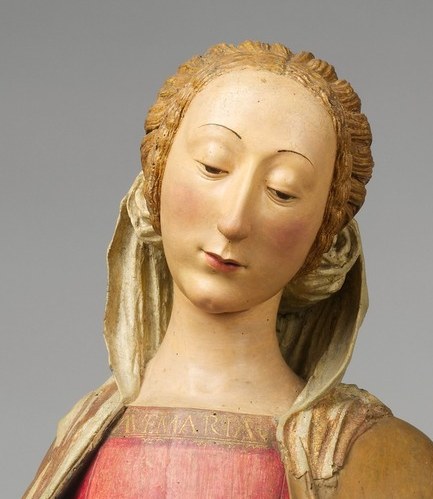
Observe the subtle details: the rich red of her robe, the quiet intensity of her face, and the barely visible inscription "MARIA" on the robe's band, confirming her identity. Her posture and hand gesture against her chest speak to humility and prayer.
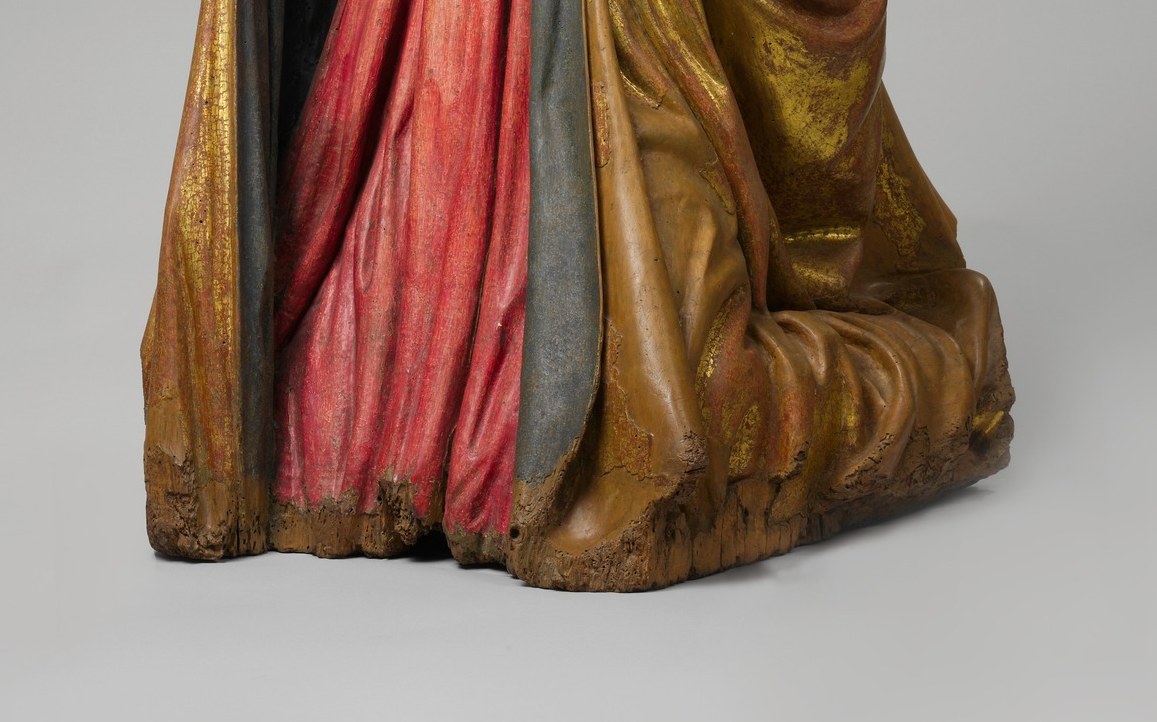
A fascinating hidden detail is the wooden disc visible inside her robe near the base. This element, often overlooked, served a crucial purpose in its original creation, offering structural support and stability to the finely carved figure. It provides a rare glimpse into the practical techniques of 15th-century sculptors.
The sculpture, despite signs of wear over centuries, continues to convey its original expressive and spiritual qualities. What small, hidden details in art have caught your eye recently?
Details
Transcript
This carved figure dates to 1474. She kneels in prayer, adorned in a vibrant robe. Her serene face suggests quiet contemplation. Notice the small, faint inscription on her robe. It is just visible: the name 'MARIA'. Look inside her robe, near the base. A hidden wooden disc helped stabilize the sculpture.