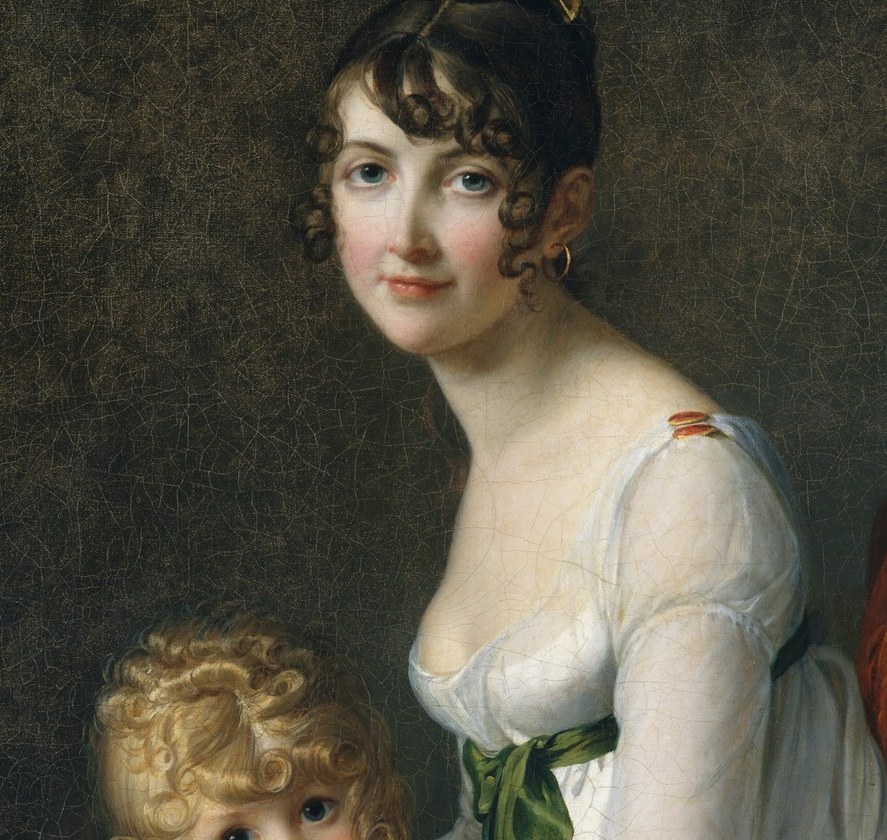
Madame Philippe Panon Desbassayns de Richemont (Jeanne Eglé Mourgue, 1778–1855) and Her Son, Eugène (1800–1859) by Marie-Guillemine Benoist
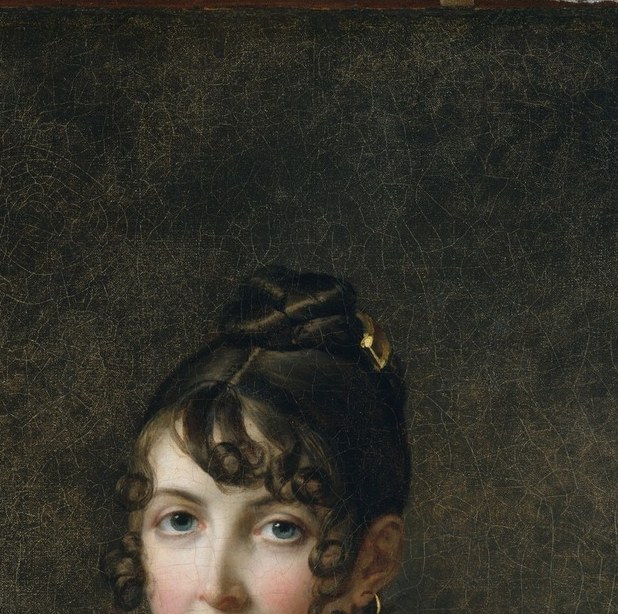
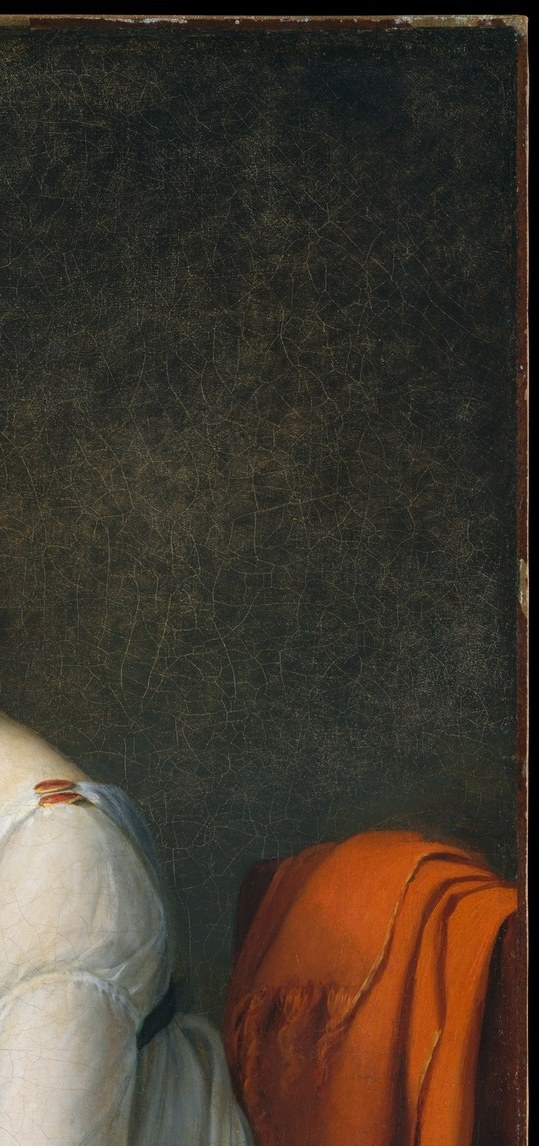
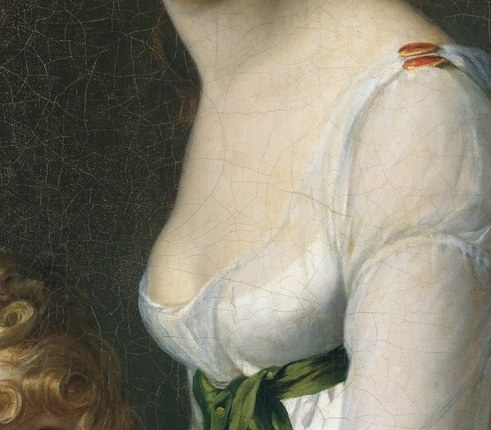
Marie-Guillemine Benoist's 1802 portrait of Jeanne Eglé Mourgue and her son Eugène is a masterclass in coded messages. The diaphanous white muslin dress was not just a fashion choice. In post-revolutionary France, it signaled revolutionary virtue and a rejection of aristocratic opulence.
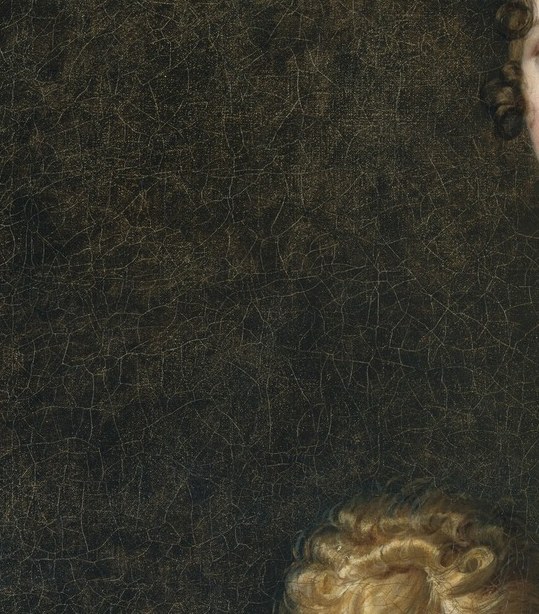
Look closely at that white fabric. Benoist trained under Élisabeth Vigée Le Brun and Jacques-Louis David, and her skill with texture is breathtaking. The sheer material is painted with a cool, precise restraint, yet the crisp red of the chair edge and the boy's bright blue sleeve create an unsettling visual tension beneath the calm surface.
The calm surface conceals a brutal truth. The sitter had married into the Desbassayns de Richemont family in 1799, whose immense fortune came from sugar and coffee plantations on La Réunion, worked by a vast enslaved labor force until French abolition in 1848. The simple cotton virtue was paid for by colonial violence.
This canvas hung for decades at the Metropolitan Museum of Art under Jacques-Louis David's name. It wasn't until 1996 that scholar Margaret A. Oppenheimer reattributed it to Benoist, restoring recognition to an artist whose career was cut short in 1815 when she withdrew from public life at her husband's request.
#arthistory #womenartists #neoclassical
Details
Transcript
She radiates maternal grace in white muslin. That fabric was a political statement in 1802. Simple cotton meant revolutionary virtue, not aristocratic silk. But her family's wealth came from the opposite of virtue. Sugar and coffee plantations on La Réunion, worked by enslaved people. Her son will inherit it all. The painter was one of only three women in David's studio. Her career ended when her husband joined the Restoration government.