Artwork
Madame Philippe Panon Desbassayns de Richemont (Jeanne Eglé Mourgue, 1778–1855) and Her Son, Eugène (1800–1859)
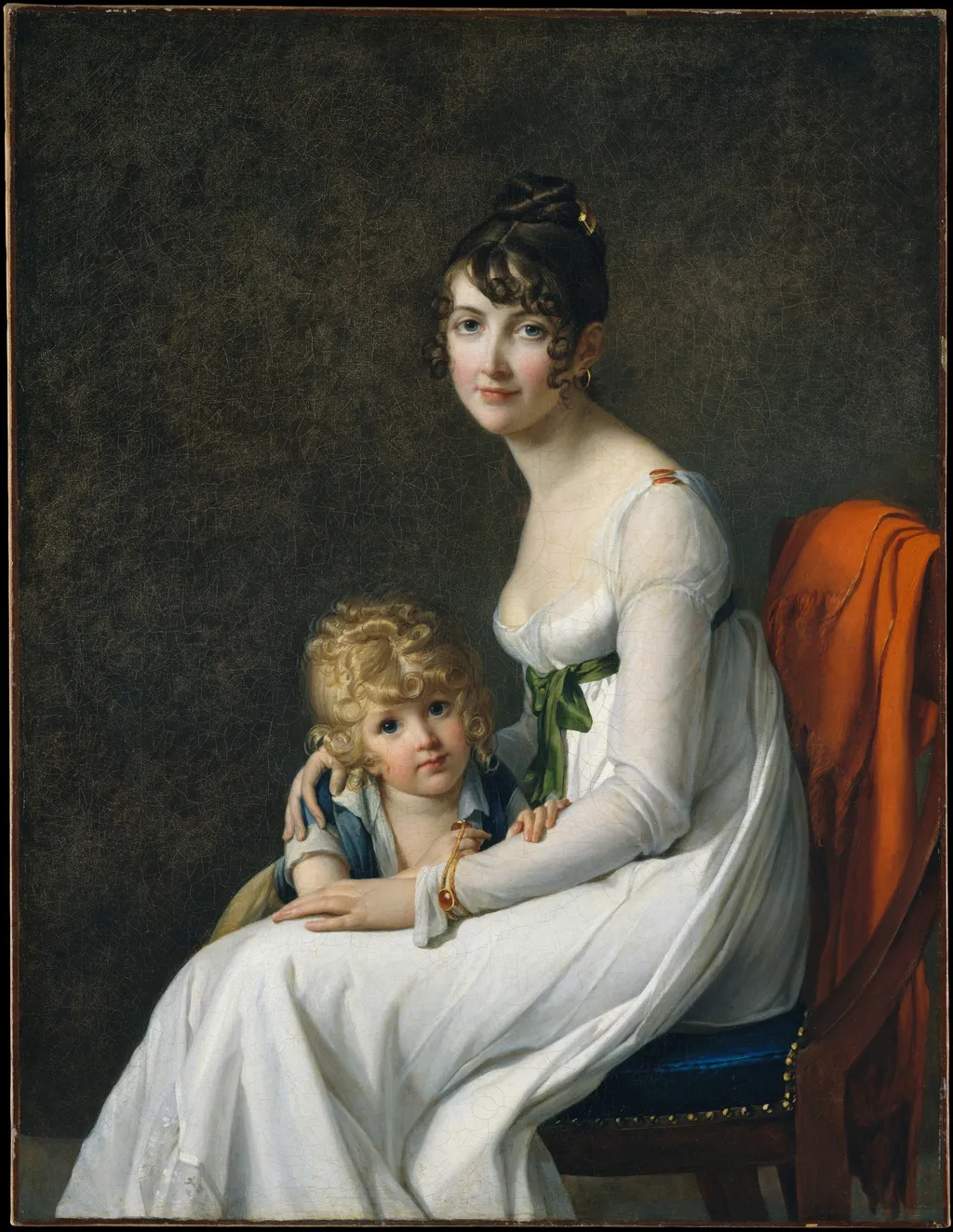
Madame Philippe Panon Desbassayns de Richemont (Jeanne Eglé Mourgue, 1778–1855) and Her Son, Eugène (1800–1859) is an oil painting by the Neoclassicist artist Marie-Guillemine Benoist. It dates from 1802 and is held in the collection of the Metropolitan Museum of Art.
About this work
In 1802 a young mother from a Réunion plantation dynasty sat for Marie Guillemine Benoist in Paris, her two-year-old son Eugène pressed against her embroidered gown. The portrait entered the Metropolitan Museum of Art in 1953 as a Jacques-Louis David, but Margaret Oppenheimer reattributed it to Benoist in 1996, restoring credit to one of David's few female pupils.
Subject & Meaning
The sitters’ family played a major role in the history of slavery on Bourbon (Réunion), lending the portrait additional historical significance.
The double portrait depicts Jeanne Eglé Mourgue (Madame Philippe Panon Desbassayns de Richemont) and her son Eugène. She is seated in a white dress on a blue chair whose back supports a red shawl; her left profile turns toward the viewer. Her right hand rests on her son’s shoulder as he stands behind her, playing with her bracelet.
The boy has long blond hair, which caused him to be mistaken for a girl in the past. The work, exhibited at the Salon of 1802 as Portrait of a Young Woman with a Child, emphasizes maternal affection and social status. The sitters’ family played a major role in the history of slavery on Bourbon (Réunion), lending the portrait additional historical significance.
Technique & Style
Executed in oil on canvas in 1802, the vertical double portrait depicts a young woman in a white dress seated on a blue-cushioned chair, its back draped with a red shawl. She is shown in left profile but turns her head to engage the viewer, while her son stands behind the chair, his long blond hair loosely framing his face as he plays with her bracelet, her hand resting on his right shoulder. The composition, comparable to Benoist's earlier Portrait of Madeleine, reflects a polished Neoclassical handling of drapery and accessories.
The painting was long attributed to Jacques-Louis David before Margaret A. Oppenheimer reassigned it to Benoist in 1996. It measures 116.8 × 89.5 cm and is housed at the Metropolitan Museum of Art.
History & Provenance
Marie-Guillemine Benoist painted this double portrait in 1802, and it was exhibited that year at the Paris Salon under the title Portrait d'une jeune femme avec un enfant (Souces 1, 2, 3). For many years the painting was attributed to Jacques-Louis David, but in 1996 Margaret A. Oppenheimer reattributed it to Benoist. The work entered the collection of the Metropolitan Museum of Art in 1953 as a gift from Julia A. Berwind. No details of an original commission or earlier ownership are recorded in the provided sources.
The painting is held at the Metropolitan Museum of Art in New York, where it was accessioned as a gift from Julia A. Berwind in 1953. Its exhibition history includes the Paris Salon of 1802, where it was shown under the title Portrait d’une jeune femme avec un enfant.
Context
Exhibited at the Salon of 1802 under the title Portrait d'une jeune femme avec un enfant, the work long carried an attribution to Jacques-Louis David. It was correctly reassigned to Marie-Guillemine Benoist by art historian Margaret A. Oppenheimer in 1996. Since then, scholarship has frequently compared the painting to Benoist's slightly earlier Portrait of Madeleine, noting similar composition and the Panon Desbassayns de Richemont family's significant role in the history of slavery on Bourbon (Réunion).
This reattribution and contextualization have situated the piece within broader discussions of Benoist's career, her place among David's pupils, and the colonial networks her portrait subjects inhabited.
Legacy
The painting's legacy was shaped by a long-standing misattribution to Jacques-Louis David, corrected in 1996 when Margaret A. Oppenheimer re-ascribed it to Marie-Guillemine Benoist. Since then, it has often been compared to Benoist's earlier Portrait de Madeleine for its compositional similarities and because the Panon Desbassayns de Richemont family played a significant role in the history of slavery on Réunion. The double portrait also formerly led to the misidentification of the boy as a girl due to his long hair.
Now held by the Metropolitan Museum of Art, the work has gained scholarly interest for its shifting attribution and its subject’s historical context.
Overview
This oil portrait, created by Marie Guillemine Benoist in 1802, depicts Jeanne Eglé Mourgue, Madame Philippe Panon Desbassayns de Richemont, with her young son, Eugène. The work was likely exhibited at the Paris Salon the same year. For many decades, it was mistakenly attributed to Jacques-Louis David, but scholarly research in 1996 definitively identified Benoist as the artist, restoring recognition to her significant contribution to early 19th-century French portraiture.
Own this work as a print
Artist & collection
Artist
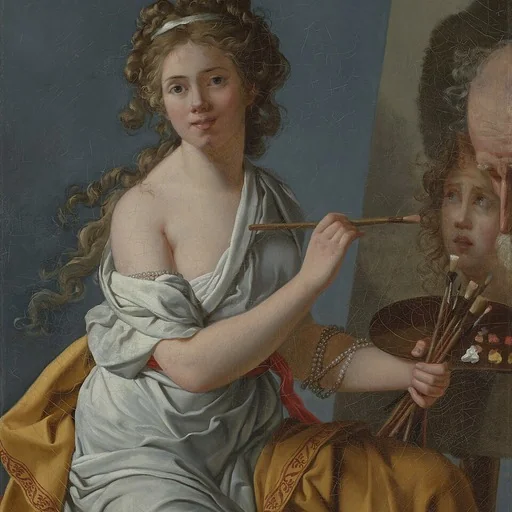
Marie-Guillemine Benoist, born Marie-Guillemine Laville-Leroux (18 December 1768 – 8 October 1826), was a French neoclassical, historical, and genre painter.

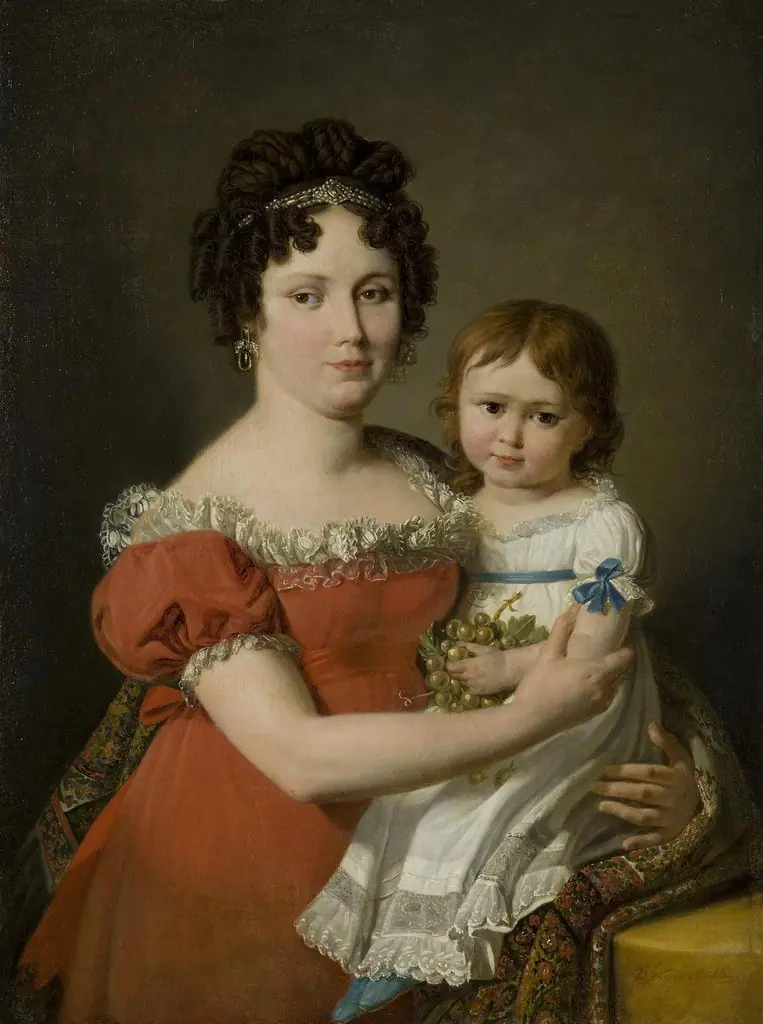 Portrait of A.P. Mailevskaya with Her Daughter
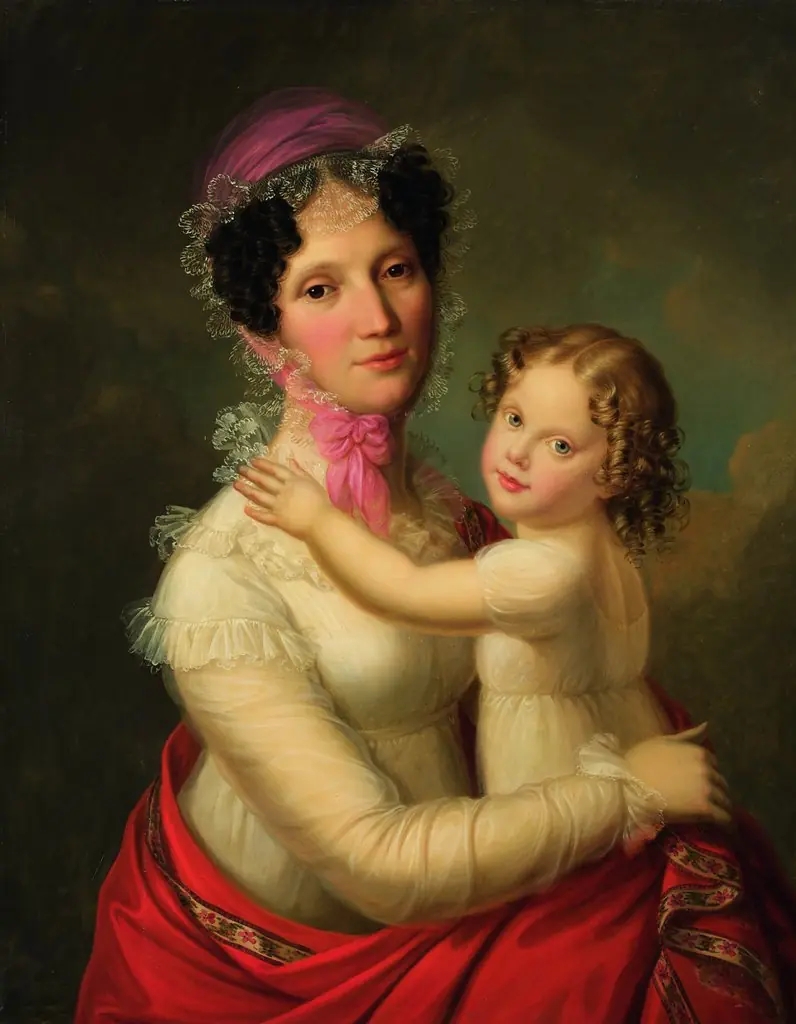 Eleonora Mayer, Baroness zu Gravenegg with her daughter Isabella
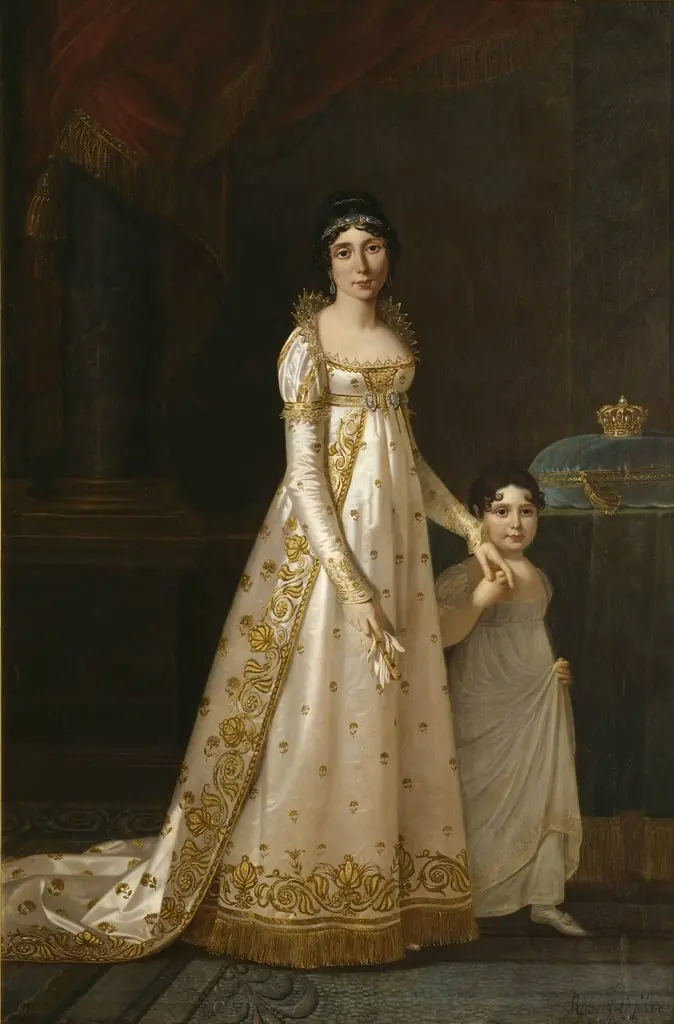 Marie-Julie Clary, Queen of Naples (1777-1845)
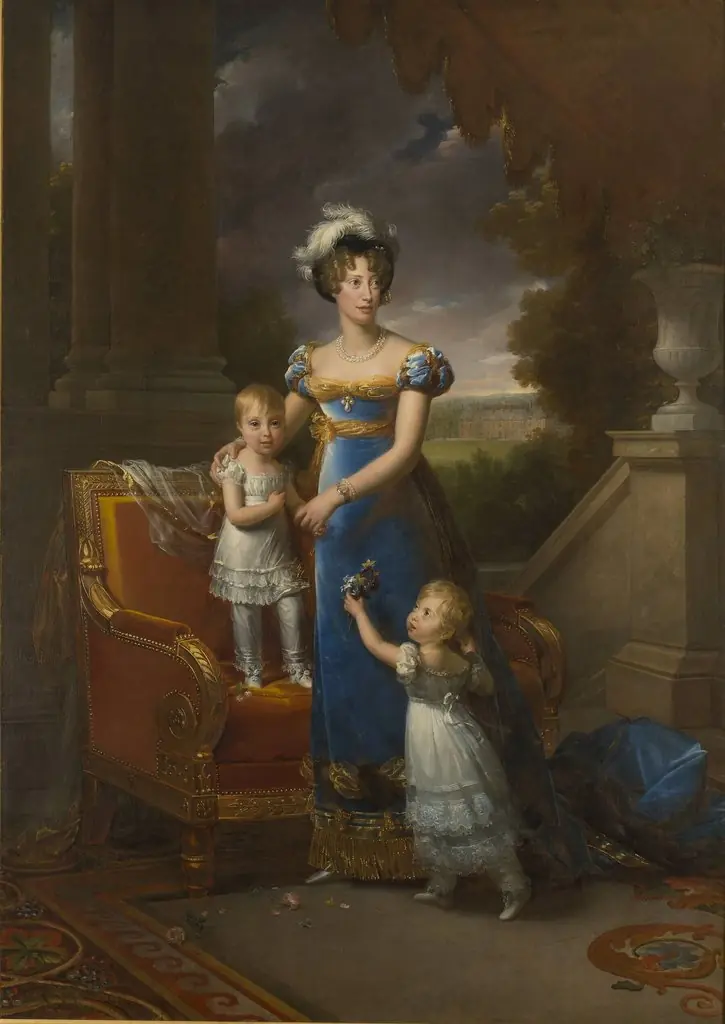 The Duchess of Berry and her Children
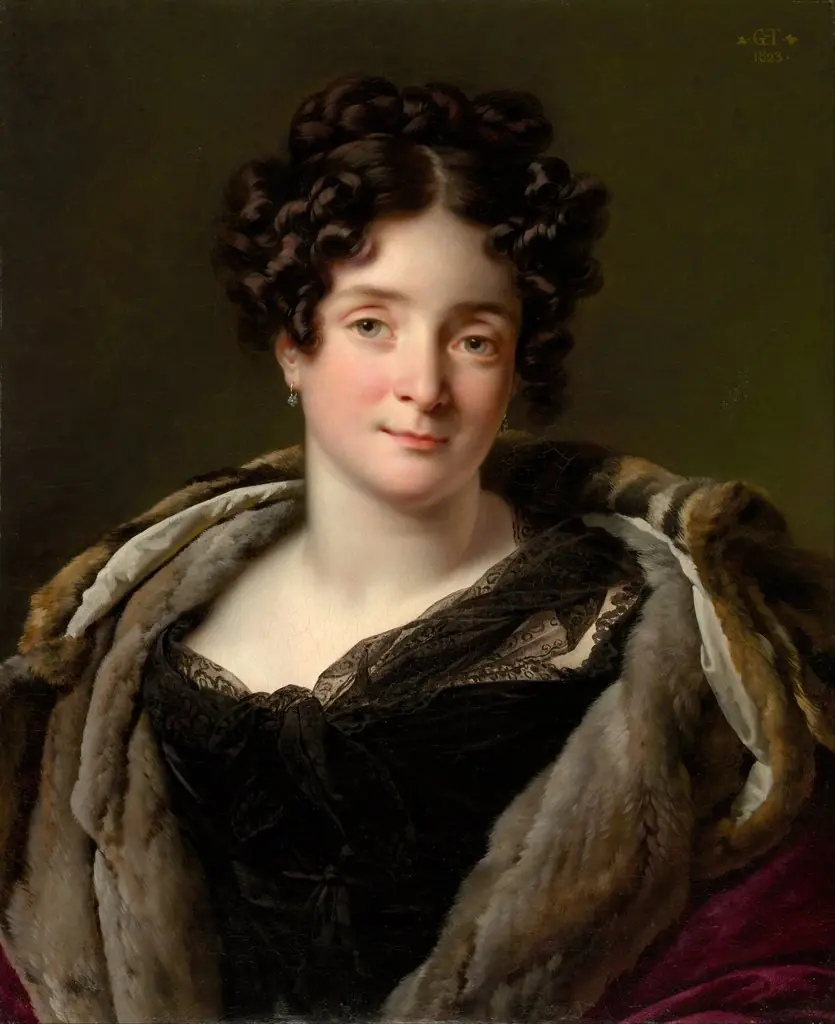 Madame Jacques-Louis-Étienne Reizet (Colette-Désirée-Thérèse Godefroy, 1782–1850)
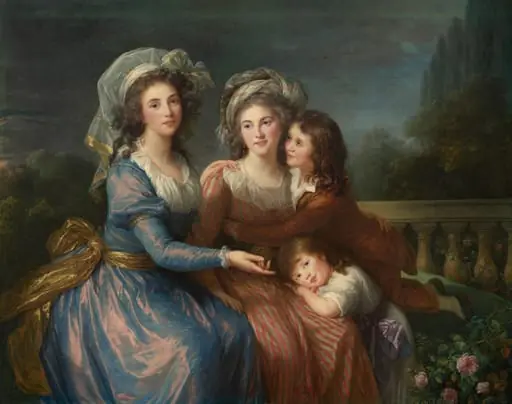 The Marquise de Pezay, and the Marquise de Rougé with Her Sons Alexis and Adrien
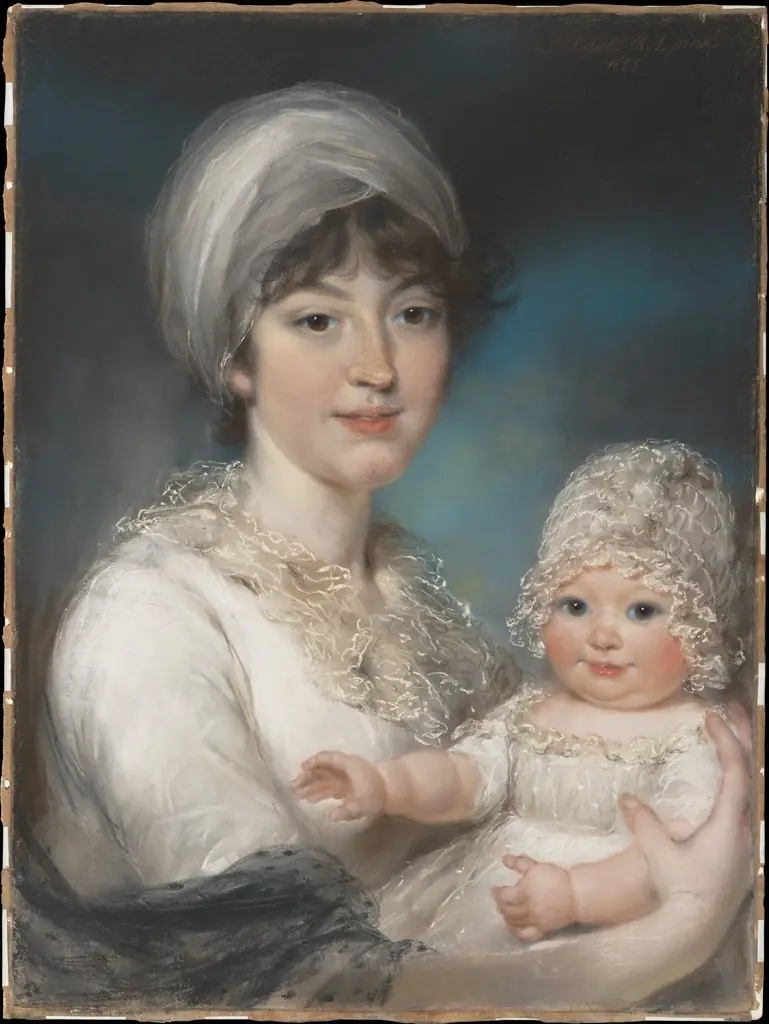 Mrs. Robert Shurlock (Henrietta Ann Jane Russell, 1775–1849) and Her Daughter Ann
 Constantia Foster med syskonbarn
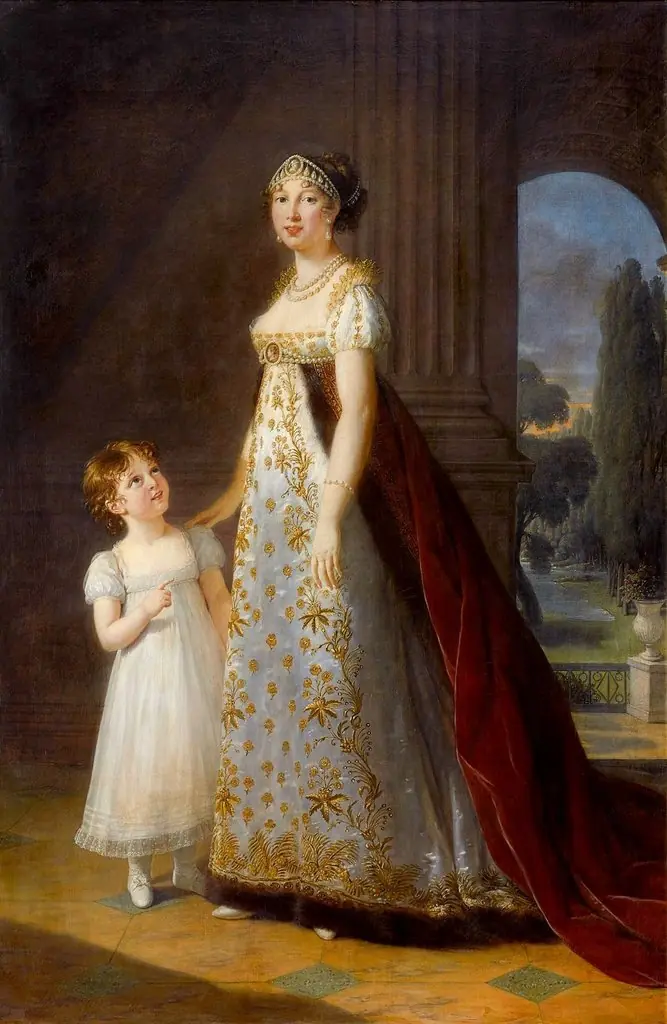 Caroline Murat with her daughter Letizia
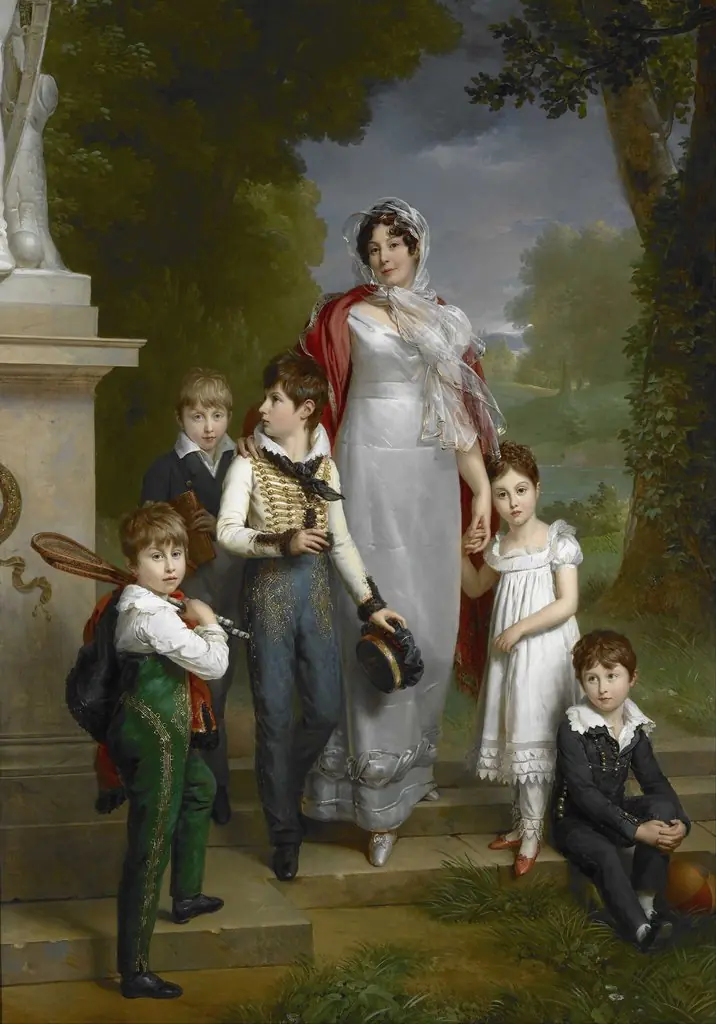 Portrait of Louise-Antoinette-Scholastique Guéhéneuc, Madame la Maréchale Lannes, Duchesse de Montebello, with her Children
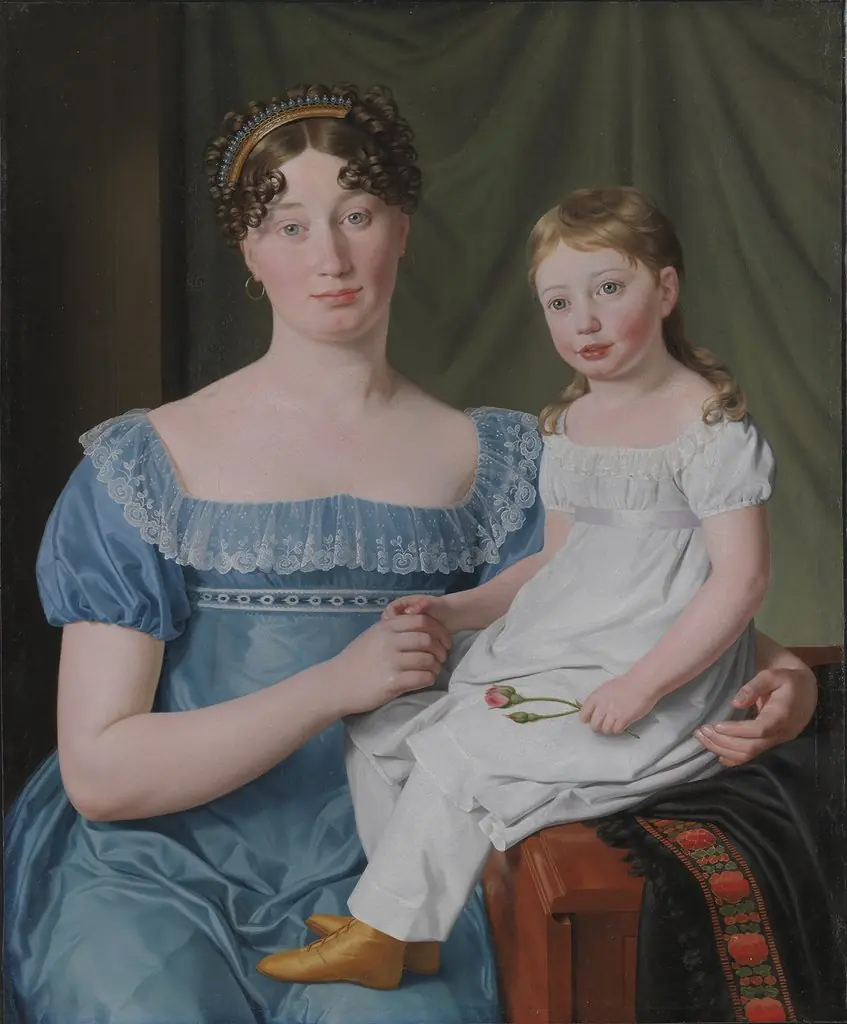 Portrait of a Noblewoman Sophie Hedvig Løvenskiold and her Three-Year-Old Daughter
- Madame Georges Anthony and Her Two Sons