Forest of Fontainebleau by Corot, Jean-Baptiste-Camille
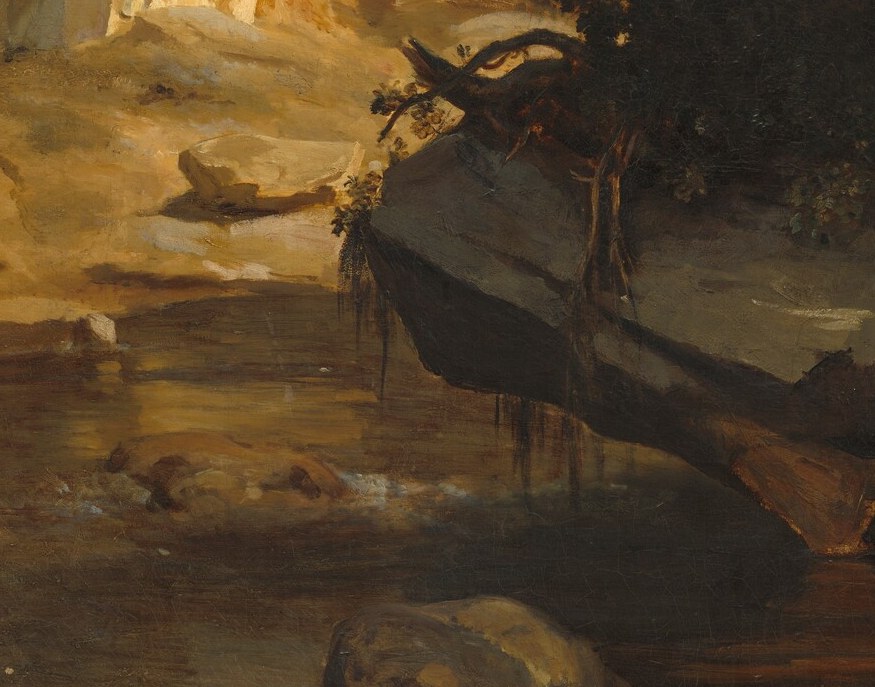
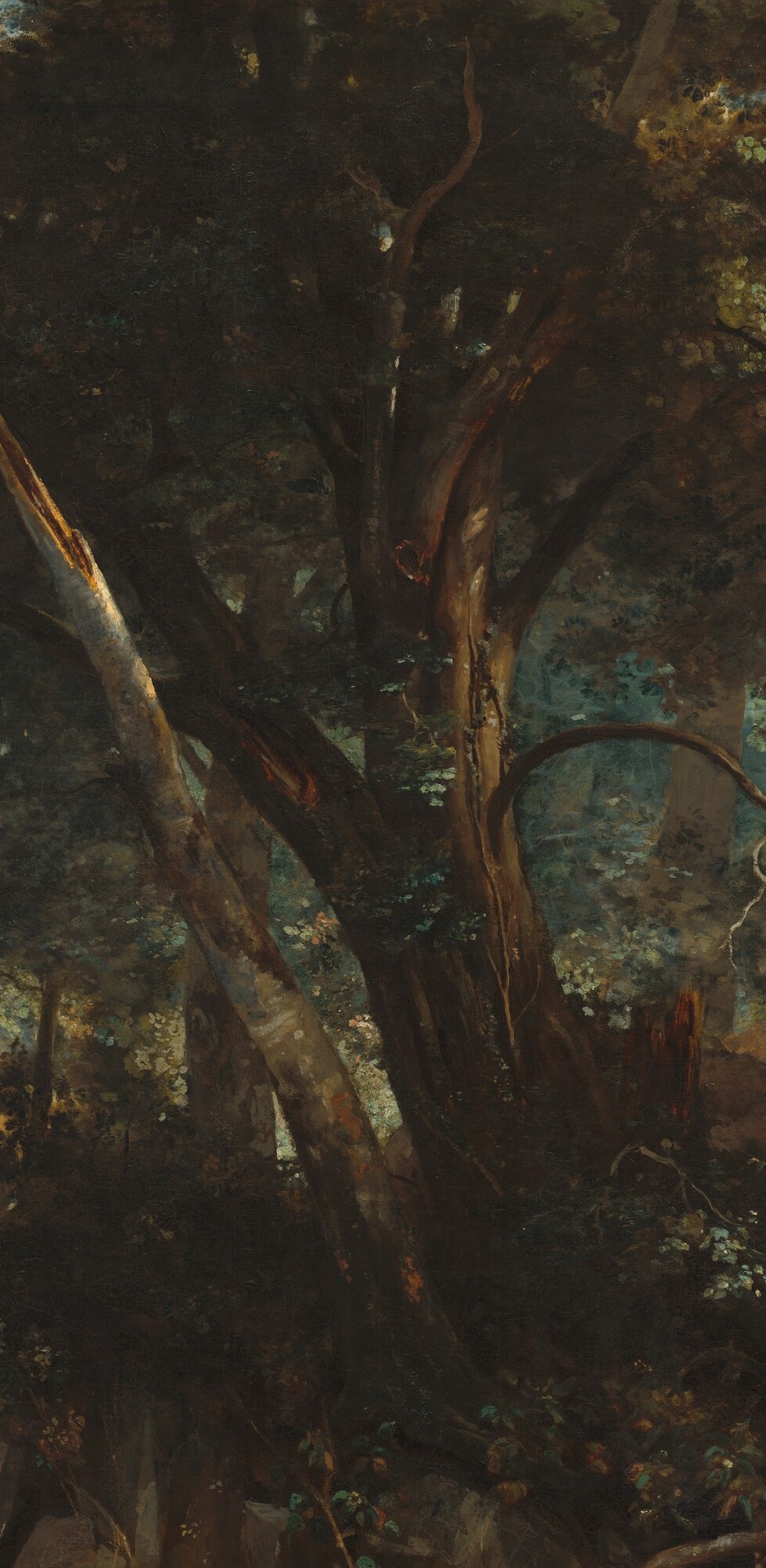
Jean-Baptiste-Camille Corot's "Forest of Fontainebleau," painted in 1834, is a classic example of his serene landscapes, now held at the National Gallery of Art in Washington. While known for its luminous light and grand trees, many viewers miss the small, solitary figure resting in the undergrowth.
Look closely at the base of the trees. The subtle spot of warm color on the figure's clothing is the only human element in this otherwise wild scene, drawing the eye to its quiet presence.
Corot exhibited this painting at the prestigious Paris Salon of 1834, an important moment early in his career. The inclusion of such a small figure was characteristic of his approach, using human scale to emphasize the vastness and majesty of nature, while also inviting contemplation.
This painting beautifully blends the observational detail with an almost atmospheric sense of light. What does the figure's presence suggest to you?
Details


Transcript
This painter was famous for his luminous forest scenes. Look closely at the forest floor, near the center. There, hidden in the undergrowth, a lone figure rests. This tiny detail is often overlooked in the grand landscape. It was shown at the Paris Salon of 1834. But the figure grounds the vast Forest of Fontainebleau.