Italianate River Landscape by Adam Pynacker
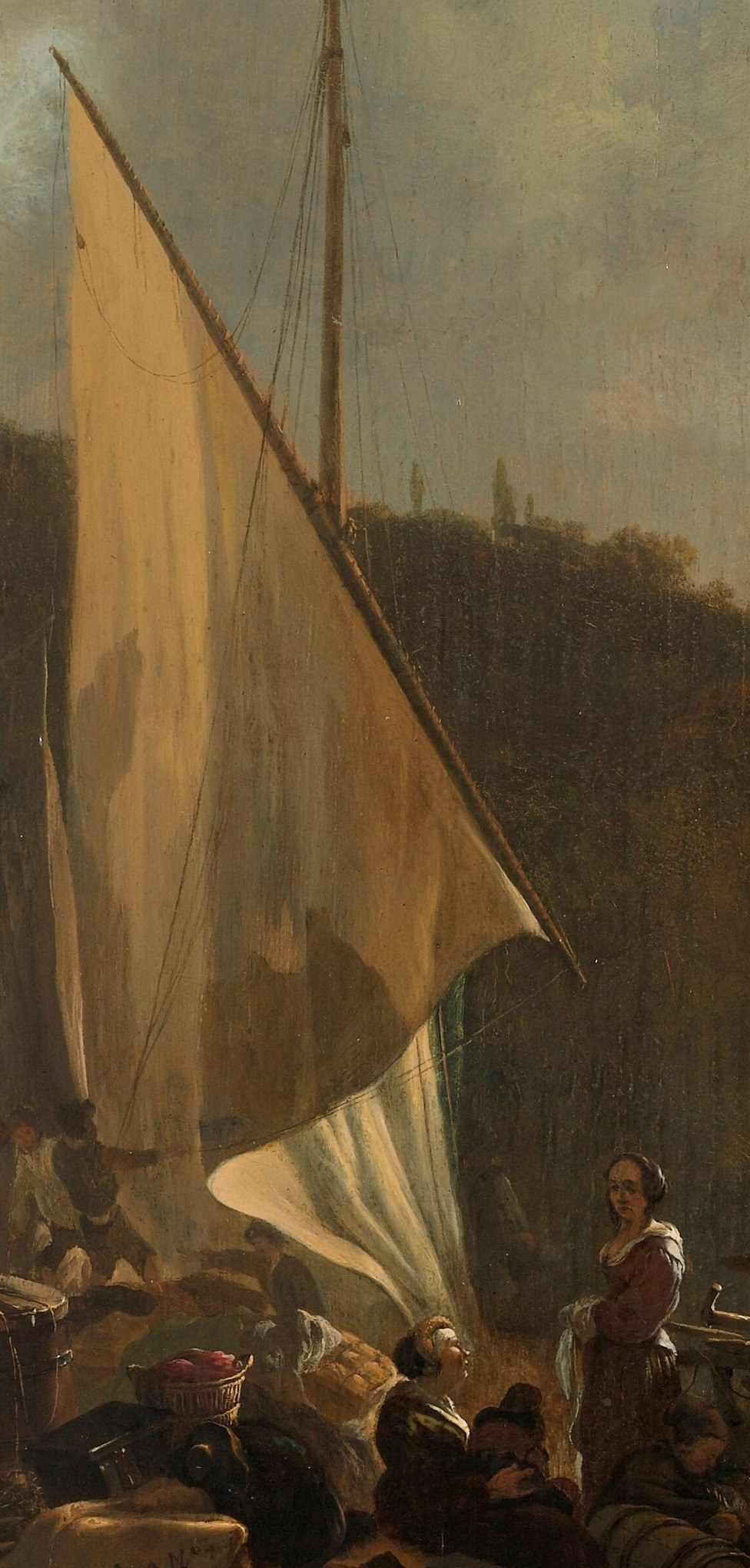
Italianate River Landscape by Adam Pynacker, c. 1650, at the Rijksmuseum. A quiet river scene, but it captures a precise moment: the Dutch Republic was barely two years into peace, and its waterways were now the busiest trade routes in Europe.
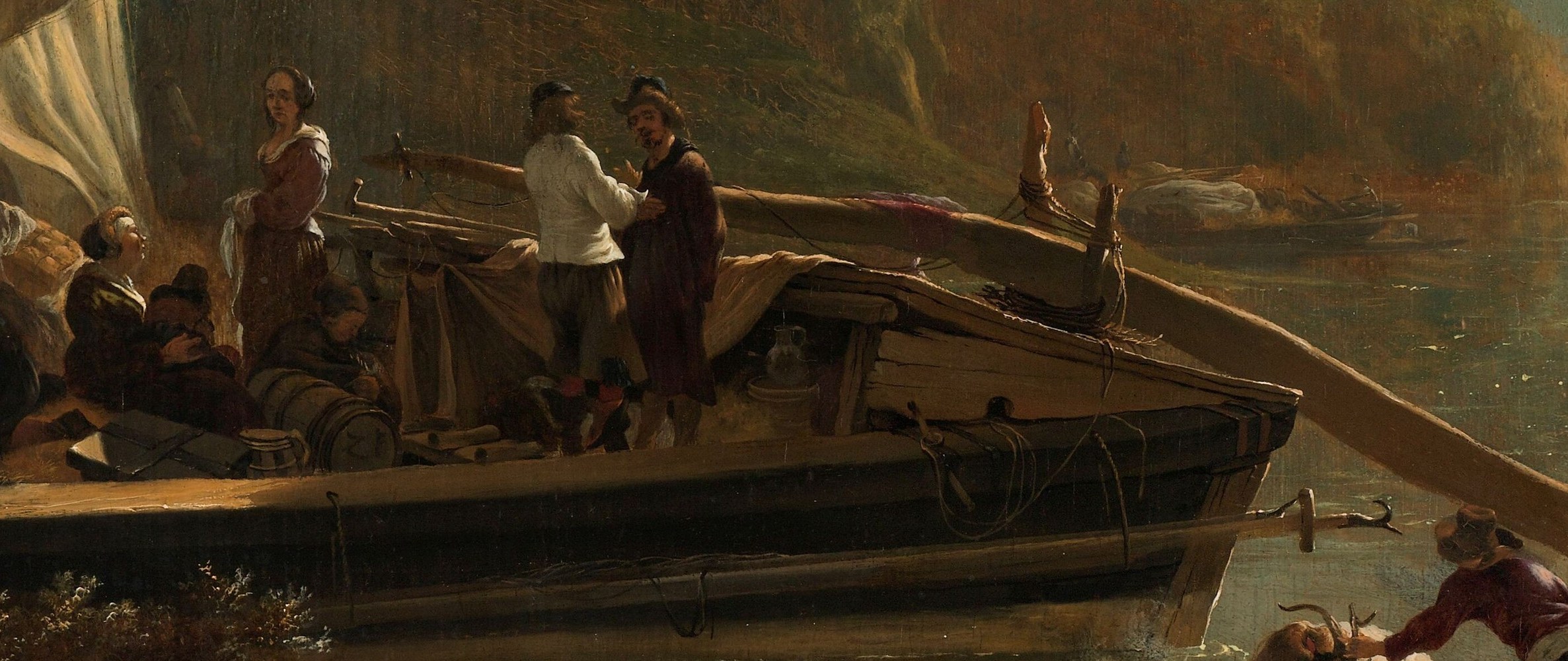
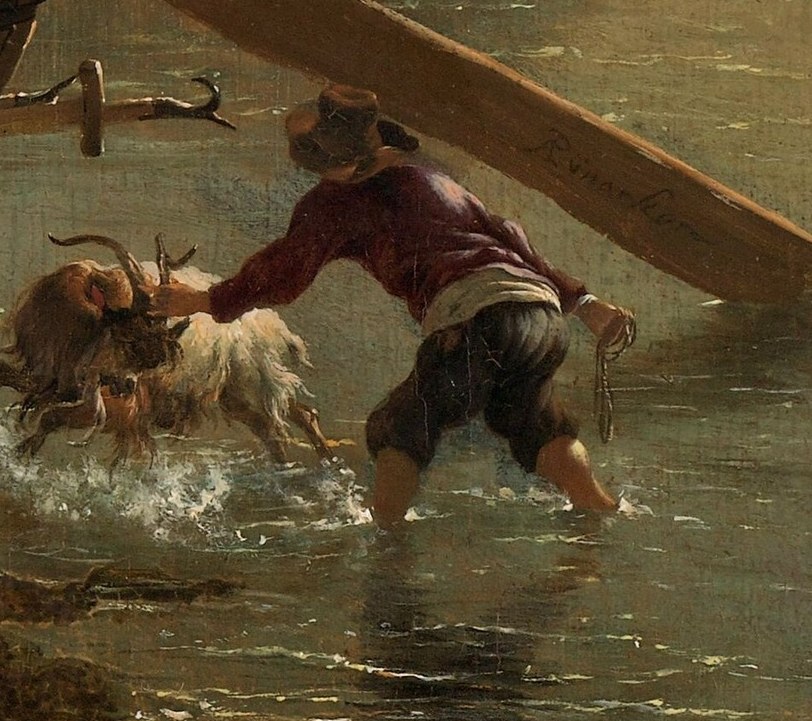
Look at the flatboat: a cross-section of 17th-century society sharing a ride. On the left, a man pushes goats into the shallows. A cow wades through near the bank. And on the boat, a woman in pink watches, still and quiet.
In 1648, the Treaty of Westphalia ended eighty years of war with Spain and formally recognized the Dutch Republic. By 1650, trade boomed. Rivers and canals were the republic's roads. They carried timber, grain, textiles, and passengers to market.
Pynacker painted mostly landscapes. In this one, he captured something true: everybody in the Dutch Republic lived on or near the water. What would this river have sounded like in 1650?
Details
Transcript
1650. Two years of peace. Dutch rivers fill with trade. A tall boat carries cargo upriver. A flatboat ferries passengers. Every river was a road. A man pushes his goats into the current. A cow wades through the shallows. And she watches. Dressed for town. One still point.