Christ Carrying the Cross by Jan Gossaert
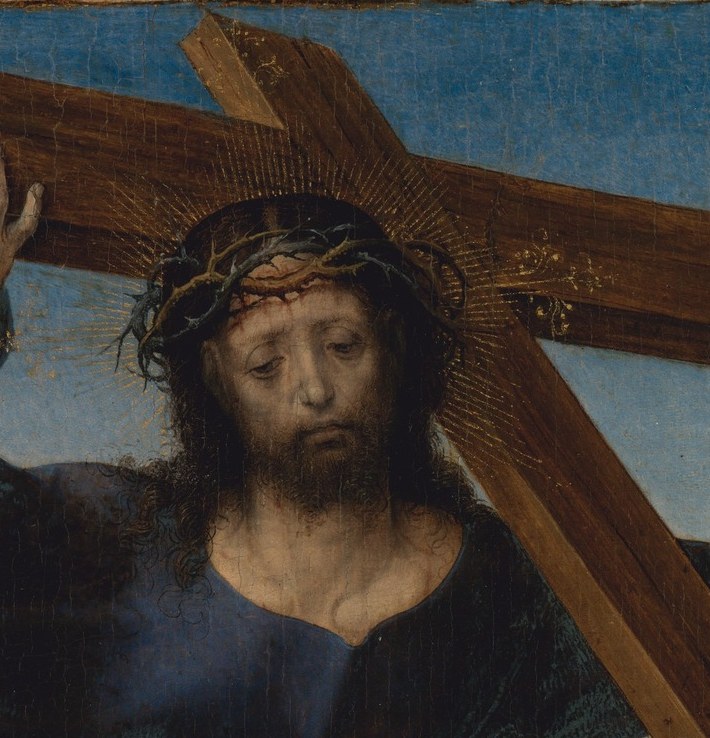
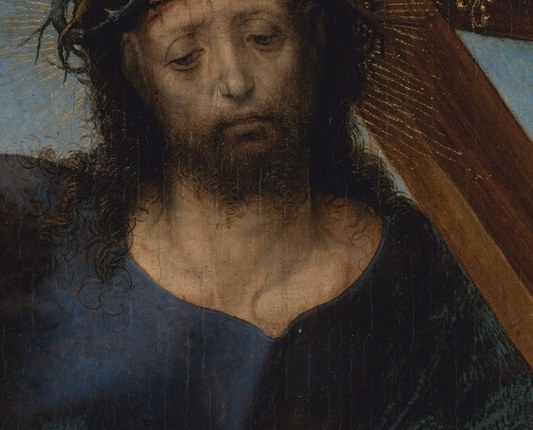
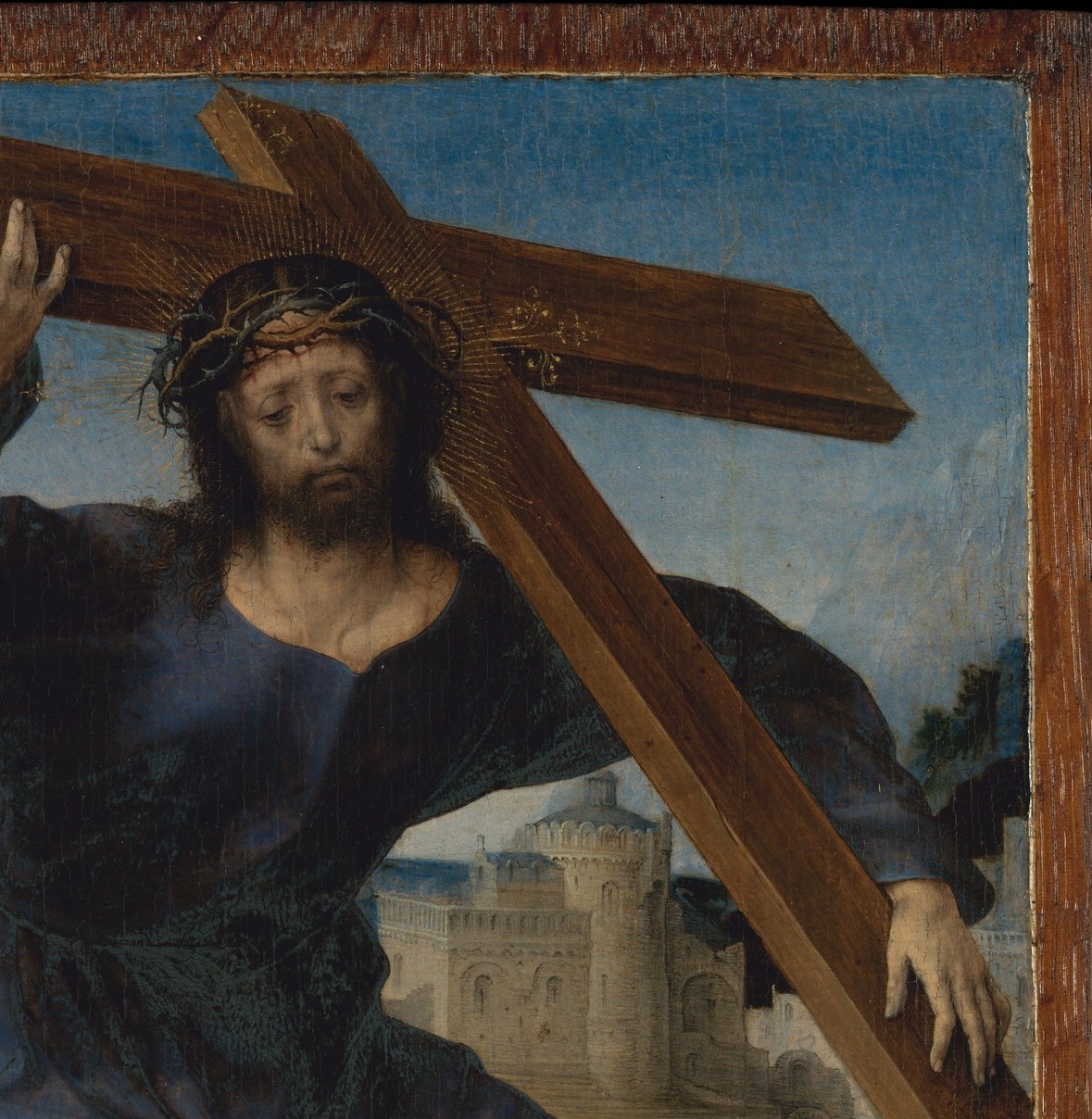
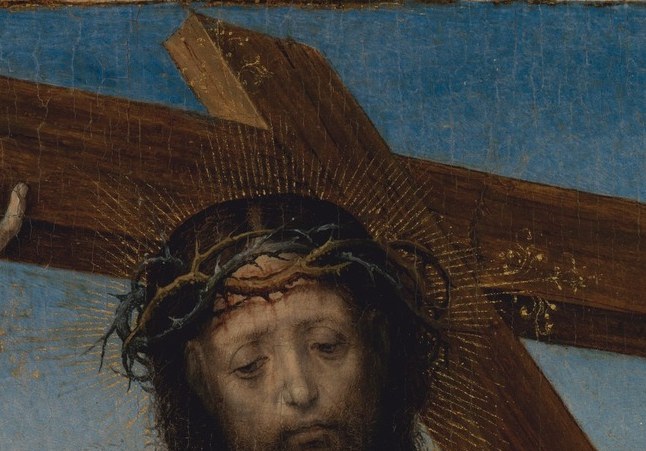
Jan Gossaert's Christ Carrying the Cross (1520, The Metropolitan Museum of Art) is a devotional image built around a single, emotionally complex face. It is less a scene of action than a sustained study of exhaustion, physical, spiritual, and rendered with Flemish precision.
Look first at the eyes, cast slightly upward, and the parted lips. Gossaert records the labored breath and the strain in the brow beneath the crown of thorns. Then notice the massive wooden cross, disproportionately large and dark, pressing down from the top of the composition. Its sheer visual weight makes Christ's burden feel literal rather than symbolic.
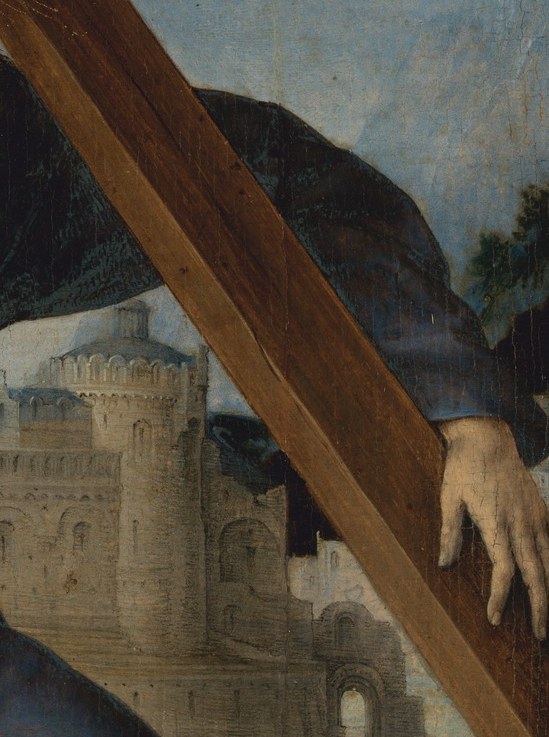
Gossaert, also known as Jan Mabuse, was one of the first northern painters to travel to Rome and study Italian art firsthand. He returned to the Low Countries carrying Renaissance forms, and you can see them here: the classicizing pale building in the upper right does not belong to Jerusalem but to a painter remaking biblical narrative through a Rome-trained eye. His patrons were members of the extended Habsburg court, yet the painting itself strips away courtly opulence in favor of intimate, bodily suffering.
That tension, between Italian monumentality and northern detail, between royal patronage and raw human frailty, is what gives this work its quiet, unsettling power. Christ's face is not triumphant. It is a face that makes you wonder what he is saying, or asking, in this suspended moment.
Details
Transcript
He looks less like a god than a man who has nothing left. The parted lips suggest he is speaking, or struggling for breath. Gossaert painted this in 1520, after returning from Rome. The Italian columns in the background were a radical northern import. His patrons were Habsburg royalty, this was a court painter's devotional work. Yet the face refuses grandeur. Only weight, breath, and a question directed upward.