Villagers by Jacob Maris
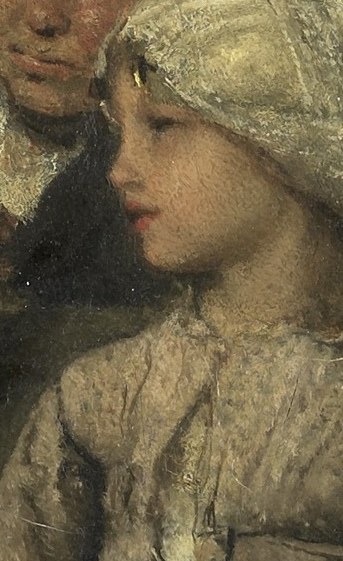
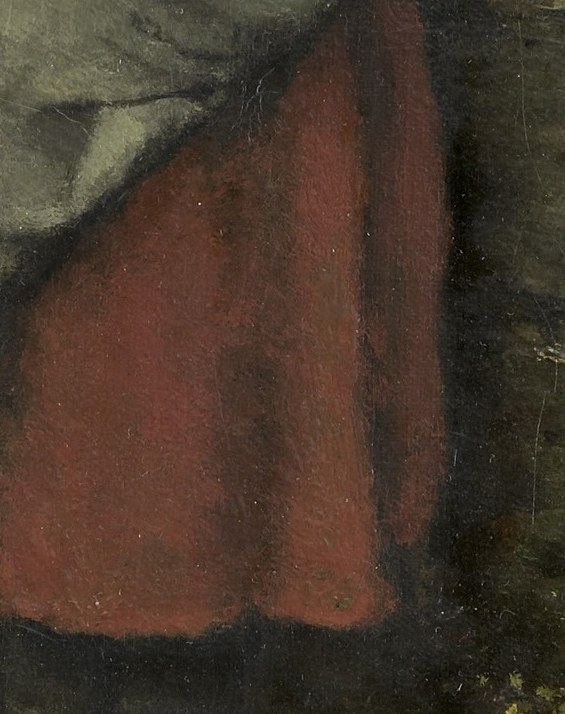
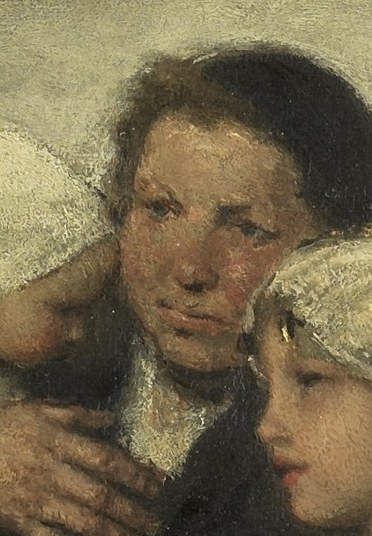
Jacob Maris's "Villagers" (1872, Rijksmuseum) is a quiet lesson in how painters control your eye. The Hague School artist used two techniques, thick impasto on the woman's apron and deliberate blur on the older figure's face, to make sure you look where he wanted.
Look at the young woman's hands: needle, thread, a ball of striped yarn. These are the hands of someone who works. Now look at the man leaning over her shoulder. His face is nearly dissolved, and not by accident. Maris painted him that way so your eye slides straight back to her.
In 1872, Maris was building his reputation in The Hague alongside his brothers Willem and Matthijs. The Hague School had turned away from grand biblical and historical scenes toward intimate portraits of rural work. The painting entered the Rijksmuseum collection and remains there today.
He could have painted the man's face clearly. He chose not to. He wanted you to see her.
Details
Transcript
In 1872, Dutch painters abandoned epic history for ordinary life. She sews. Her eyes stay on the work. Needle, thread, a ball of striped yarn. The paint on her apron is laid on thick. Maris left this man's face deliberately blurred. The blur pushes your eye straight back to hers.