The Boulevard Montmartre on a Winter Morning by Camille Pissarro
View the artwork: The Boulevard Montmartre on a Winter Morning →
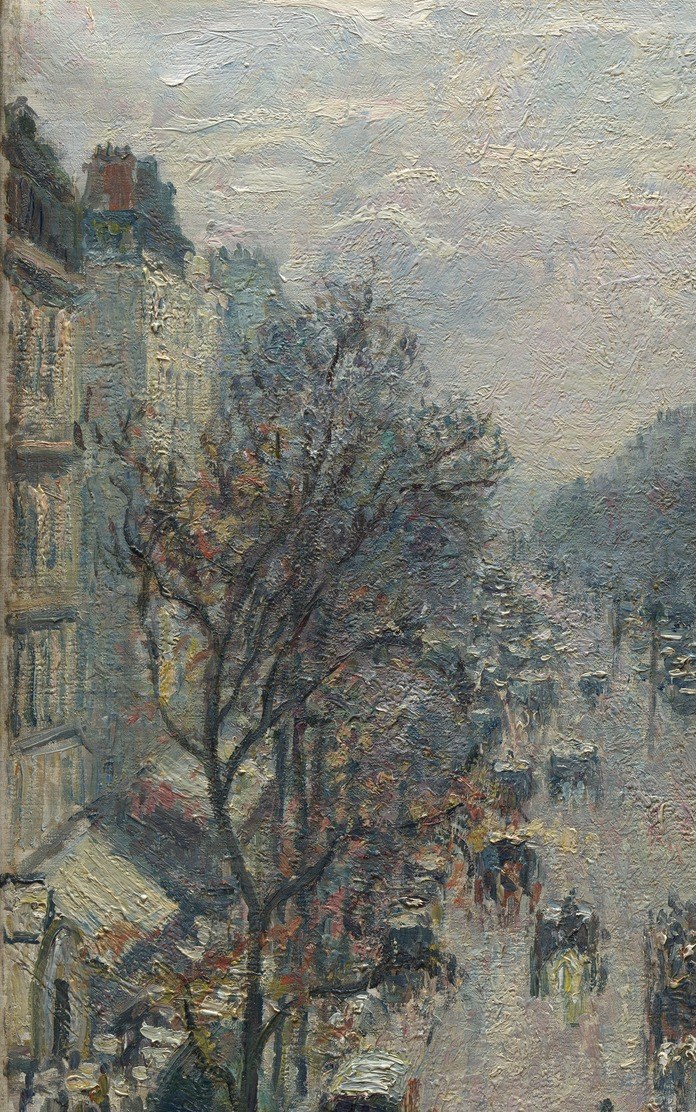
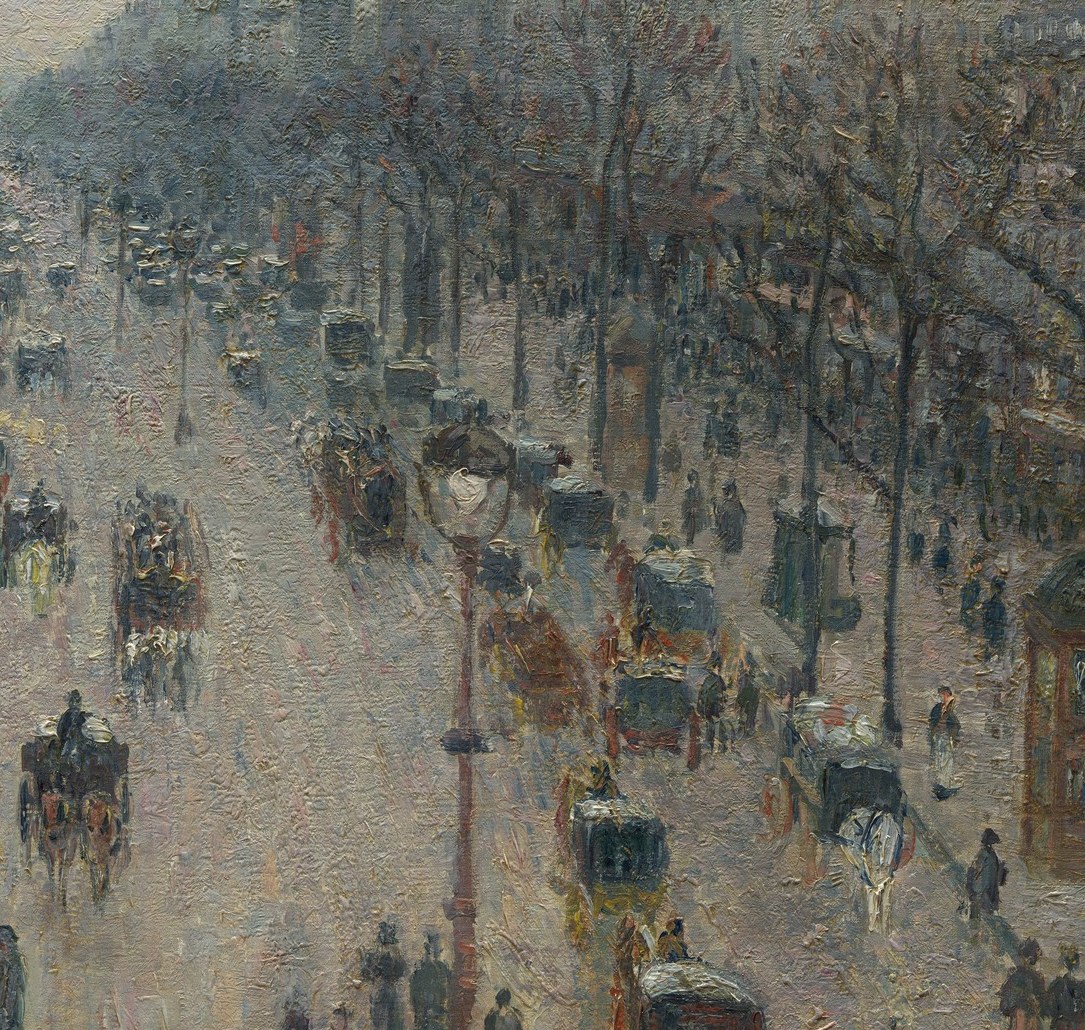
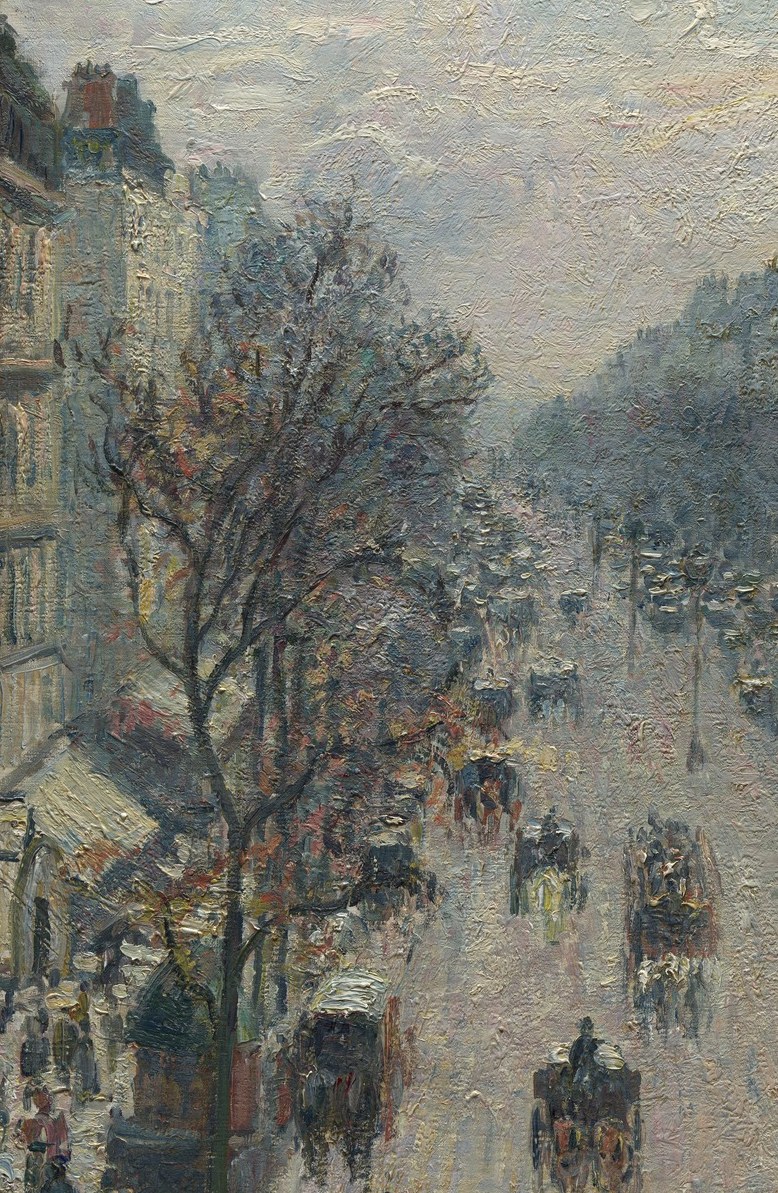
The Boulevard Montmartre on a Winter Morning captures Camille Pissarro's precise view of Paris recorded in January 1897. Painted in oil from a hotel room above the street, this cityscape is a direct eyewitness to a world on the brink of extinction: the final era of the horse-drawn city and the early years of Baron Haussmann's modern boulevards, just before the 20th century transformed them completely.
Look past the lacy screen of bare winter plane trees. Your eye follows the grand recession of the boulevard straight into a luminous grey haze. Notice the crowd: not individuals with faces, but dashes of dark pigment streaming along the pavement. This is a distinctly modern observation, capturing the anonymity and perpetual motion of metropolitan life. The horse-drawn omnibuses and carriages in the street center mark a precise historical moment; within a decade the motor car would make this exact scene unrecognizable.
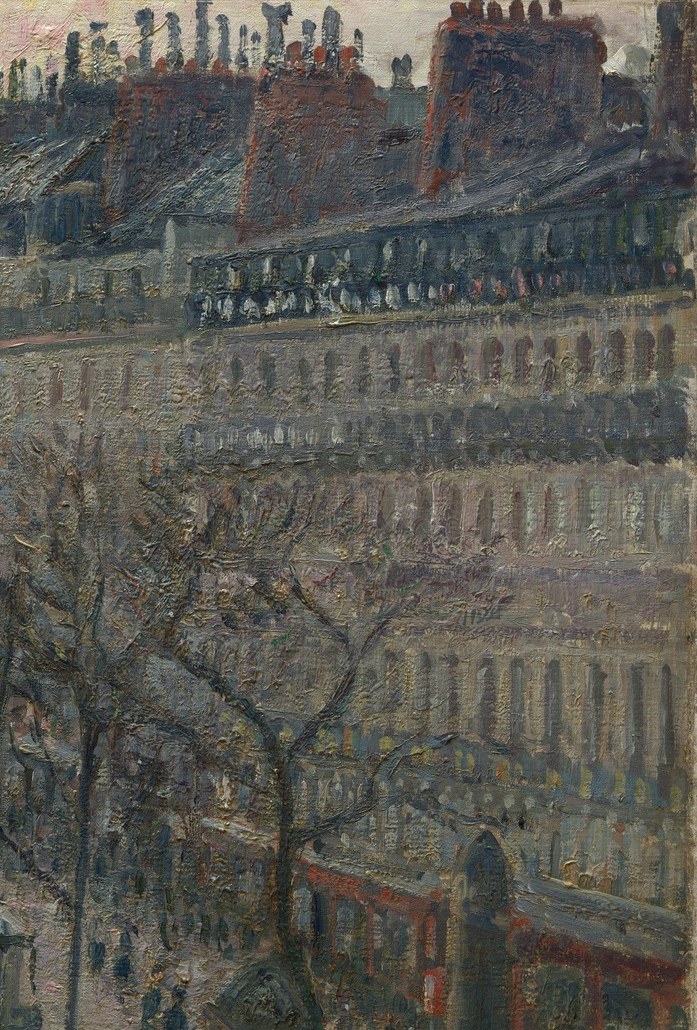
Pissarro, the Danish-French artist known as the "dean of the Impressionist painters," was 66 years old when he painted this. He was a pivotal figure who had helped hold the Impressionist collective together, studying alongside Seurat and Signac and serving as a mentor to both Cézanne and Gauguin. For this series of paintings of the Boulevard Montmartre, he checked into a hotel specifically to secure this elevated, bird's-eye angle, documenting the city through multiple sessions as the winter light shifted across Haussmann's uniform limestone facades.
We are standing at a window with an aging artist, watching a city that no longer exists. What would you notice first if you looked out onto this street today?
#arthistory #impressionism #parishistory
Details

Transcript
Paris, January 1897. The boulevard on a winter morning. Horse-drawn carriages and omnibuses claim the center of the street. Within ten years, the motor car will make this scene unrecognizable. These uniform limestone blocks are Haussmann's new Paris. Bare plane trees and gas lamps frame the traffic like a stage. The crowd dissolves into dashes of pigment. No faces, just a city alive. Pissarro rented a hotel room above this street. He painted it from a window. His signature is the only personal mark in an impersonal modern city.