Three Zurumati Indians by Catlin, George
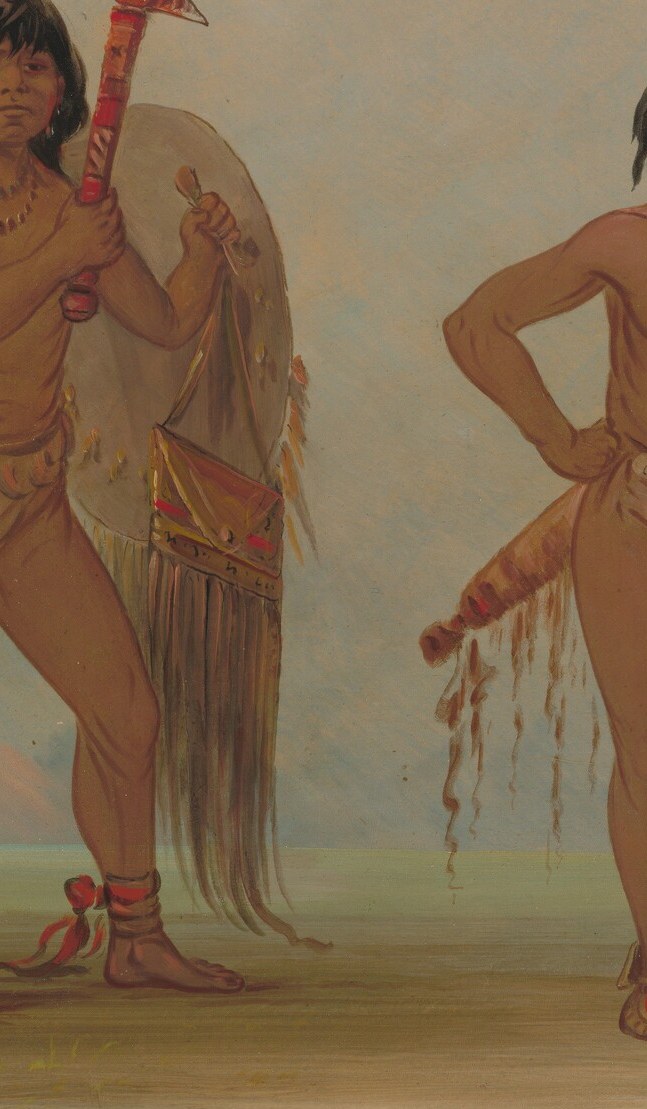
George Catlin, a self-taught American painter, dedicated his career to documenting Native American cultures. His painting, *Three Zurumati Indians*, created between 1854 and 1869, is housed in a private collection. It's an important part of his extensive visual record, which he created during a period of rapid westward expansion in the 19th century.
In this work, three members of the Zurumati tribe are depicted, each with distinct attire and implements. Observe the intricate headdress on the central figure, and the decorated shield, both hinting at cultural identity and skill. These details reflect Catlin's commitment to recording the customs he believed were at risk of vanishing.
Catlin traveled the American frontier extensively in the 1830s, producing countless field sketches. This studio piece, like many others, was painted after his return east, using those earlier observations as references. His work served a dual purpose: ethnographic record and artistic expression, offering a unique visual archive of tribal life.
Catlin's portraits offer us a glimpse into a pivotal moment in American history. What do you notice first about these figures?
Details
Transcript
This painter documented Native American life in the 1830s. He aimed to preserve customs he feared would soon disappear. The middle figure wears an elaborate headdress, signaling status. He holds a decorated shield, emphasizing martial skill. The artist created studio pieces like this from earlier sketches. These are the Zurumati, a tribal group from the Plains region.