Convent near Rome by George Henry Yewell
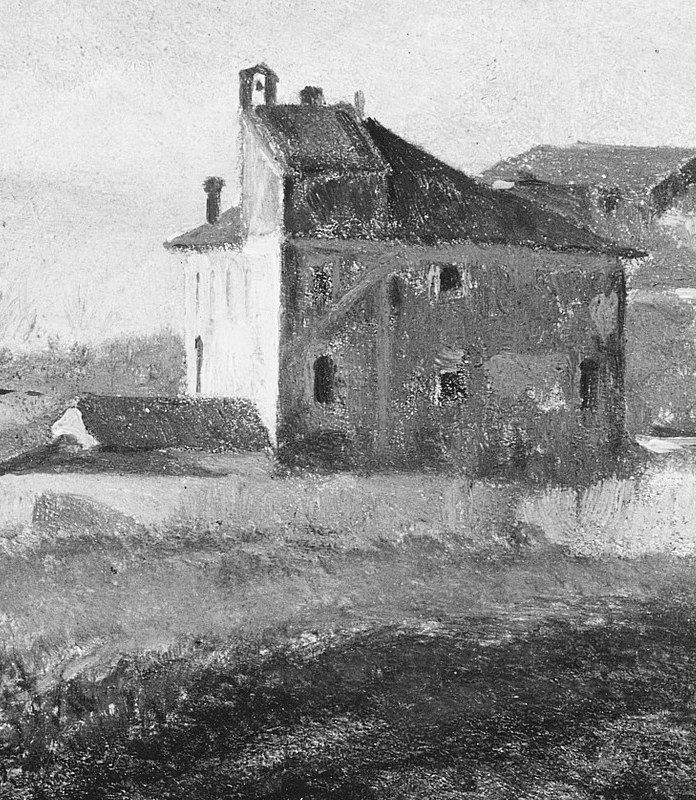
George Henry Yewell's "Convent near Rome" (1870) hangs quietly at the Metropolitan Museum of Art today, but its arrival in New York stirred an art-world scandal that had nothing to do with the painting itself.
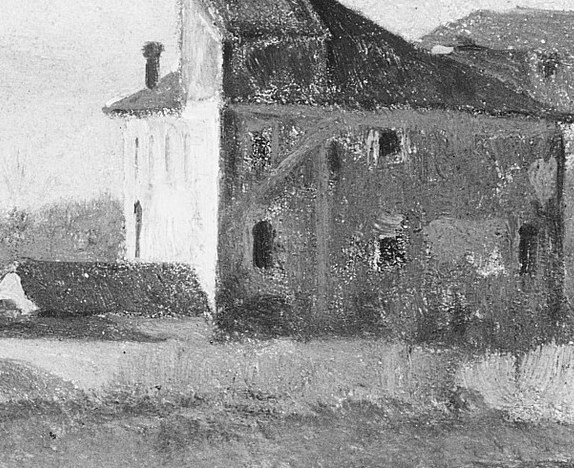
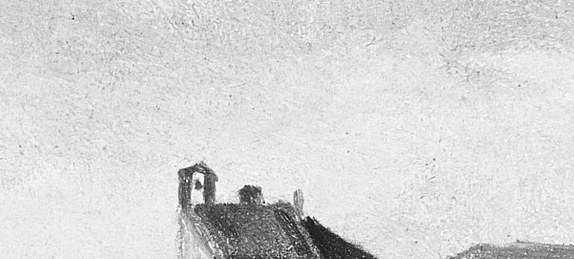
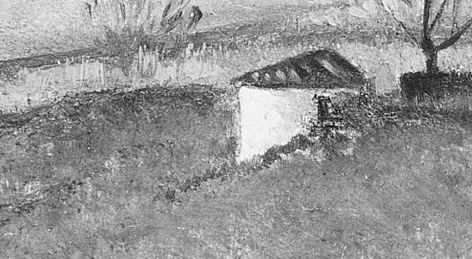
The canvas shows a weathered convent building on the Roman campagna under a pale Lazio haze. Its broken windows suggest decline, but a chimney against the sky confirms life inside. Yewell, an American from Iowa who trained in New York, spent years in Italy painting such rural scenes, blending Hudson River observation with the soft light of the campagna.
When the shipment containing this picture landed in New York, it arrived beside another crate: a nude Venus. That painting, intended for a private collector, was flagged by a customs official. The press ran with it, newspapers across the city debated public morality and art, and the Venus was refused entry. By the time the Metropolitan acquired "Convent near Rome," it was the safe painting in the story. The Venus was quietly returned to Italy.
A quiet landscape, a goddess in a crate, and a museum that chose the safer picture. What arrives with a painting can be as interesting as the painting itself.
Details
Transcript
It looks like a quiet Roman view from 1870. An American in Italy, painting the hazy light. Look at the broken windows. The chimney says someone still lives inside. But when Yewell shipped this home, there was a problem. It arrived with a nude Venus, meant for a different buyer. The customs clerk saw the goddess and called the press. So the Metropolitan took the convent, and never hung the Venus.