The Dogana and Santa Maria della Salute, Venice by Turner, Joseph Mallord William
Joseph Mallord William Turner's 'The Dogana and Santa Maria della Salute, Venice,' painted in 1843, is a luminous oil painting held at the Metropolitan Museum of Art. It showcases his distinctive approach to light and atmosphere, blurring the lines between representation and abstraction.
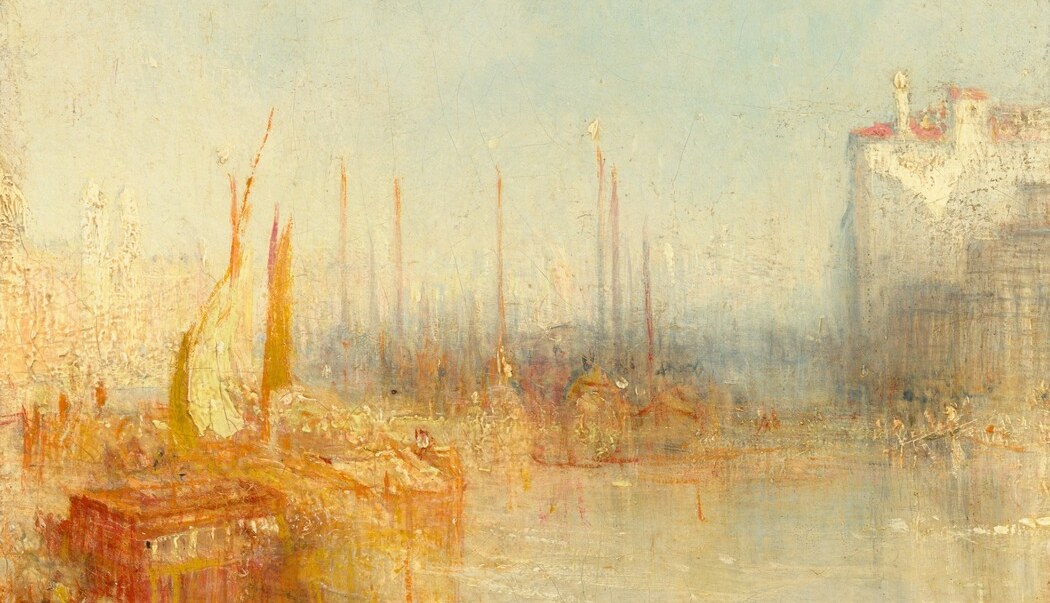
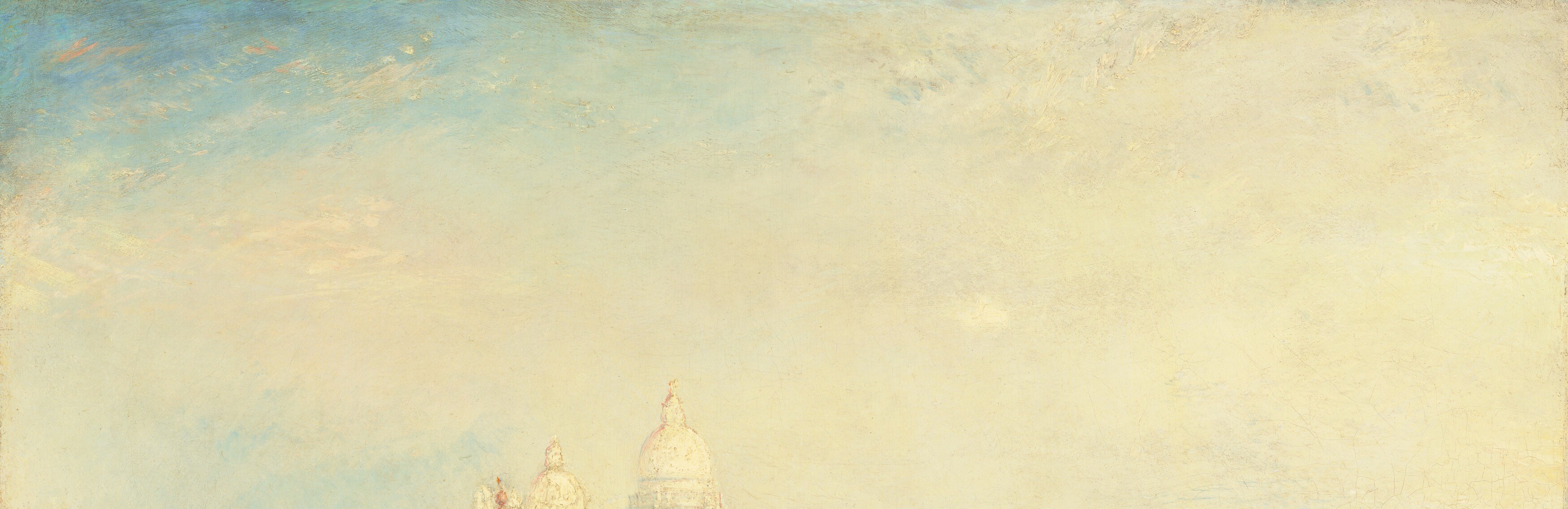
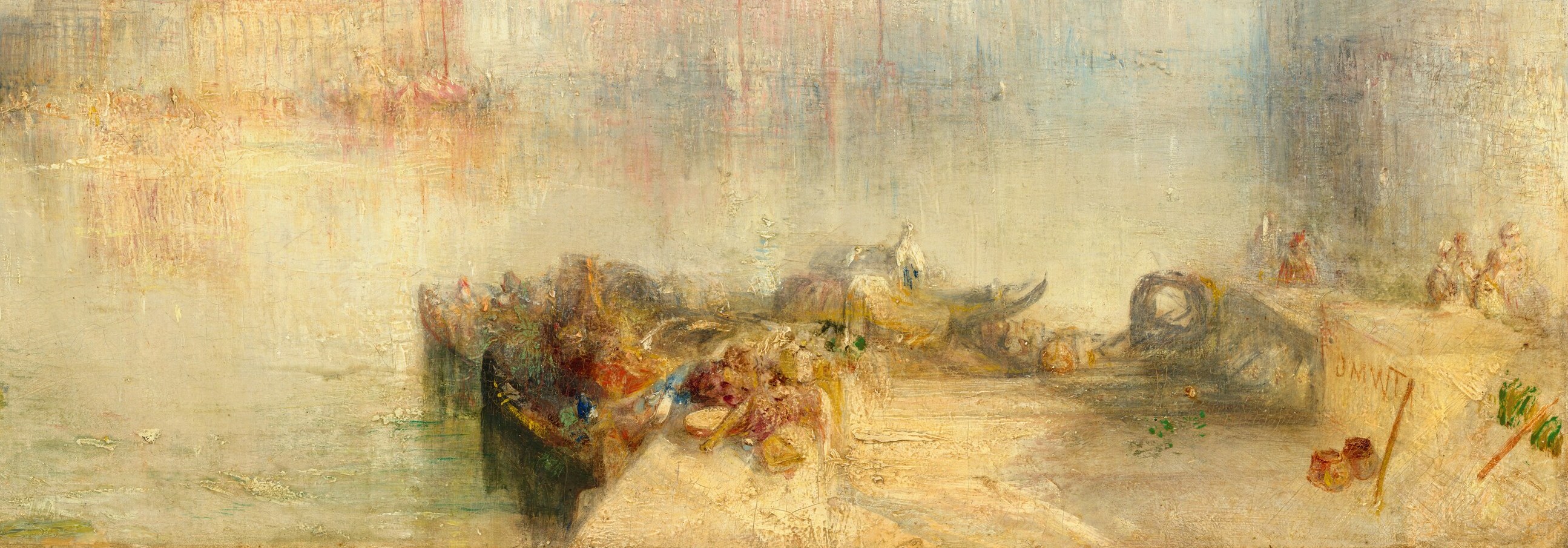
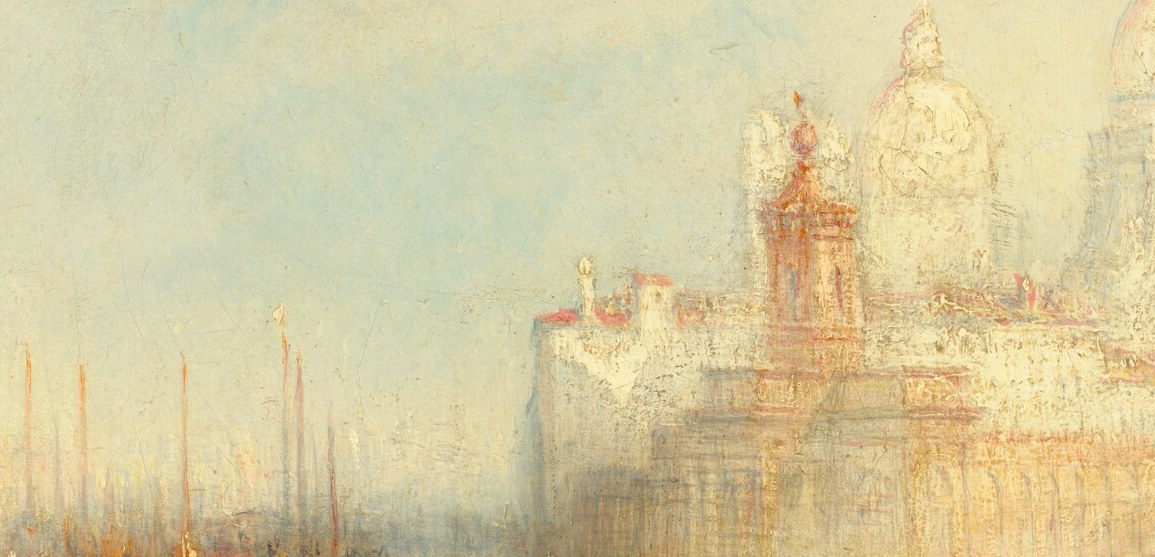
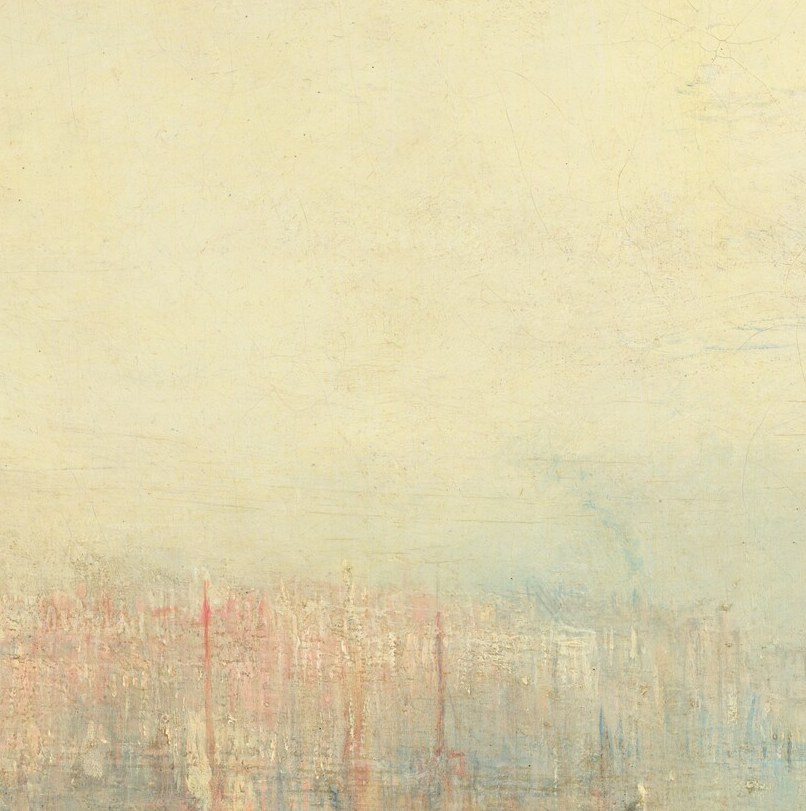
Turner's late style is evident here, where architectural forms are softened by a haze of golden light and reflected water. Notice the rapid, expressive brushstrokes that capture the play of light on the water and the distant buildings, rather than precise topographical detail.
Created during Turner's third and final visit to Venice, he painted this from memory, often months or years after his initial sketches. While some critics initially derided his 'yellow hazes and dissolved forms,' influential critic John Ruskin championed his work, recognizing its revolutionary qualities.
This painting isn't just a scene of Venice, but a poetic meditation on the transient effects of light and atmosphere. How do these painterly techniques make you feel about the scene?
Details
Transcript
This is Venice, painted in 1843, by a controversial artist. Turner visited Venice three times, always sketching in small notebooks. He then painted these luminous scenes from memory, often years later. His brushstrokes are rapid and expressive, prioritizing light over detail. Look closely at the water's shimmering, broken reflections. His late style dissolved forms, bridging landscape painting and Impressionism.