Triptych of the adoration of the magi by http://www.wikidata.org/.well-known/genid/67c85d6098a0e31c2155c0a8b86bebf6
Jan de Beer's 'Triptych of the Adoration of the Magi', painted around 1512, is a beautiful example of early 16th-century religious art. Now housed at the Museum of Fine Arts, Antwerp, it captures a pivotal biblical event with characteristic detail and a subdued color scheme.
Look closely at the central panel, where Mary cradles the infant Jesus, surrounded by the reverent Magi offering their gifts. The subtle details, from the serene expressions on Mary's and Joseph's faces to the watchful angels above, convey the solemnity of the occasion.
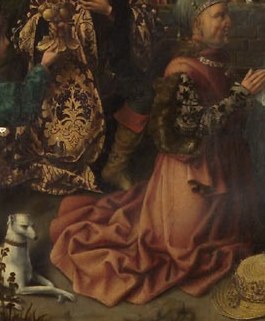
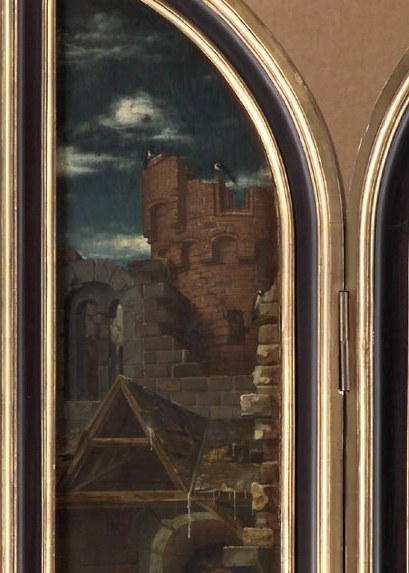
The inclusion of elements like the ruined castle on the left, symbolizing the passing of old traditions, and the loyal dog in the foreground, adds layers of meaning to this sacred scene. De Beer’s mastery of oil paint allowed for such nuanced storytelling, even within a restrained palette.
What other hidden symbols do you notice in this rich narrative?
Details
Transcript
This triptych depicts the adoration of the Magi. Mary holds the infant Jesus, the scene's serene focus. A kneeling Magus offers his gift with deep reverence. An angel choir watches from above, celebrating the moment. This painter was known for his restrained palette and detail. Even a small dog is present, a symbol of loyalty. A ruined castle suggests the end of an old order. A figure in a red cap observes intensely from the right.