The Calling of the Apostles Peter and Andrew by Duccio di Buoninsegna
View the artwork: The Calling of the Apostles Peter and Andrew →
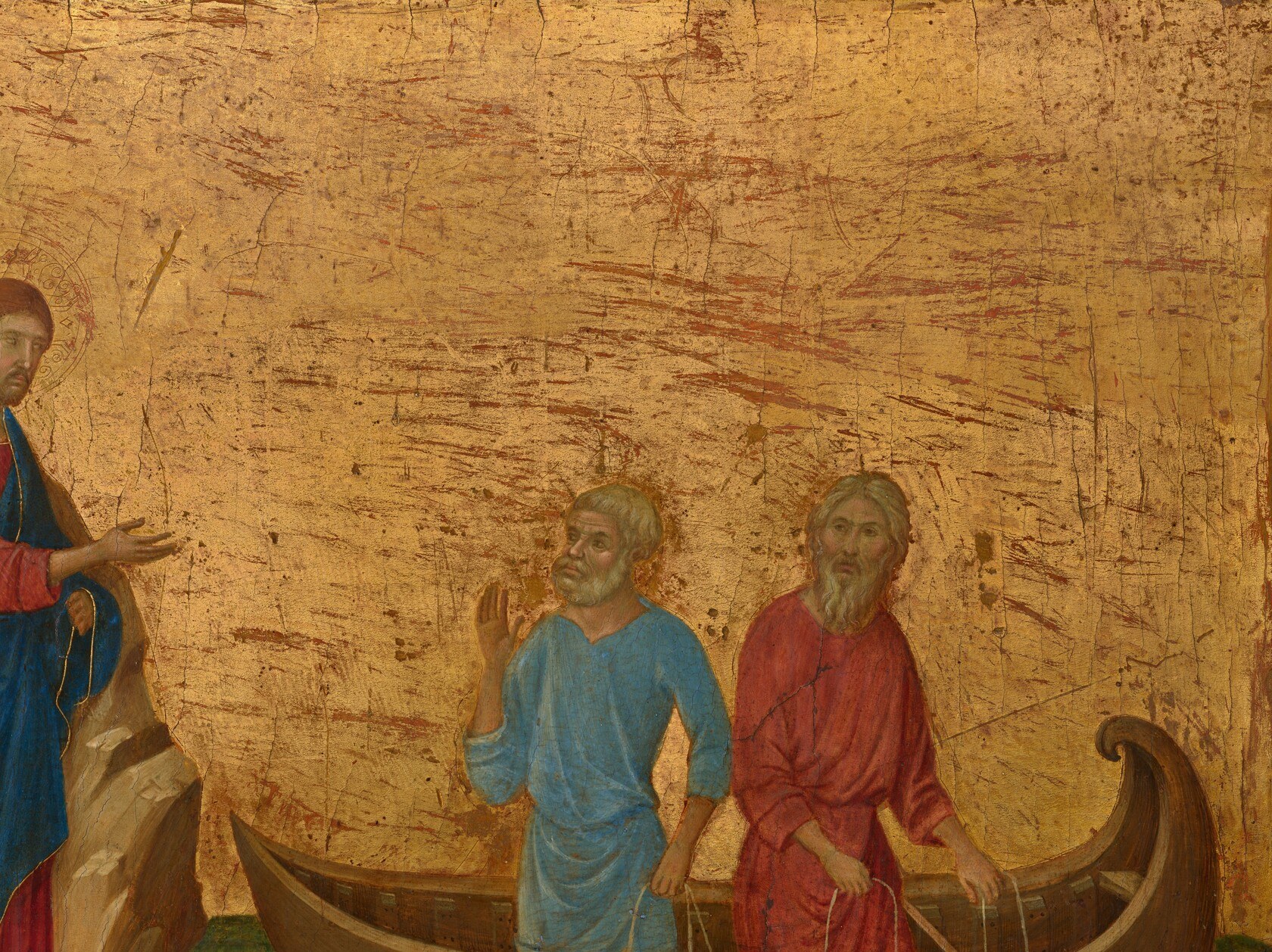
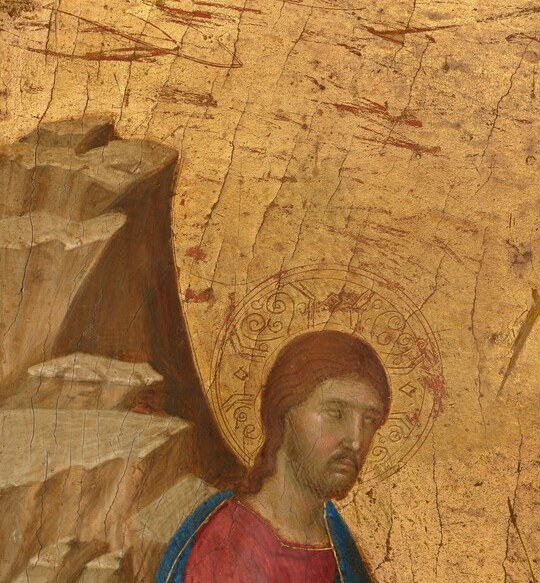
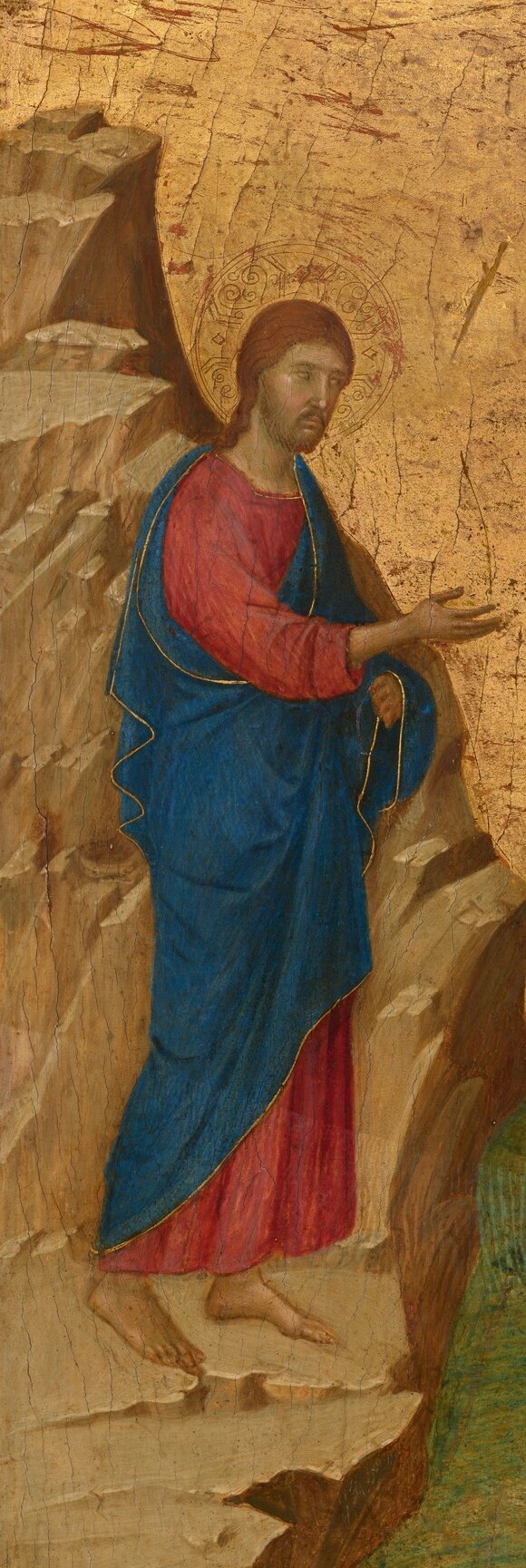
Duccio's The Calling of the Apostles Peter and Andrew was painted between 1308 and 1311. It once belonged to the Maestà, the largest and most celebrated altarpiece of its time. Siena Cathedral paraded it through the streets for three days before installing it. Today the panel lives at the National Gallery of Art in Washington, D.C.
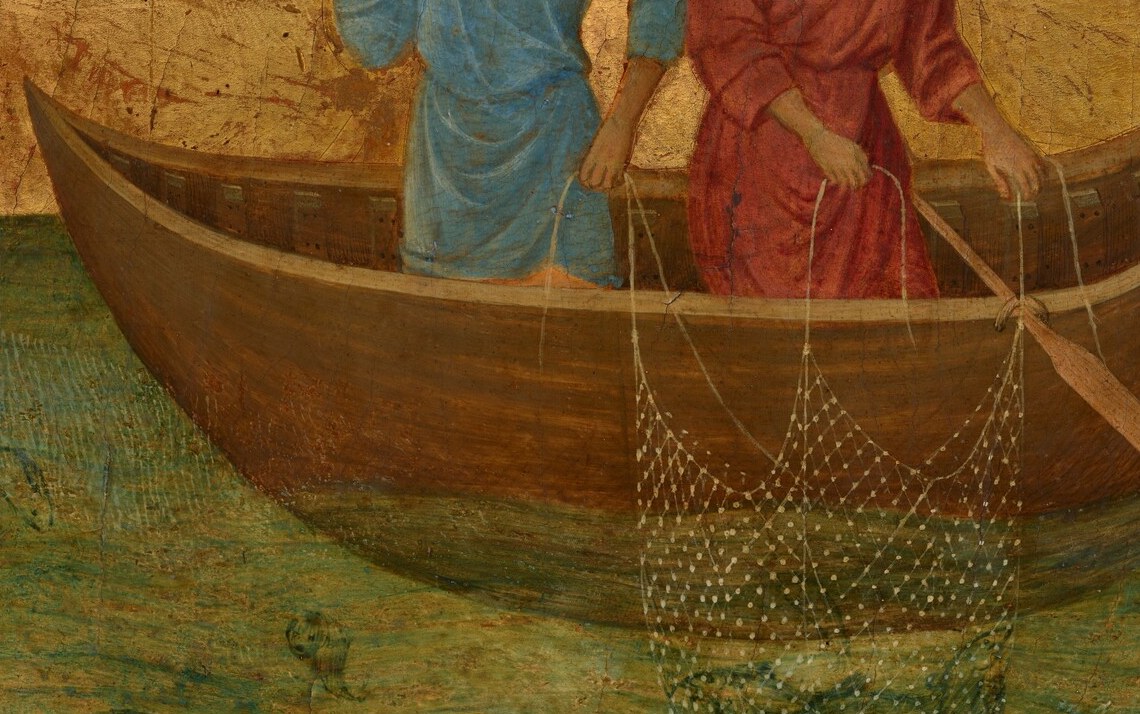
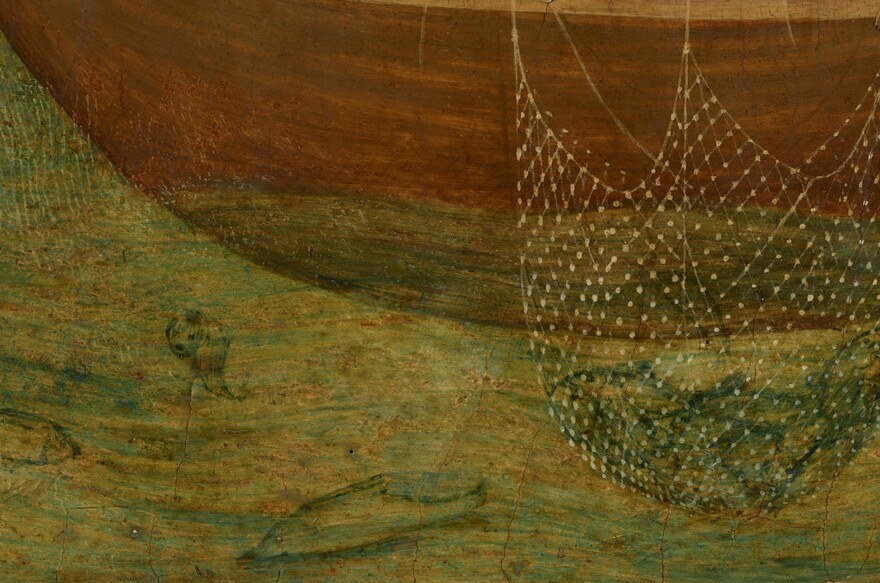
Look at the fishing net beneath the boat. Duccio painted the mesh so thin that the fish remain visible through it, a startling naturalistic detail for 1308. The gold background is pure Byzantine eternity, but that net reaches toward something new.
When the cathedral removed the Maestà in 1506, they sawed the massive altarpiece into saleable pieces. This panel scattered through the art market for nearly four centuries. It passed from a small Italian collection in 1879 to the dealer Charles Fairfax Murray, then the British collector Robert Henry Benson, and finally Duveen Brothers, who sold it to Clarence Mackay in New York. The Kress Foundation gave it to the National Gallery in 1939.
So a panel that launched with trumpet fanfares nearly vanished into private drawing rooms. What other pieces of the Maestà are still waiting to be found?
#arthistory #sienesepainting #duccio
Details
Transcript
In 1311, Siena carried a fifteen-foot altarpiece through the streets. They sang hymns for three days. Duccio was paid 3,000 gold florins. Then in 1506, the cathedral took a saw to it. This panel vanished. Four centuries of silence. Christ stands on solid rock, calling two men from their boat. Their net is translucent. You can see the fish through the mesh. He painted a visual pun: the fish they leave for the men they will catch. In 1879, it surfaced in a small town collection. Then a dealer, a baron, Duveen.