Facsimile of an Omaha Robe by Catlin, George
George Catlin's 'Facsimile of an Omaha Robe', painted between 1861 and 1869, is an oil on card mounted on paperboard work, housed in a private collection. It's not a direct depiction but an allegorical representation of Plains Indian life, reflecting Catlin's extensive travels and observations.
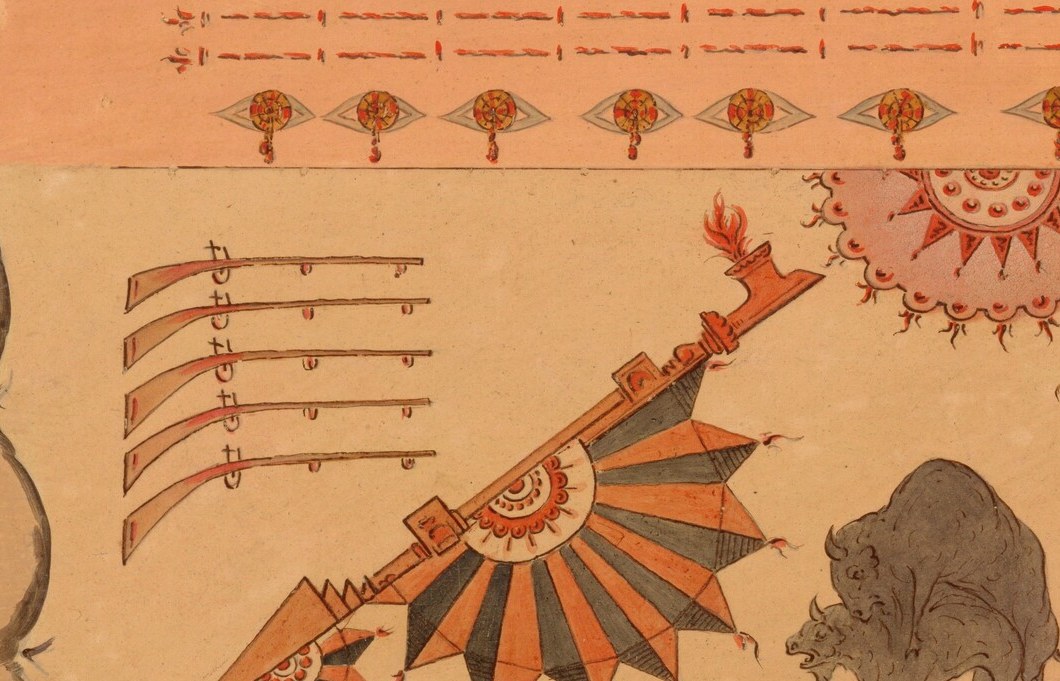
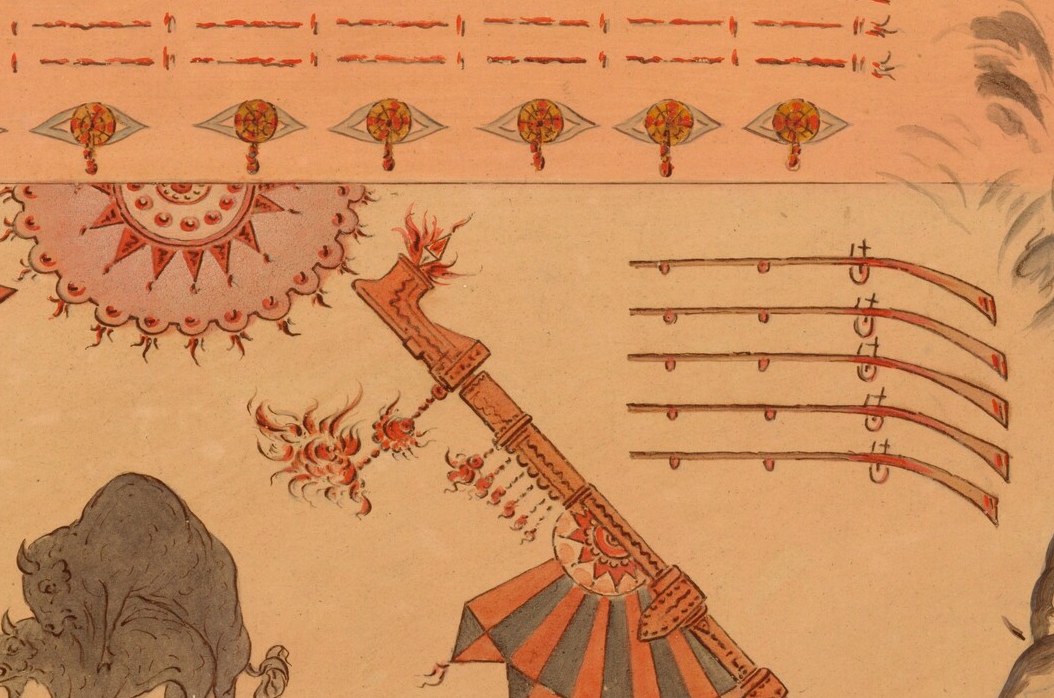
At the center, a solitary bison stands between two striped tents, surrounded by dot-like forms that could signify people or objects. The wavy orange border frames the scene, giving it a narrative feel characteristic of folk art. Notice the vibrant sun-like symbols and feathered ornaments, which add to its symbolic rather than literal portrayal.
Catlin made five expeditions to the American West in the 1830s, documenting Native American cultures. By the 1860s, his work evolved towards more stylized representations, blending his ethnographic notes with the public's appetite for romanticized images. This piece showcases his later artistic phase and its blend of documentation and allegory.
It offers a unique window into 19th-century Indigenous representation, illustrating how observation and artistic interpretation can intertwine. What details in this facsimile catch your eye the most?
Details
Transcript
This painting isn't a snapshot, it's an allegory. The artist, George Catlin, traveled the American West in the 1830s. He documented Plains Indian cultures through portraits and writings. Look closely at the solitary bison, central to the scene. This stylized work reflects his observations, but with symbolic intent. Even the number 209 is part of a larger cataloging system. It's an ethnographic record, filtered through folk art conventions.