Saint George's Church, New York by Edward Lamson Henry
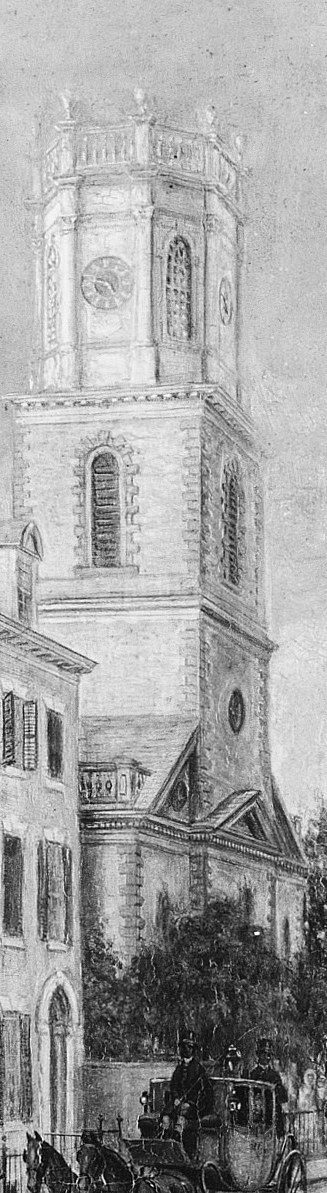
Edward Lamson Henry's "Saint George's Church, New York," painted in 1875, captures a moment of transition in American urban life. This oil painting, housed at The Metropolitan Museum of Art, showcases the artist's meticulous rendering of ordinary scenes.
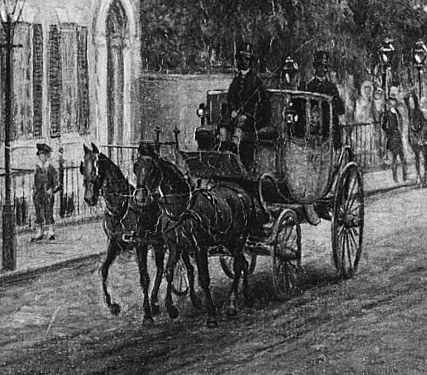
Look closely at the interplay of old and new: the prominent church steeple, a symbol of established faith, stands tall over a city beginning to embrace modern infrastructure. The gas lamppost, a new technology, illuminates a street still traversed by horse-drawn carriages.
Henry, known for his detailed genre scenes, offers a fascinating glimpse into 19th-century New York. His work preserves the everyday rhythm and architectural character of a city on the cusp of significant change, reflecting his interest in American daily life.
What details do you notice that speak to this era of transformation?
Details
Transcript
This painter was famous for everyday American life. This church, Saint George's, was built in the 1840s. Its towering steeple was a landmark for decades. The gas lamppost shows a city becoming modern. Horse-drawn carriages still filled the streets. In 1875, New York was changing fast.