The Death of Socrates by Jacques Louis David
View the artwork: The Death of Socrates →
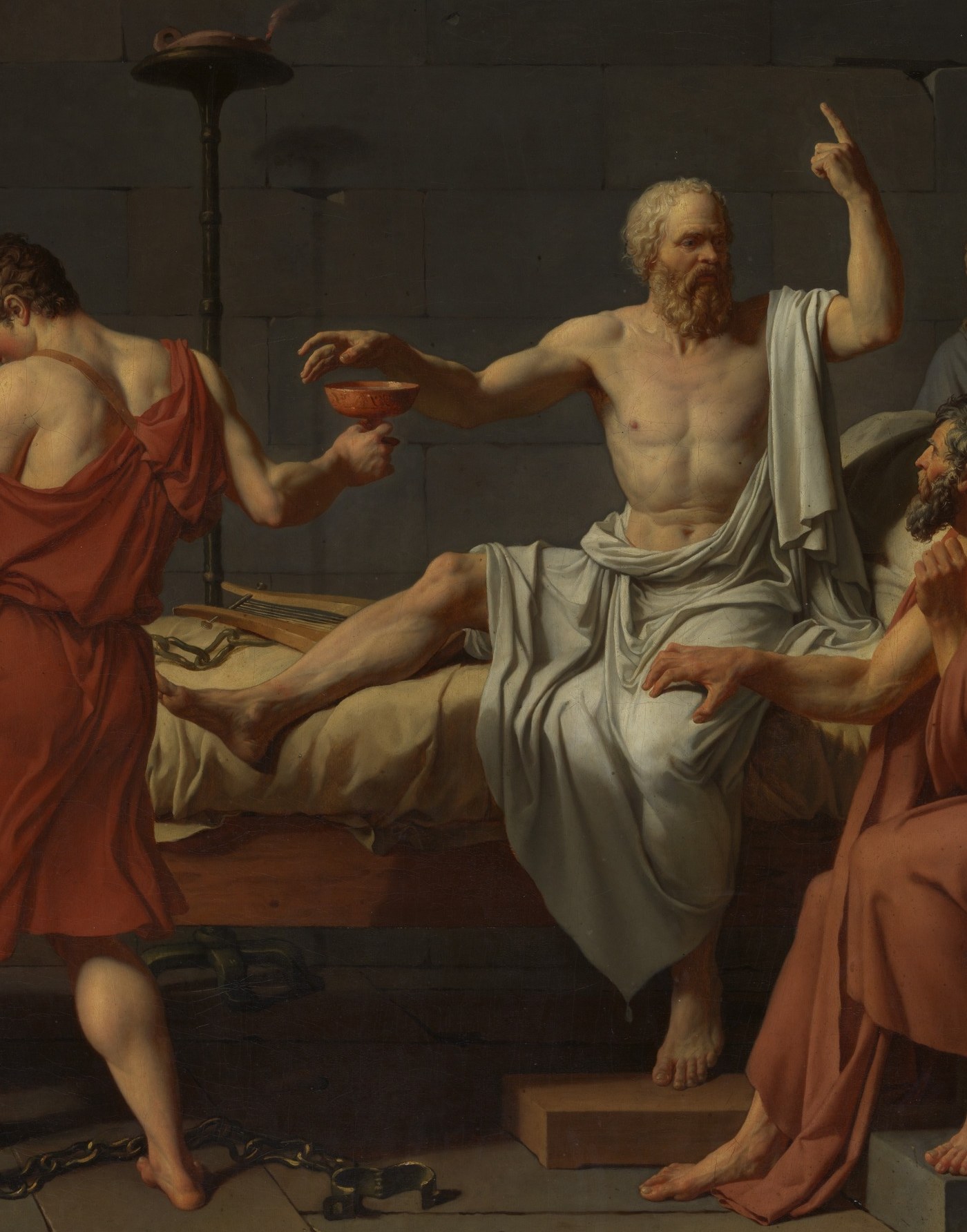
Jacques-Louis David's The Death of Socrates (1787) is a scene of execution where the condemned man is the calmest person in the room. But the painting's real gut punch is not the philosopher, it is the young jailer handing him the poison. He cannot watch his own hands.
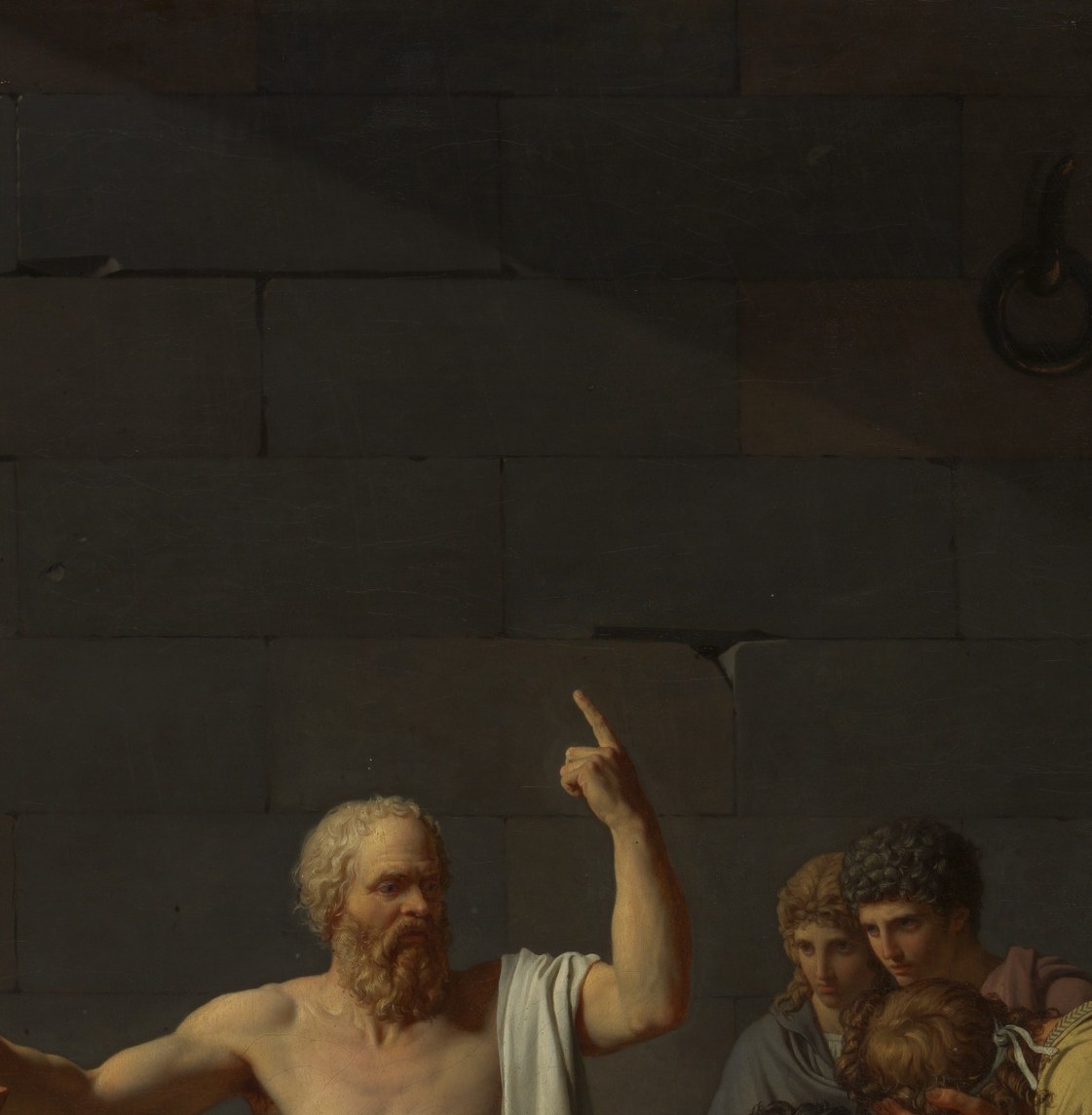
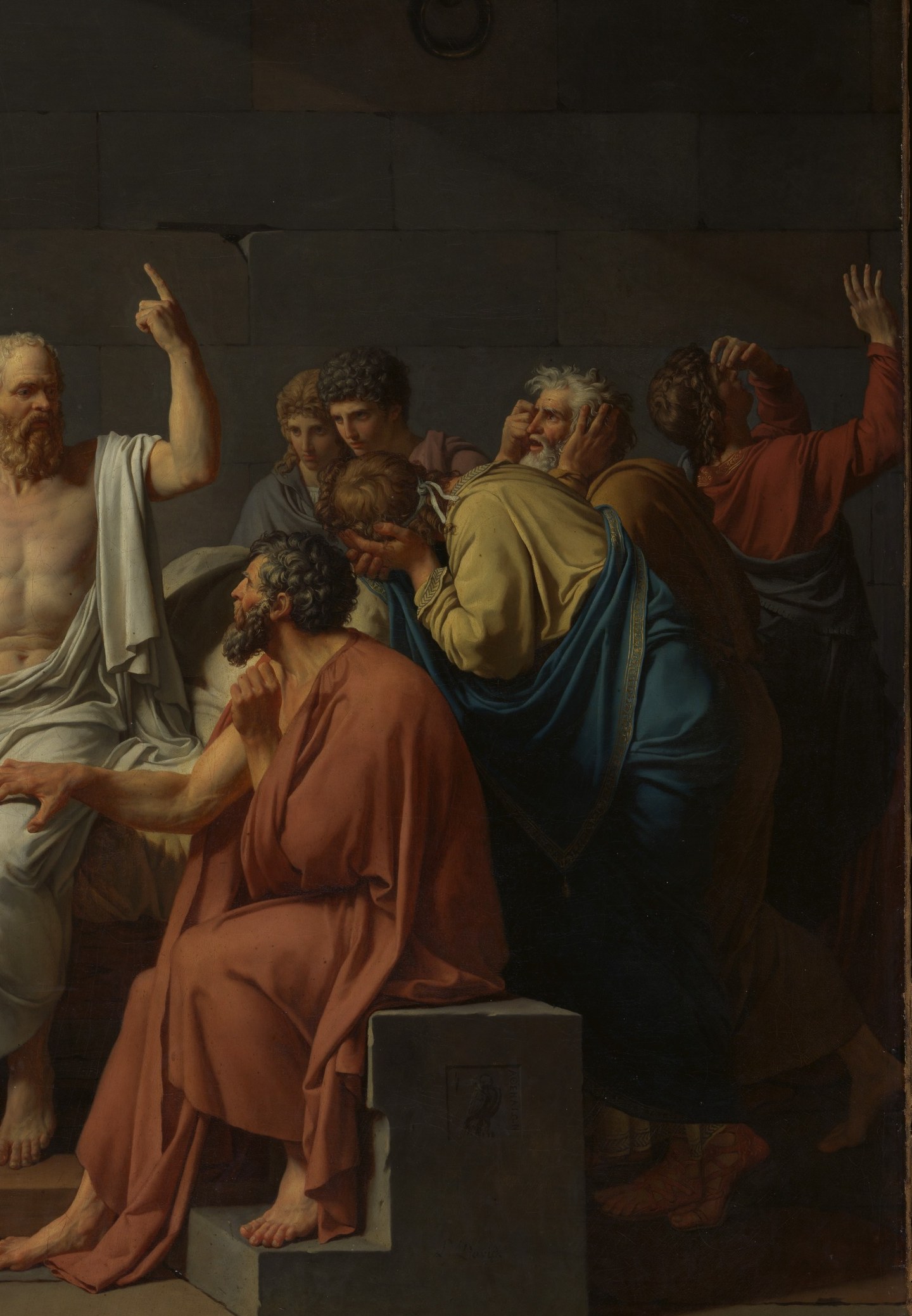
The painting, at the Metropolitan Museum of Art, turns Plato's Phaedo into a theatrical tableau. Socrates' finger points upward, caught mid-argument about the soul's immortality, while his closest disciple Crito clings to his legs, wordless physical grief trying to hold onto a body philosophy has already left. The jailer, though, is the inversion: he extends the hemlock cup with his face averted, slumped in a posture of devastation. The executioner is more visibly undone than the victim.
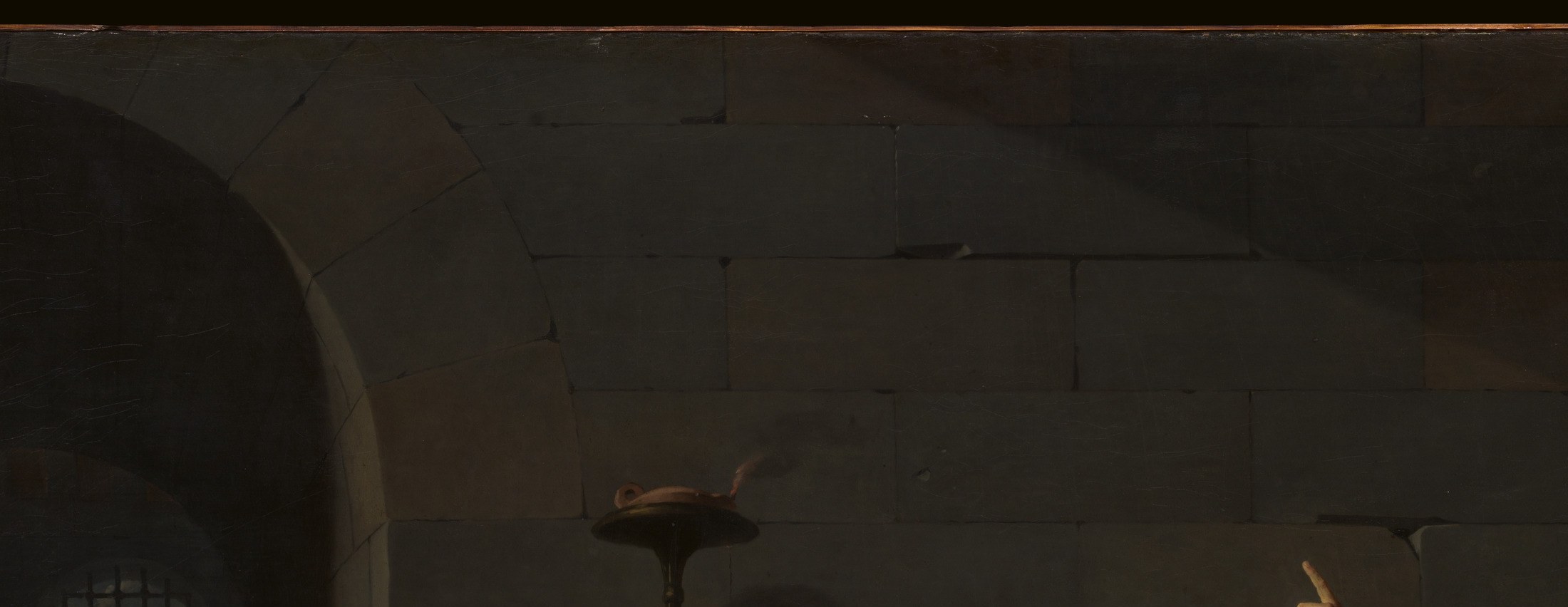
David painted this in 1787, two years before the French Revolution devoured the Ancien Régime. The picture was a political act dressed as classical history, a man unjustly condemned by the state, serene in his principles while authority crumbles around him. The solitary figure retreating up the stairs in the background is likely an official who cannot face what his system has done.
When the Met acquired it in 1931, they were securing not just a Neoclassical masterpiece but a painting that had already done its real work: making a moral argument visible in oil, pigment, and the turned-away face of a man holding death in his hand.
#arthistory #jacqueslouisdavid #neoclassical
Details
Transcript
Socrates is about to die. He isn't the one falling apart. He points past the poison, mid-lecture on the soul's immortality. His disciple Crito clings to his legs, touch as the last argument against death. But look at the young jailer. He cannot face what he is doing. He holds out the hemlock, head turned away. Grief has seized the executioner. David painted this in 1787, two years before the French Revolution. A regime that jailed dissenters was about to collapse. The painting knew it first.