Still Life with Oranges and Goblet of Wine by Peto, John Frederick
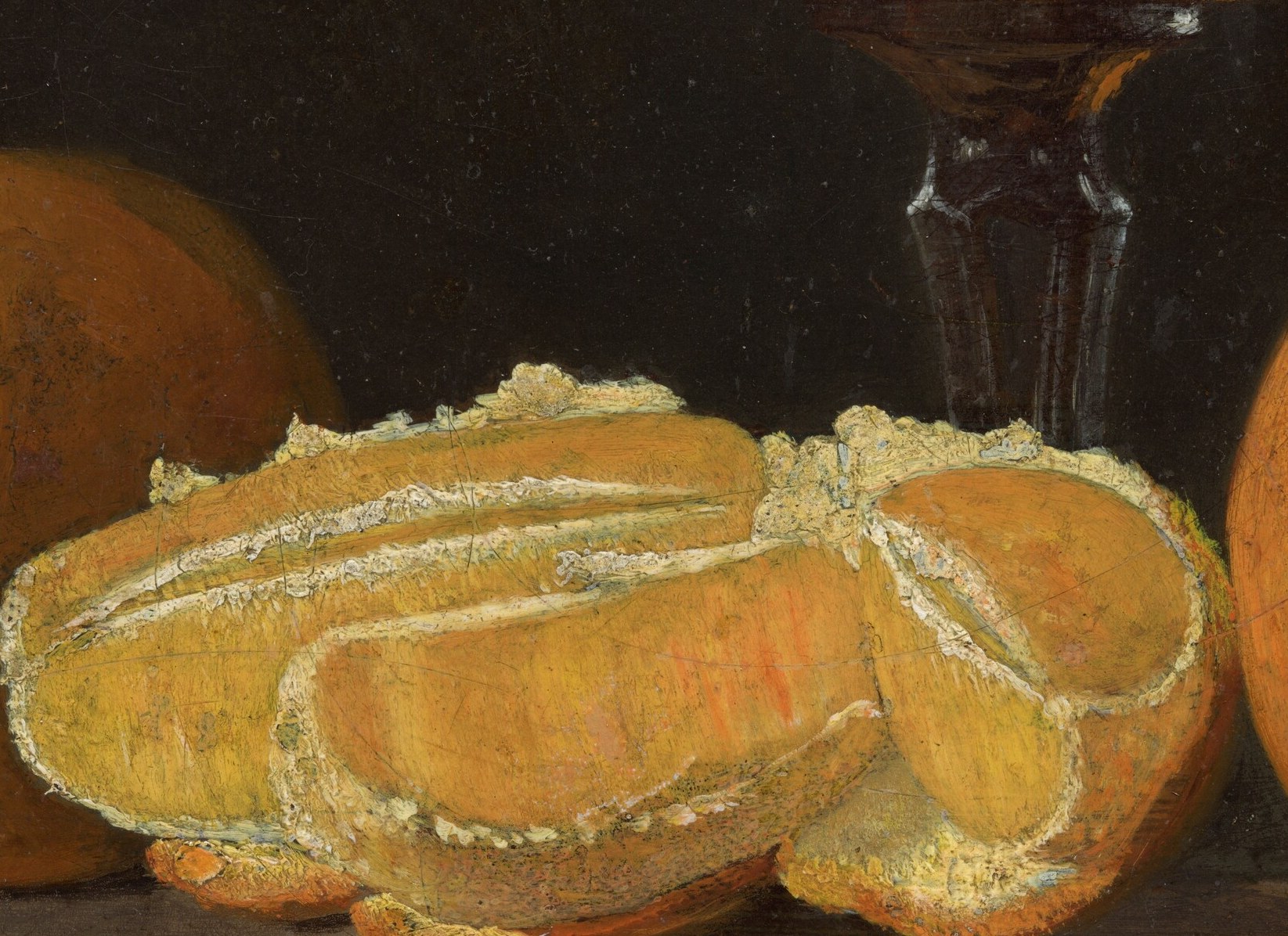
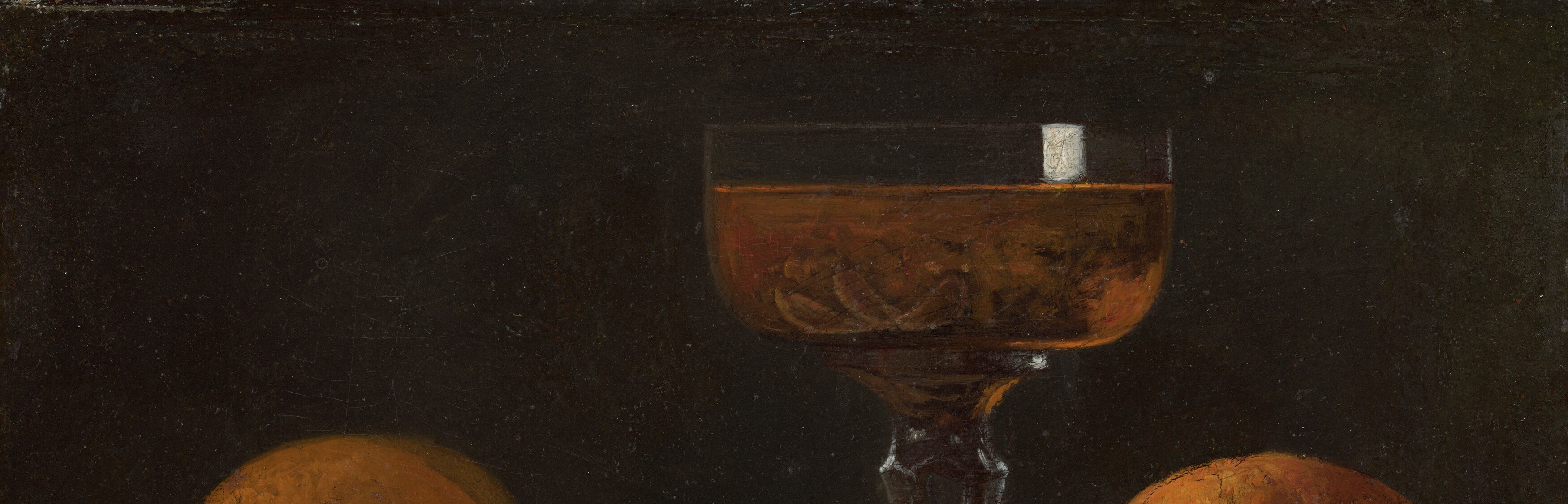
This is John Frederick Peto's Still Life with Oranges and Goblet of Wine, painted in the 1880s and now in the National Gallery of Art in Washington. At first glance it is a modest kitchen-table arrangement, but the longer you look, the more the painting performs a quiet magic trick on your eyes.
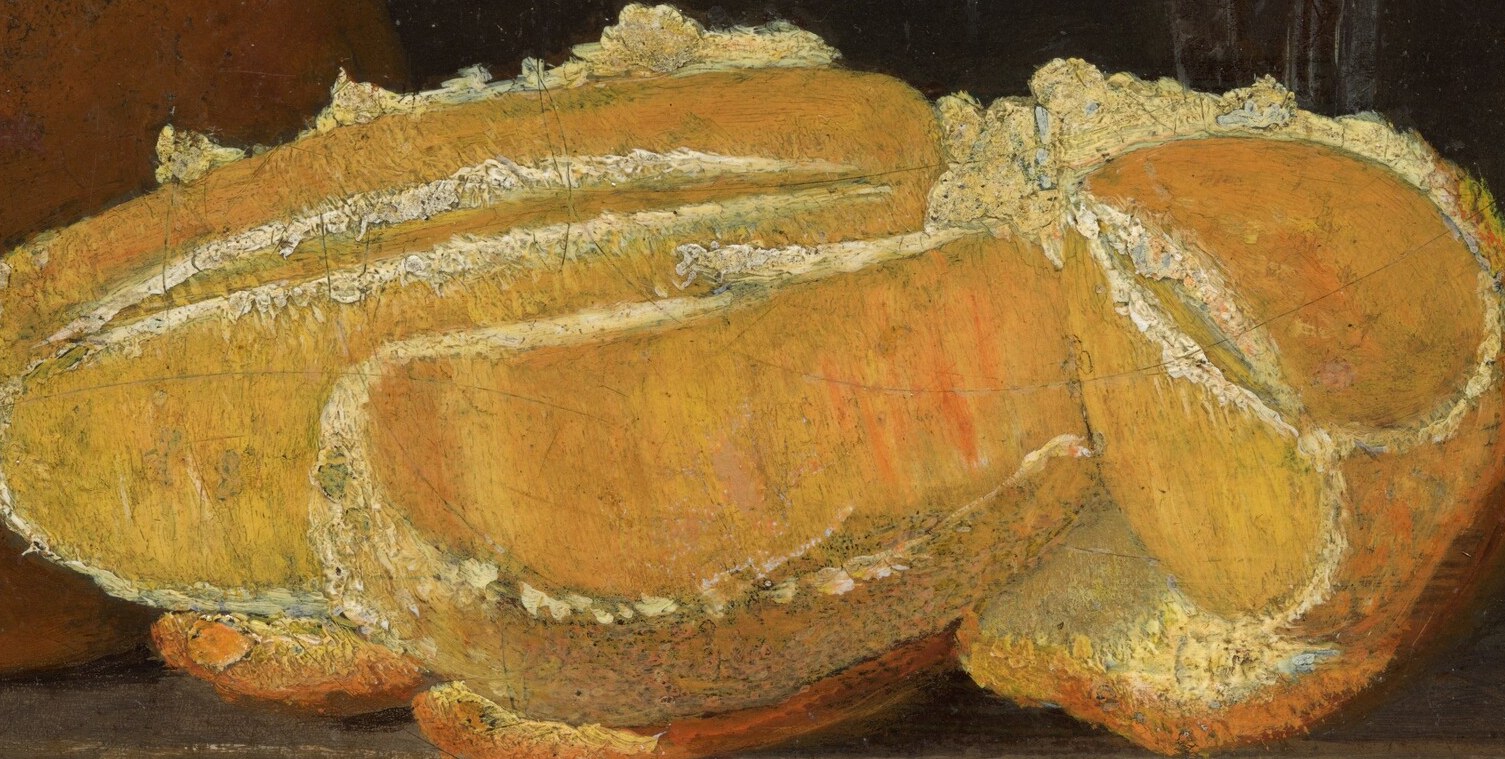
Notice how the orange peel curls over the table's edge. Peto painted it so that its cast shadow falls slightly forward, breaking the picture plane and making the peel feel closer to you than the frame itself. Then search the dark upper area for a tiny white rectangle. It is a painted paper label or ticket, complete with its own illusion of adhesive edges and a slight shadow. It is the kind of detail most people scroll straight past, and it is the whole point.
Peto worked in Philadelphia and New York but stayed outside the big movements of his time. He often reused boards and sold work through pawnshops rather than galleries. Much of his output was later misattributed to his more famous contemporary William Harnett. Only in the mid-20th century did scholars untangle the two and recognize Peto's distinct, unassuming genius.
A painting this quiet asks nothing of you except patience. What other small surprises have you found hiding in the dark backgrounds of still lifes?
Details
Transcript
Three oranges, a goblet of wine, a wooden table. The painting is a study in quiet, patient illusion. Look at the peel dangling over the ledge. It seems to cast a shadow right onto our side of the canvas. But the real trick is up here, near the top. It appears to be a small paper label, painted to fool you. This painter worked in near-total obscurity. But his small, signed illusions refused to be thrown away.