Saint Parasceva by http://www.wikidata.org/.well-known/genid/d9d5f8c30b88f6e022affc1bfe429dc7
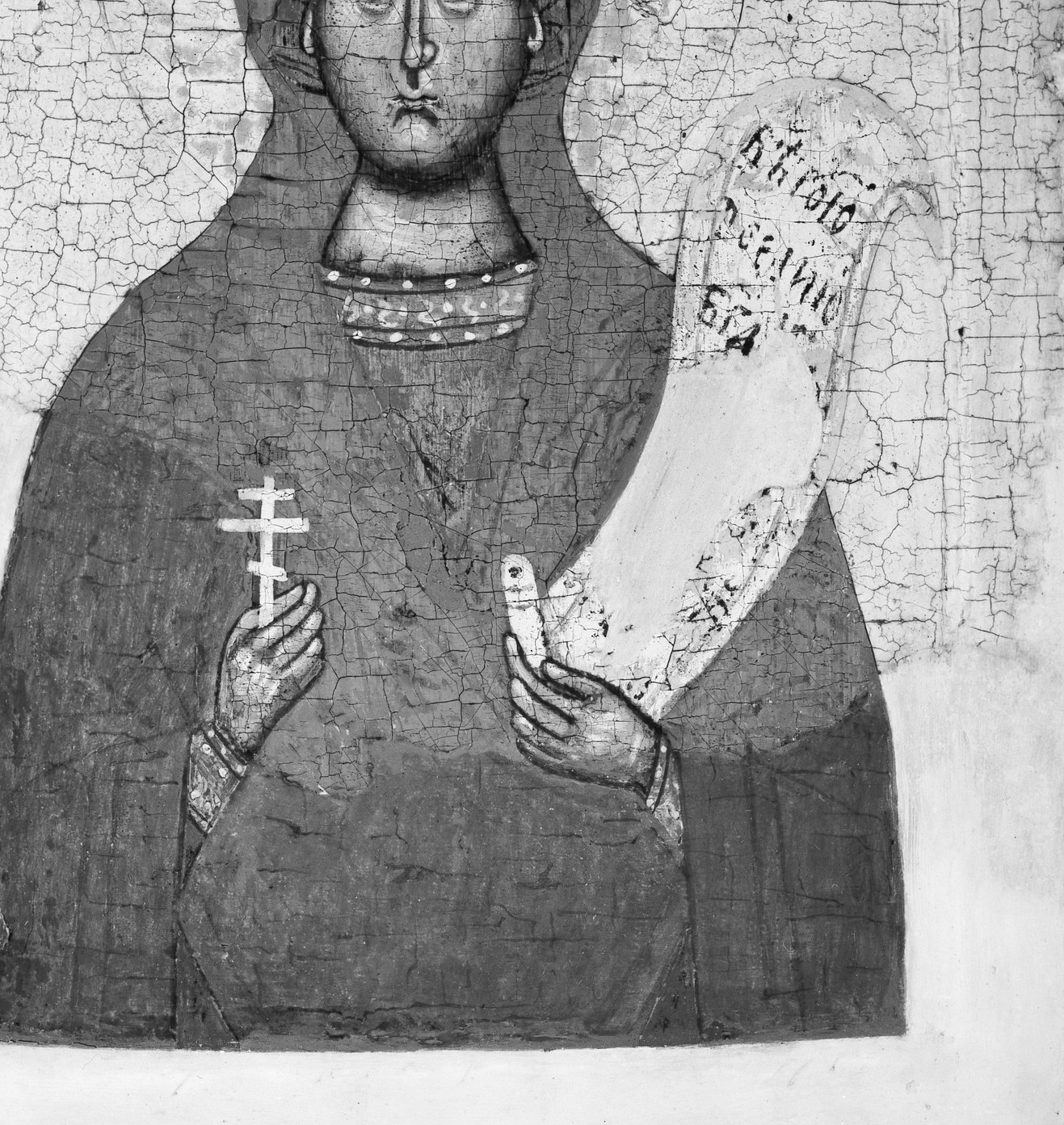
This powerful painting, 'Saint Parasceva' (c. 1500) by an unknown artist, showcases the enduring precision of tempera paint. Created by mixing egg yolk with pigments, tempera dries quickly, demanding tiny, deliberate brushstrokes from the artist. This method allows for an extraordinary level of detail and fine lines.
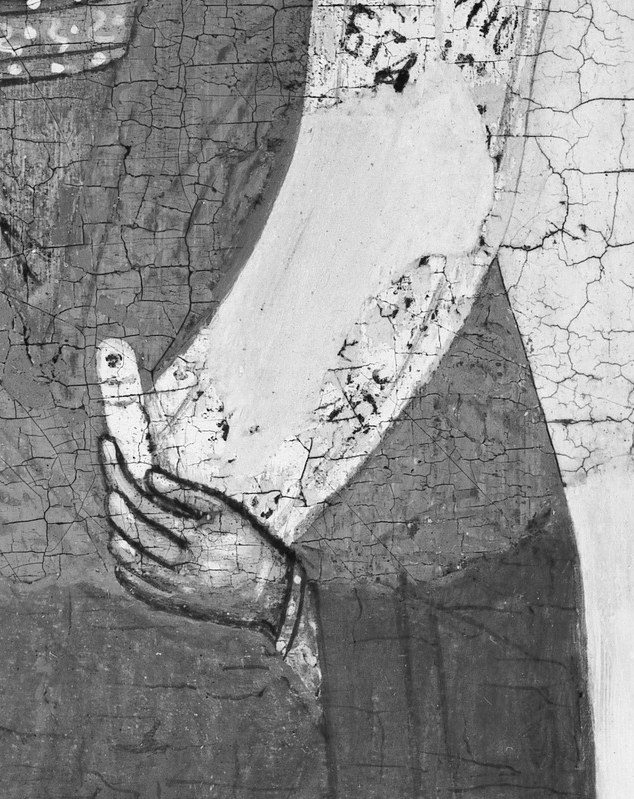
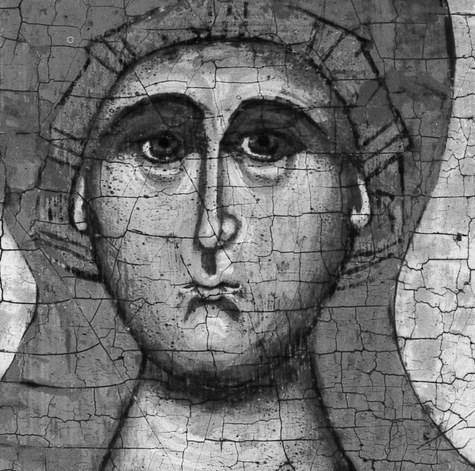
Observe the delicate rendering of Saint Parasceva's hands and face. Even after five centuries, the intricate shading and precise contours are remarkably preserved, despite the natural craquelure (fine cracking) that develops over time.
Tempera was a prevalent medium in the medieval period, particularly for icon painting, due to its durability and ability to produce luminous, stable colors. This artwork's survival and the clarity of its details offer a glimpse into the devotional art and technical mastery of its era.
What other details do you notice that speak to the artist's meticulous hand?
Details
Transcript
This painting is five centuries old. It was painted with tempera, egg yolk mixed with pigment. Tempera dries fast, forcing the artist to use tiny, precise strokes. Notice the delicate shading and fine lines on her fingers. Even after centuries of cracking, the detail remains. The technique allows for incredible, enduring precision.