Courtyard, Tetuan, Morocco by John Singer Sargent
This painting, John Singer Sargent's "Courtyard, Tetuan, Morocco" (1890), caused a stir when exhibited. Despite its title, the work became infamous not for its exotic location but for Sargent's daring use of light and shadow, which critics interpreted as overtly sensual and scandalous.
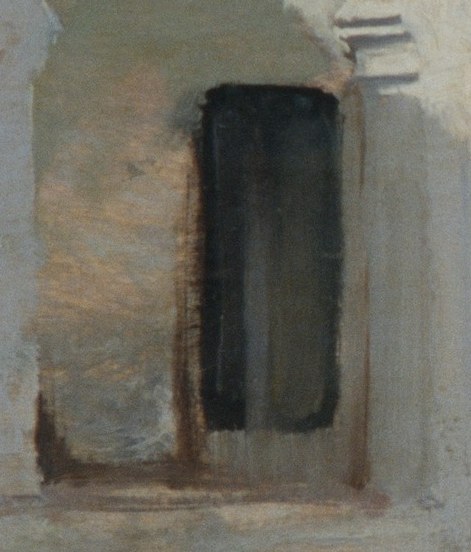
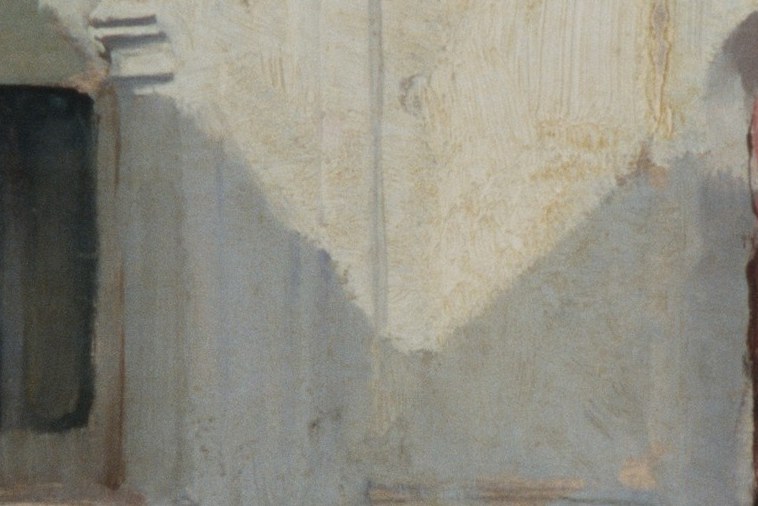
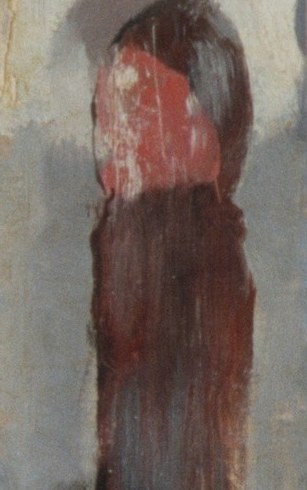
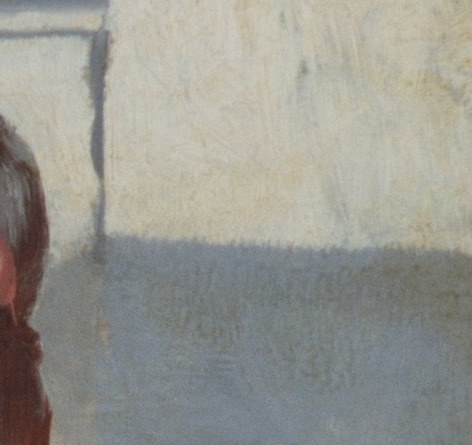
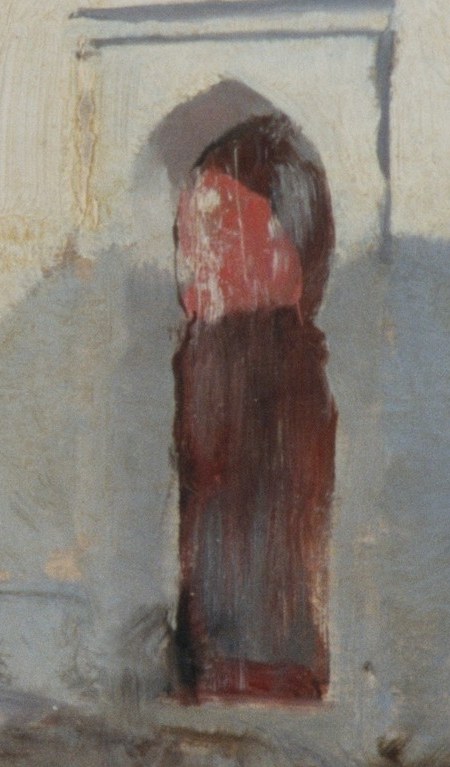
Notice the stark contrast between the bright, textured wall and the deep, mysterious shadows of the arched doorways. A flash of red fabric peeks from one entrance, hinting at hidden depths within the scene. Sargent masterfully employs impasto to render the rough plaster and the sharp geometric patterns of the light, creating an atmosphere that was considered daring for its time.
Sargent, known primarily for his society portraits, often traveled to North Africa and the Middle East, seeking subjects beyond the European salons. This particular work, painted en plein air, captured the intense Mediterranean light and the aged architecture of a Moroccan courtyard. However, its bold depiction of shadow and form led to accusations of eroticism and controversy upon its debut.
What was once a scene of atmospheric light and decay became a symbol of artistic rebellion, proving that even a quiet courtyard could hold scandal.
Details
Transcript
This is the courtyard that scandalized Paris. Look at the deep, inviting shadow. Sargent painted these shadows sensually. A red robe hints at hidden pleasures. Light and shadow create a forbidden mood. He was accused of eroticism here.