清 佚名 舊傳管道昇 竹石圖 冊頁|Bamboo by Guan Daosheng|Unidentified artist
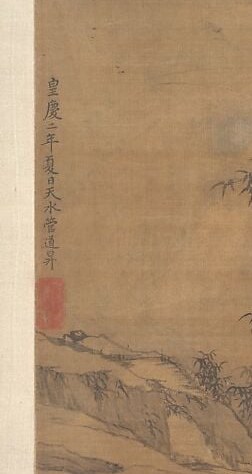
This elegant ink painting on silk, titled *Bamboo*, was long thought to be the work of Guan Daosheng, a prominent female painter from the Yuan Dynasty. However, stylistic analysis and other clues eventually led art historians to re-attribute it to an unidentified artist from the Qing Dynasty, around 1639.
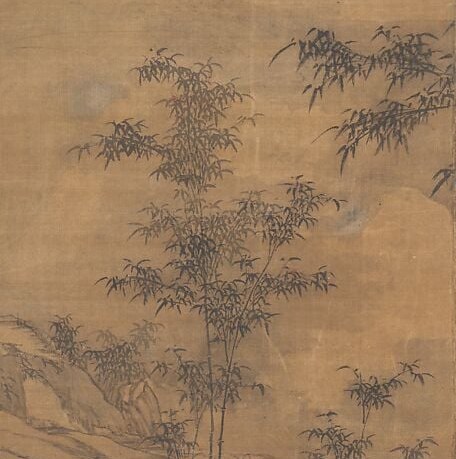
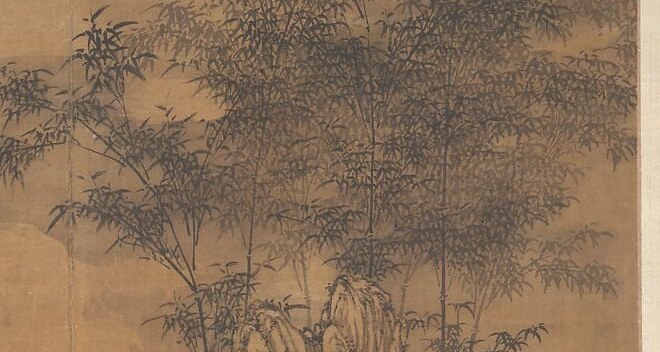
The artist employed a minimalist approach, using a limited number of brushstrokes to capture the essence of the bamboo. Notice the delicate leaves and solid stalks on the right, and the sparser ones on the left, all rendered with a focus on vitality and movement. The small bamboo shoots at the bottom symbolize new life.
In Chinese culture, bamboo holds deep symbolic meaning, representing qualities like integrity, perseverance, and modesty due to its resilience and flexibility. The choice to depict bamboo without elaborate settings underscores these virtues.
Even without a known artist, the painting continues to speak volumes through its simplicity and profound cultural symbolism. What does the enduring power of this work tell us about art's ability to transcend its creator's identity?
Details
Transcript
This painting was long attributed to a famous woman artist. The calligraphy inscription on the left provides context. But the style suggested it was painted much later. Art historians eventually re-attributed it to an unknown artist. The anonymous painter used minimal strokes to capture bamboo's essence. This plant symbolizes integrity and perseverance in Chinese culture.