The Experts by Alexandre Gabriel Decamps
View the artwork: The Experts →
Alexandre Decamps painted The Experts in 1837, and it still lands as one of the funniest and most pointed satires in the Metropolitan Museum of Art.
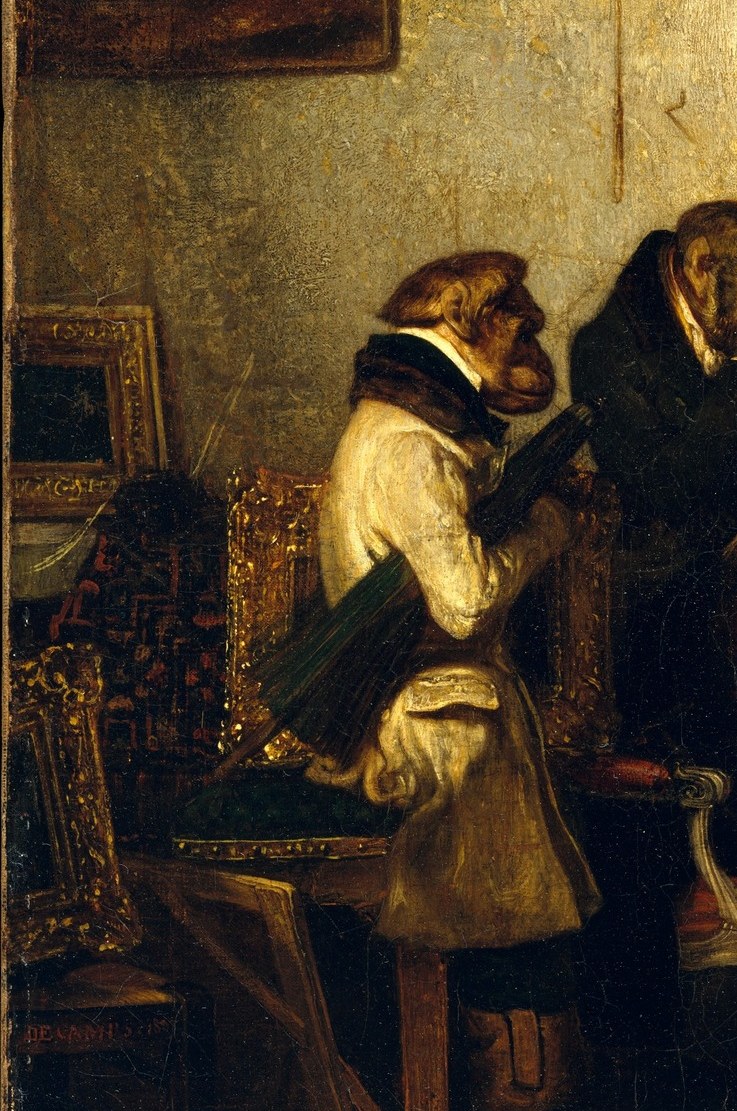
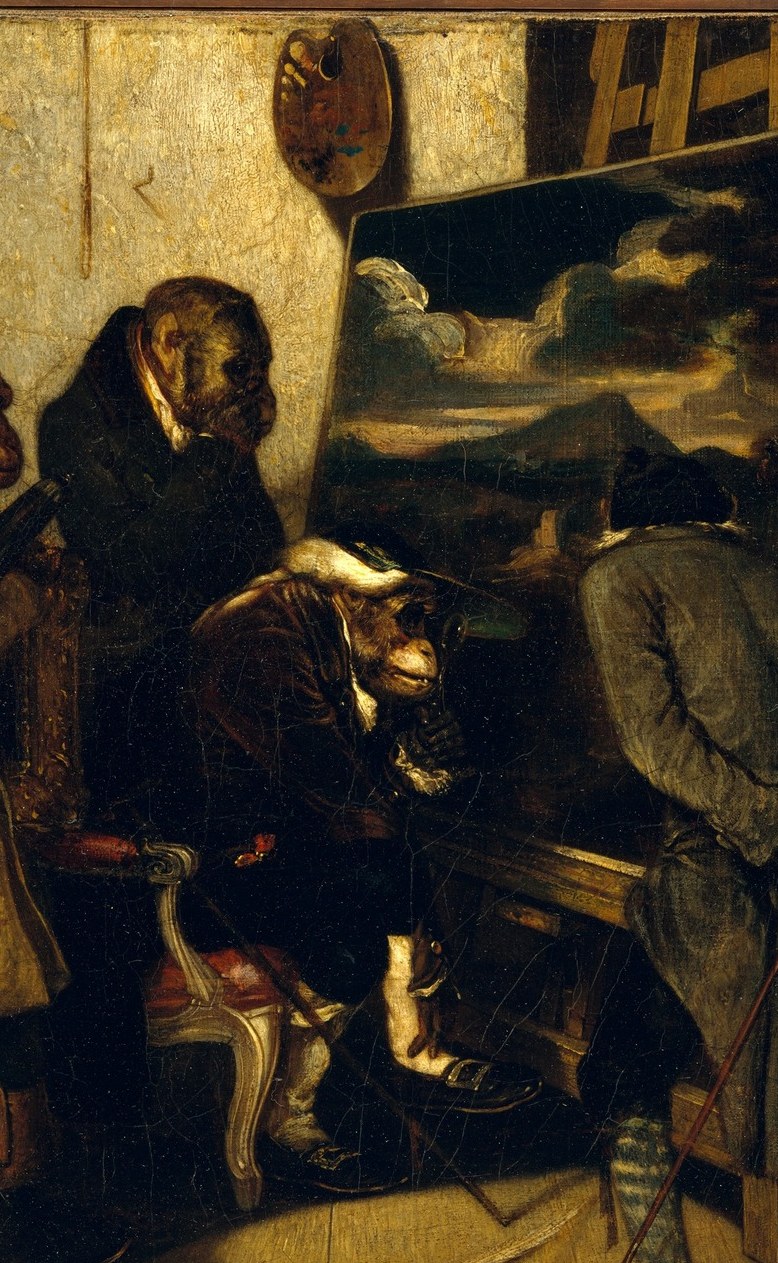
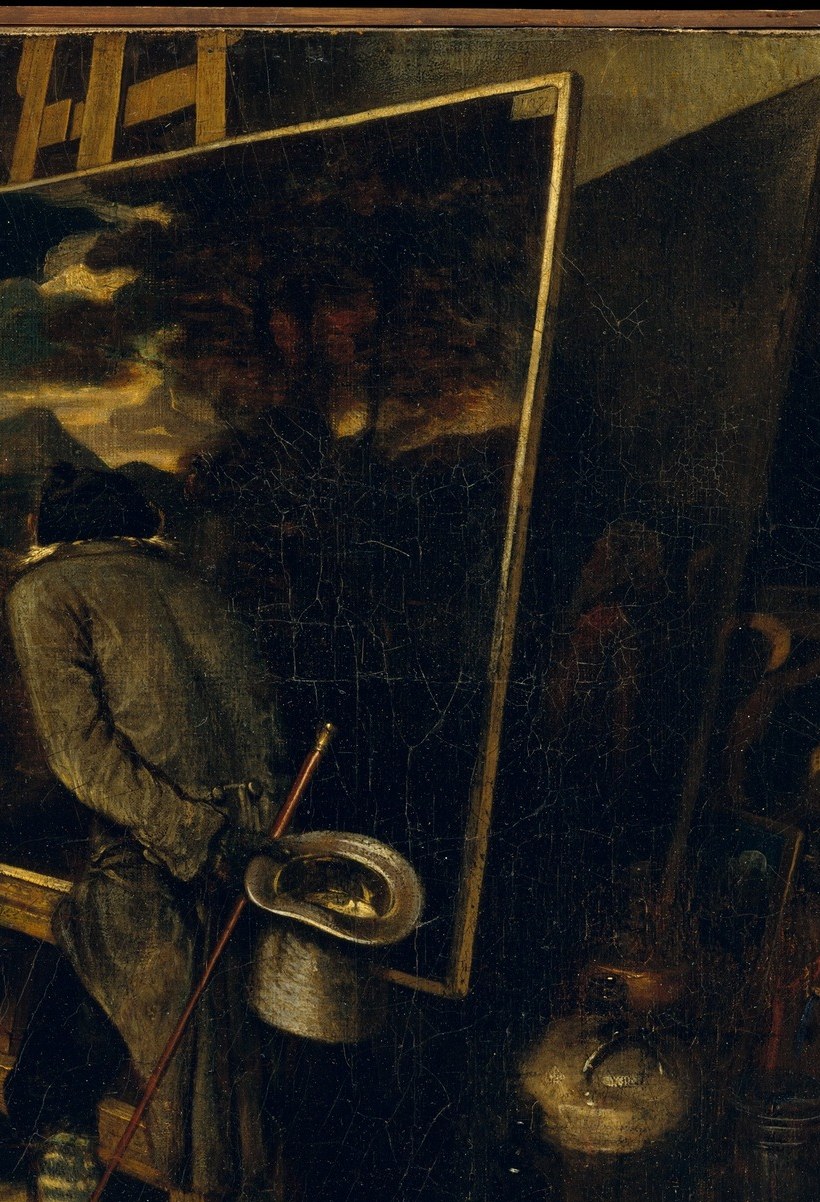
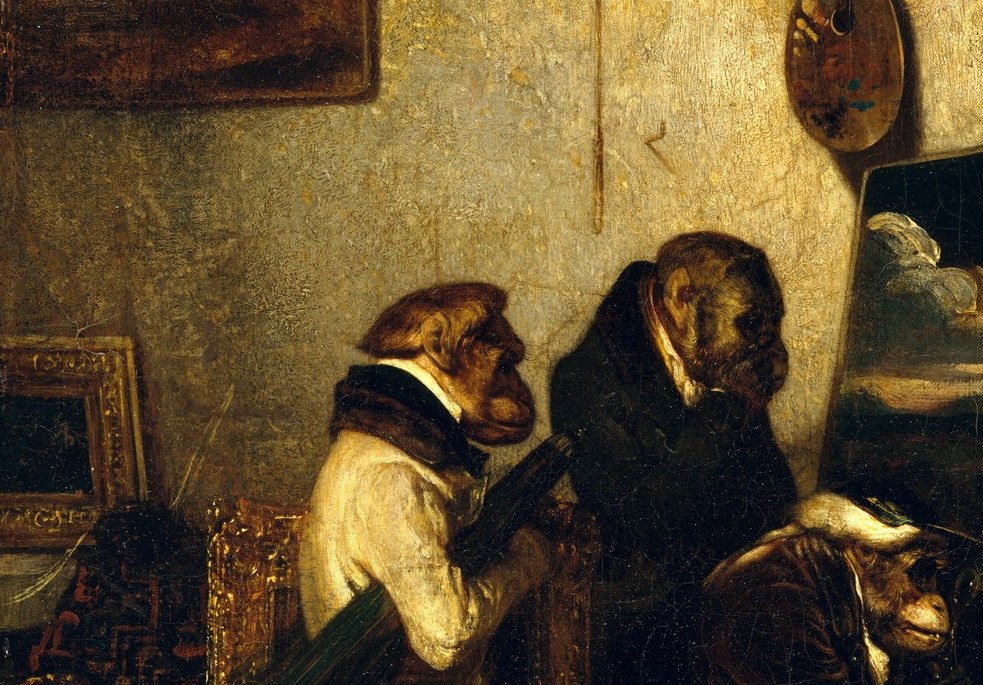
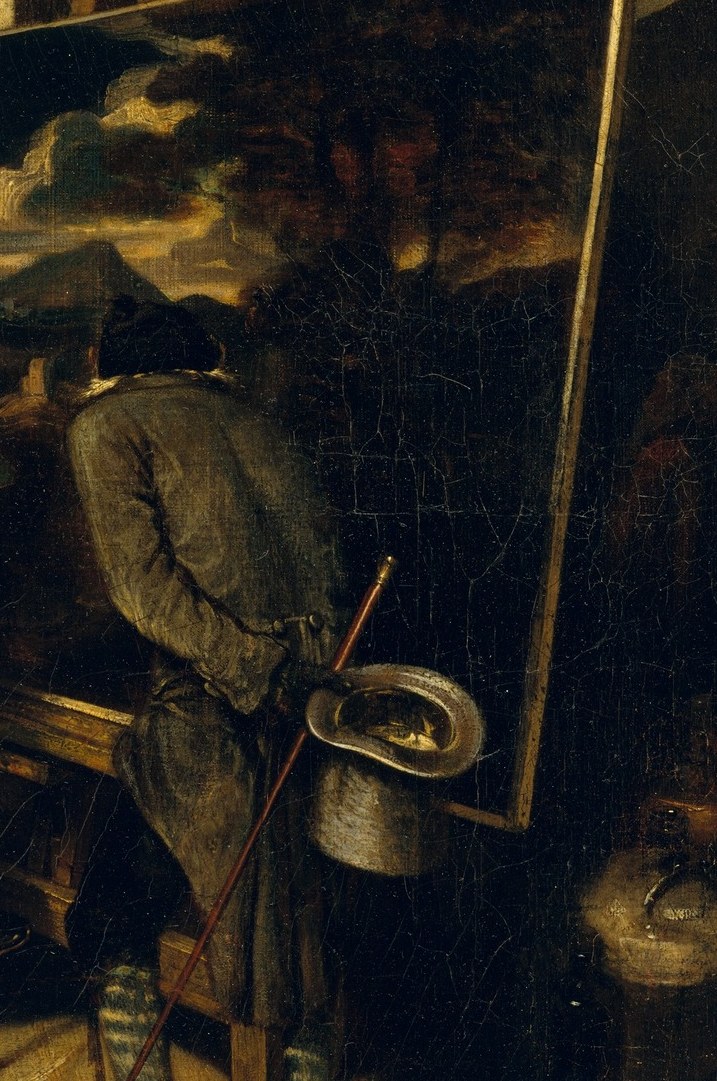
In a dark studio, three chimpanzees in frock coats and cravats gather around a landscape canvas. The center chimp, in a tall silk hat, gestures like a lawyer delivering a closing argument. On the right, a fourth leans in so close his nose nearly touches the paint. They are not looking at art, they are performing judgment, consulting a reference book open on the floor rather than trusting what they see.
Decamps drew on the French tradition of singerie, dressing apes in human clothing to mock human folly. When this canvas appeared at the 1839 Paris Salon, the target was unmistakable: the self-appointed connoisseurs who dismissed living artists for failing to measure up to the seventeenth-century master Nicolas Poussin. The painting on the easel is a Poussin landscape, held up as the unassailable ideal by critics who had stopped looking altogether.
Decamps was better known in his own time for Orientalist scenes, but The Experts may be his most modern work. Every generation has critics who mistake precedent for taste. Seeing them as chimpanzees is still a useful reminder.
#arthistory #19thcenturyart #metmuseum
Details
Transcript
They dress like French gentlemen. They study a canvas as if it were overdue accounts. A folio lies open on the floor. They consult books, not their eyes. The painting they judge is a Poussin, the old master standard. The painter wanted a seat at the 1839 Paris Salon. He got one, and filled it with apes.