Airs and graces by Laura Theresa Alma-Tadema
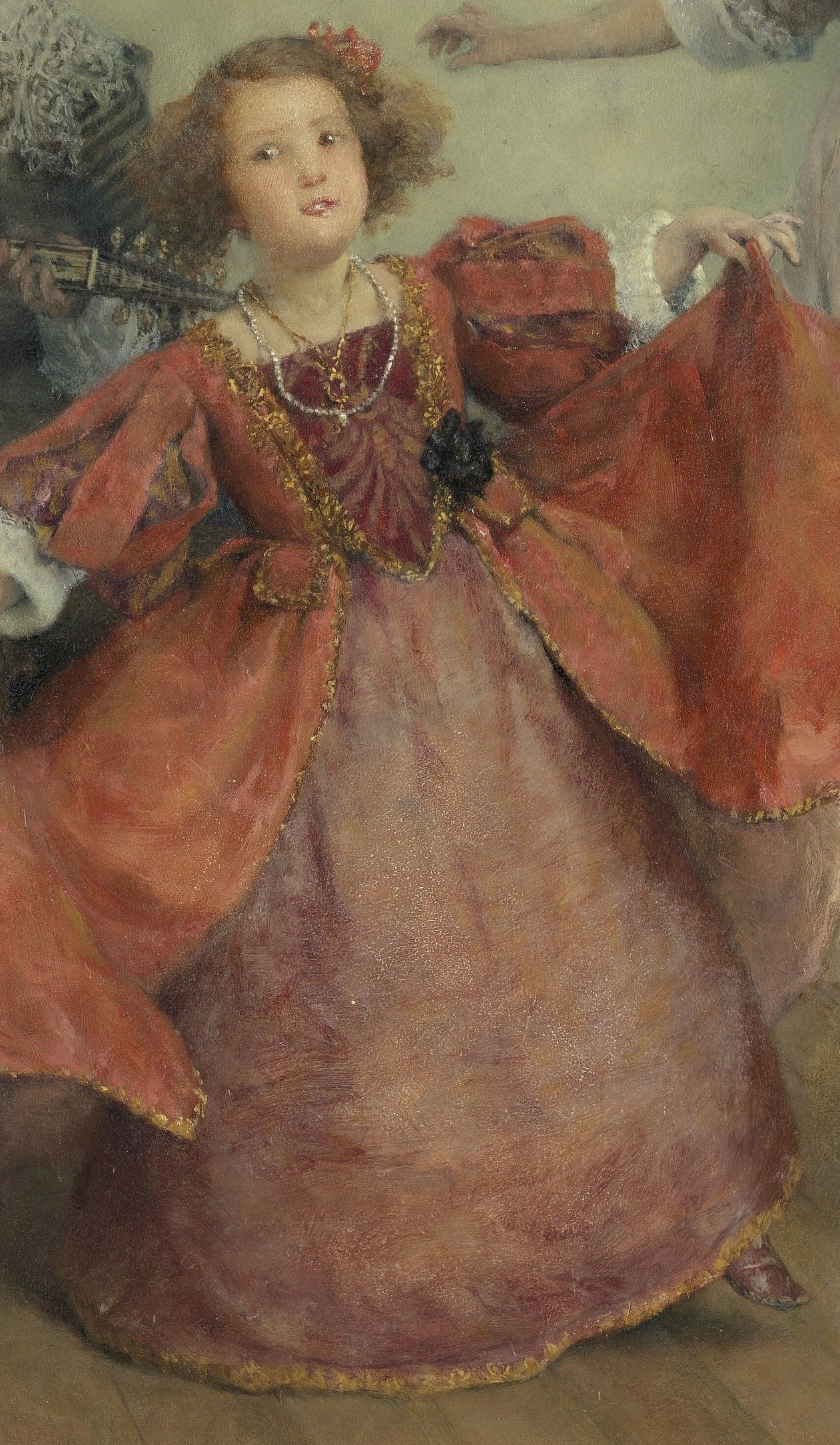
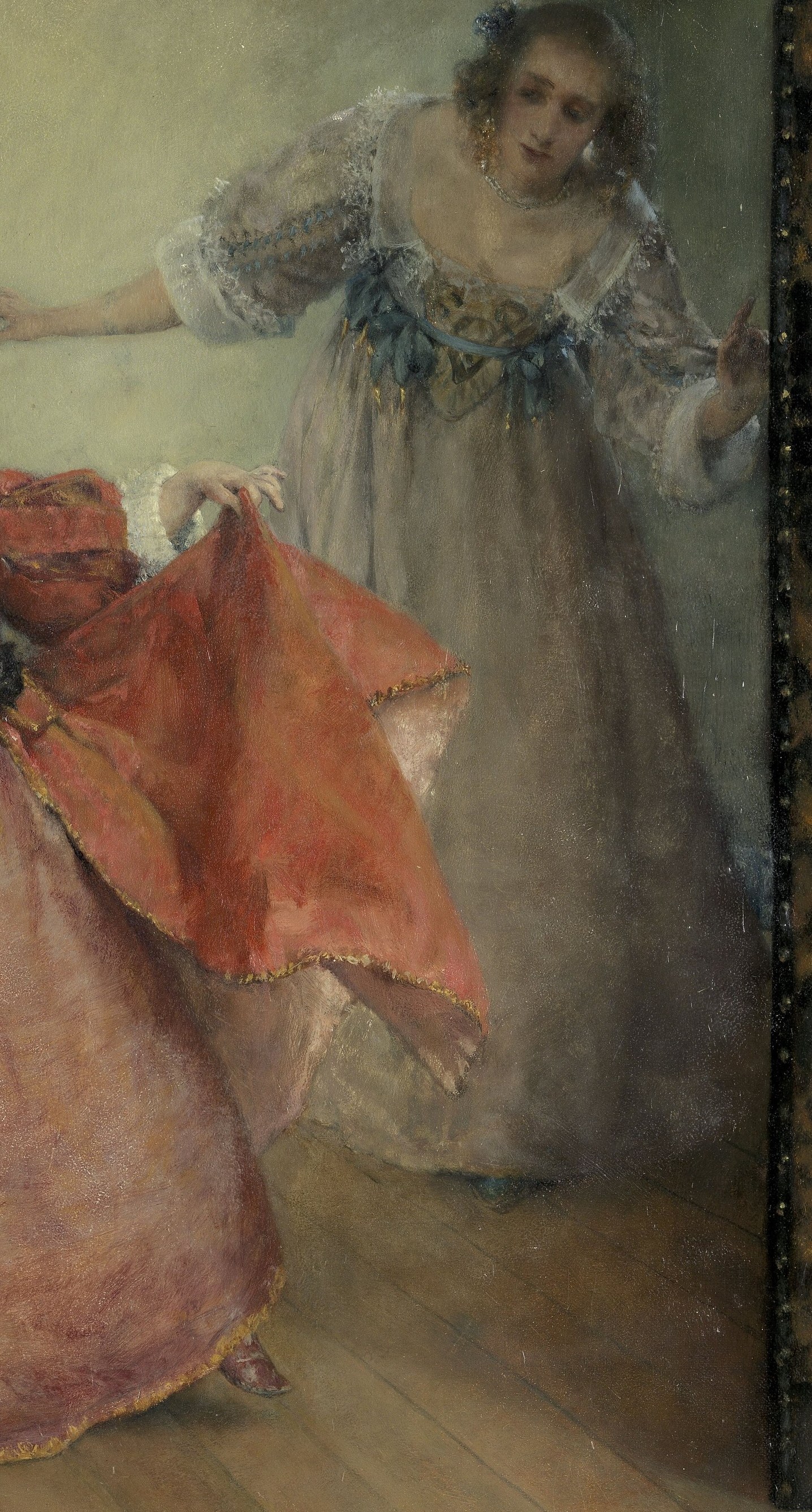
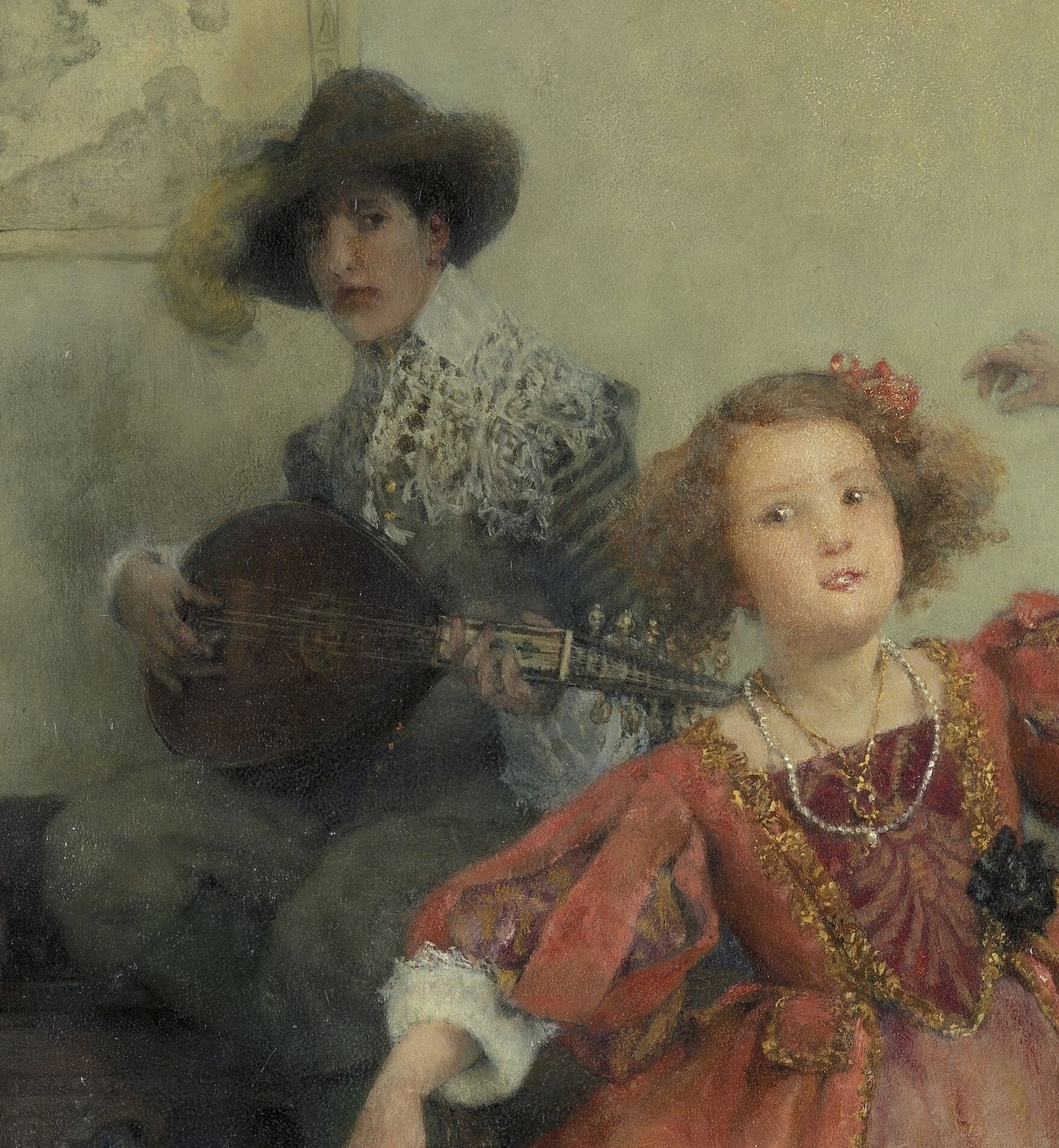
In Laura Theresa Alma-Tadema's *Airs and Graces*, painted in 1896, a moment of genteel instruction unfolds within a cultured Victorian home. This oil painting, held at the Rijksmuseum, captures a young girl learning dance or deportment under the watchful eye of an older woman, accompanied by a lutenist.
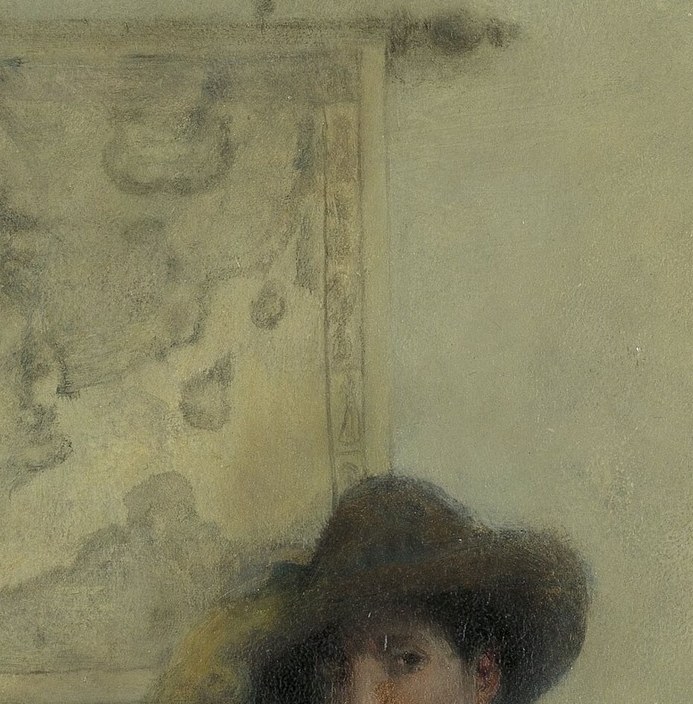
Notice the vibrant red dress of the dancing girl, contrasting with the muted tones of the room. The map on the wall is a subtle detail that hints at an environment valuing education and a broad perspective, beyond domestic confines.
Alma-Tadema, a British artist, was known for her intimate domestic and genre scenes, exhibiting 18 of her works at the prestigious Royal Academy. Her husband, Sir Lawrence Alma-Tadema, was also a celebrated painter of the era. This work showcases her talent for depicting the subtle light and refined atmospheres of late 19th-century interiors.
The painting invites us to consider the quiet moments of learning and leisure that shaped women's lives in this period.
Details
Transcript
This painting, from 1896, captures a refined domestic moment. A young girl in red practices a dance or a graceful pose. Her teacher, a poised woman, guides her with an outstretched hand. A musician provides accompaniment on a lute, a cultured instrument. On the wall, a map suggests an interest in education and the world. This kind of scene was a specialty of the British artist. Laura Theresa Alma-Tadema exhibited 18 works at the Royal Academy.