A View of the Mountain Pass Called the Notch of the White Mountains (Crawford Notch) by Cole, Thomas
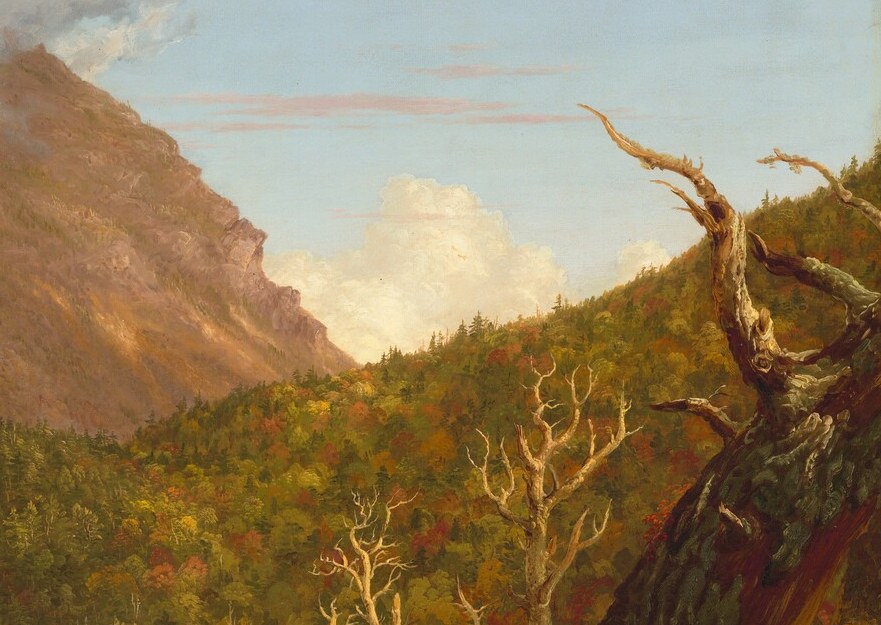
This is Thomas Cole's 'A View of the Mountain Pass Called the Notch of the White Mountains (Crawford Notch),' painted in 1839. It captures an exact moment in New England history: the White Mountains were just opening to tourism, and the road you see cut through the valley was a new route bringing stagecoaches of visitors into terrain that had been nearly impassable a generation earlier.
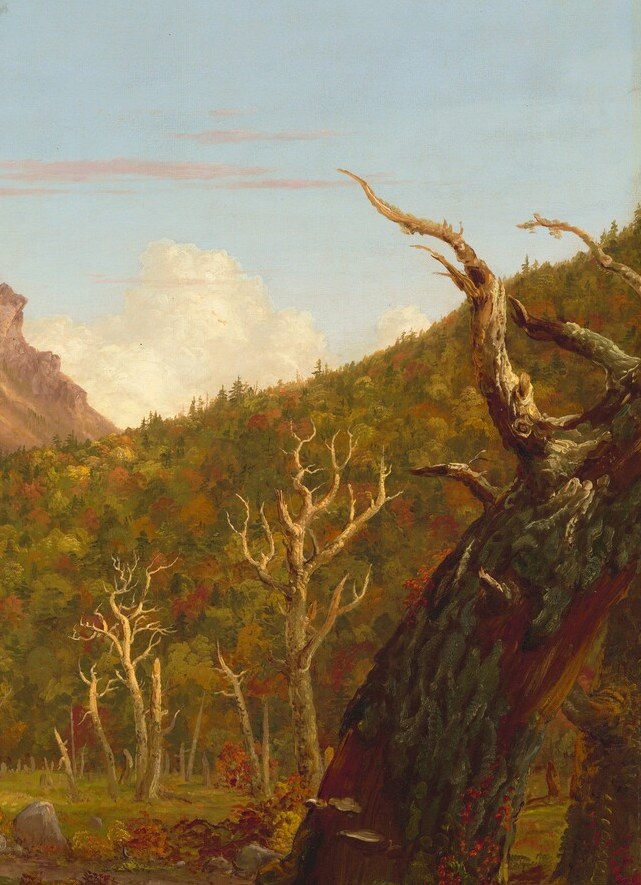
Look first at the V-shaped notch of light at the center. Cole organizes the entire painting around it. Then find the tiny figure on the road and the small white inn beside it. Those two marks are the only civilization for miles, and their scale against the mountains is Cole's whole argument about the size of nature and the smallness of us. The dead tree in the right foreground is another signature move: a mortality motif he placed in painting after painting.
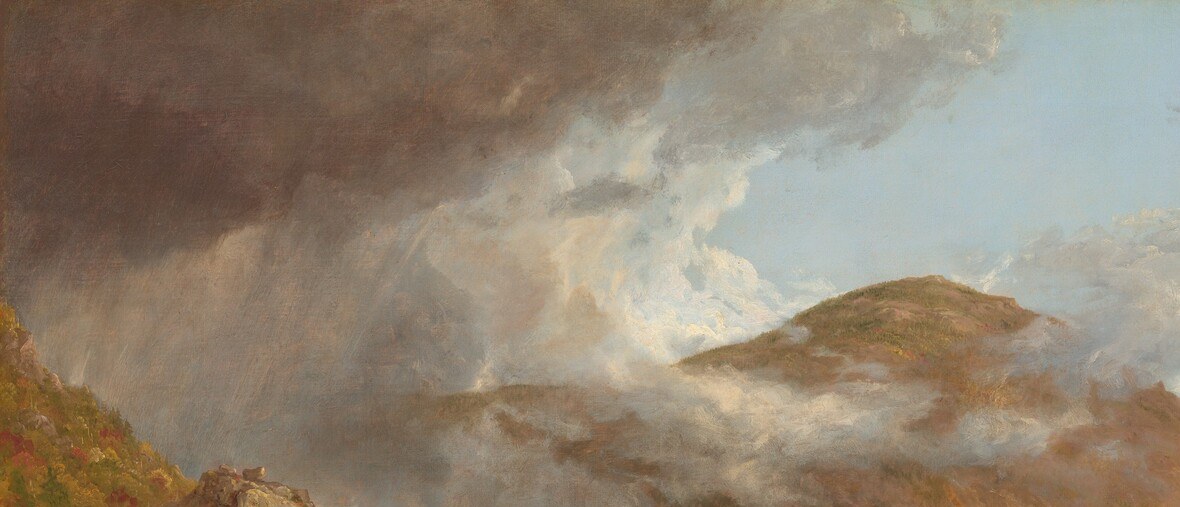
Cole was the founder of the Hudson River School, and this canvas is a late-career statement. He had visited Crawford Notch and knew the pass intimately. The storm clouds massing on the left are not generic drama. They mean winter is about to arrive and shut the pass down for months. The autumn foliage on the right slope says this is the season's last clear day. He is showing the wilderness as it actually was: thrilling, unstable, and still far larger than anything Americans had built inside it.
The painting now lives at the National Gallery of Art. You can stand in front of it and walk that road.
#arthistory #hudsonriverschool #thomascole
Details
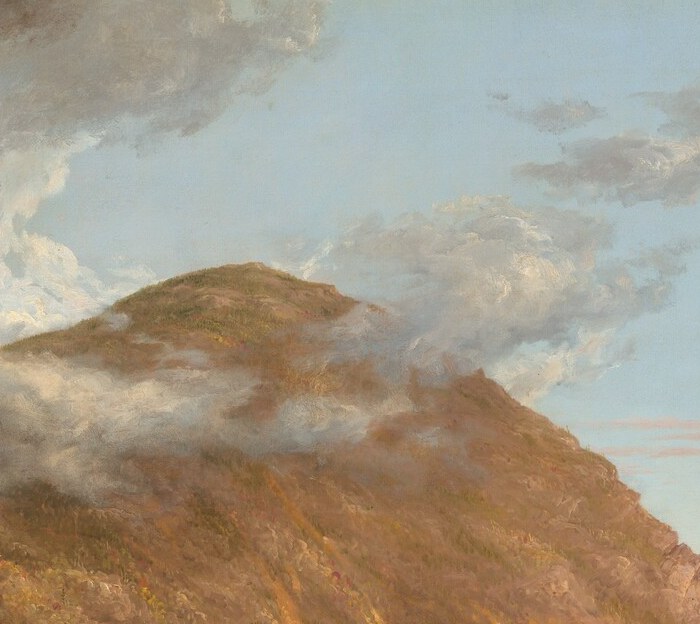
Transcript
Autumn, 1839. The White Mountains of New Hampshire. A rutted road cuts through the valley toward a gap in the mountains. That gap is Crawford Notch, the only pass through this range. A small white inn sits beside the road, the lone sign of civilization. Tourists had just begun travelling here by stagecoach, paying to see the wilderness. A dead tree in the foreground reminds them what this landscape can do. A storm massing over the left peak is about to close the pass for winter. Cole painted this as a witness: beautiful, dangerous, and newly American.