Five Maya Indians by Catlin, George
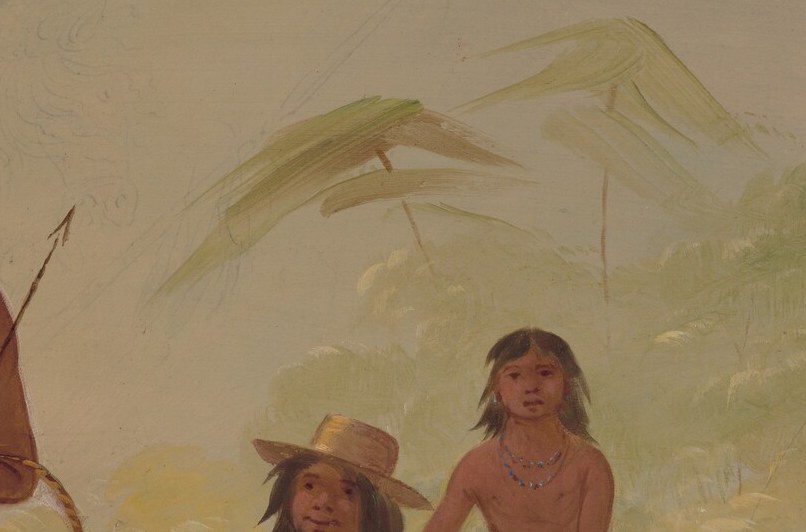
Is it a genuine George Catlin, or a clever forgery? This painting, "Five Maya Indians," dates between 1855 and 1869, years after Catlin's peak work documenting Indigenous cultures.
At first glance, it appears to be a typical Catlin, with figures in traditional attire, and even features a catalog number, 'A 291', in its signature. Yet, it's not by Catlin at all. It was created to imitate his distinct style and was likely intended to be integrated into his renowned collection, fooling experts for years.
George Catlin, an American lawyer turned painter, spent much of the 1830s traveling the American West, producing thousands of portraits and scenes of Native American life. This painting, however, is now attributed to an unknown artist, whose skill in mimicry has kept the true origin a mystery.
The deception highlights the enduring value of Catlin's work and the lengths to which art can be imitated. What details do you think gave it away?
Details

Transcript
This painting looks like a rare Catlin, an early American painter. His work documented Indigenous cultures in the 1830s. But this painting was made decades later, between 1855 and 1869. Even the artist's signature includes a catalog number 'A 291'. The problem is, this Catlin is not a Catlin at all. It's an imitation, meant to be part of his famous collection. The true artist remains unknown, the deception still hidden.