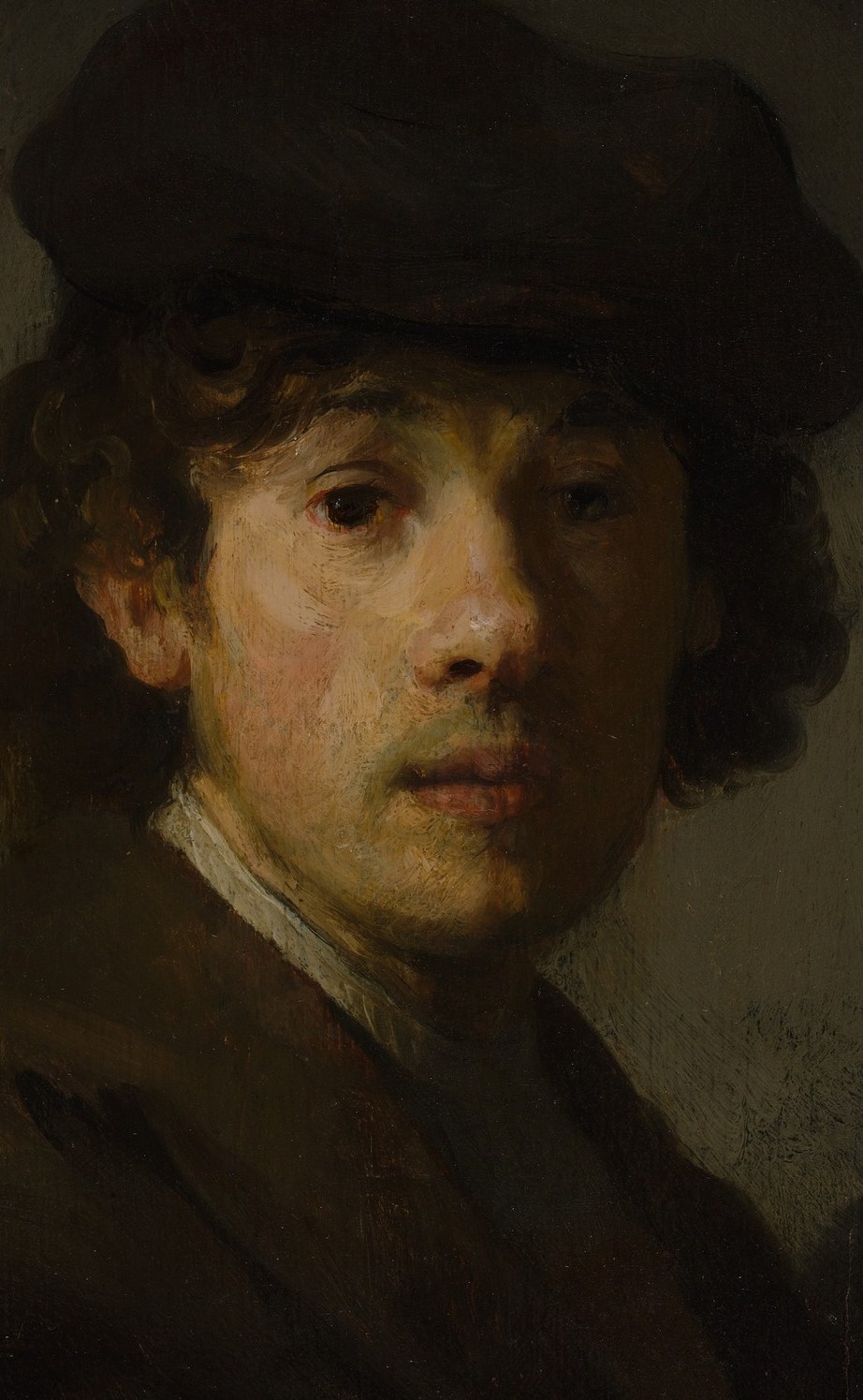
Rembrandt (1606–1669) as a Young Man by Rembrandt
This is one of Rembrandt's earliest self-portraits, painted around 1630 when he was roughly 24 and still working in his native Leiden. It hangs today in the Walker Art Gallery, Liverpool, where its small scale and darkened varnish mean a visitor could easily drift past it. But in close-up, the painting is a masterclass in the one technique that would define his entire career.
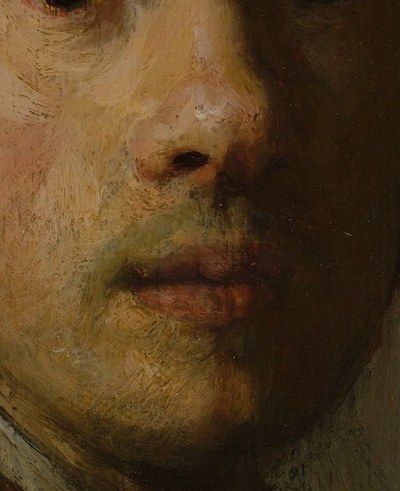
Look at the shadow that swallows the left side of his face. Most painters treat shadow as a soft fade into darkness, a lack of light. Here, the shadow is a positive, hard-edged shape that Rembrandt cut into the lit side of the face like a sculptor removing material. Follow its contour down the cheek and jaw. That edge is what pushes the illuminated forehead, the nose, and the one lit eye forward into three-dimensional life. He was not painting light. He was painting the shadow that makes light feel real.
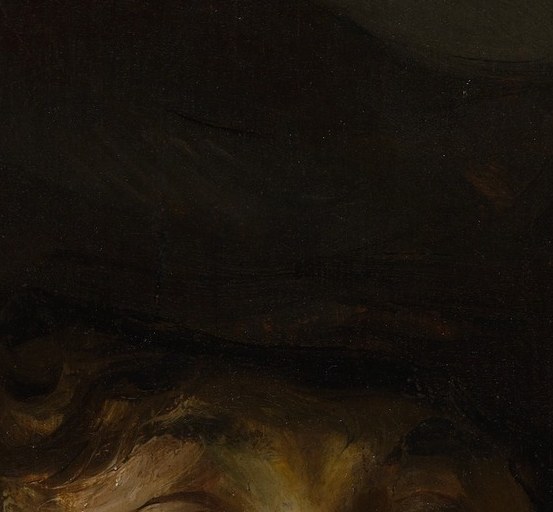
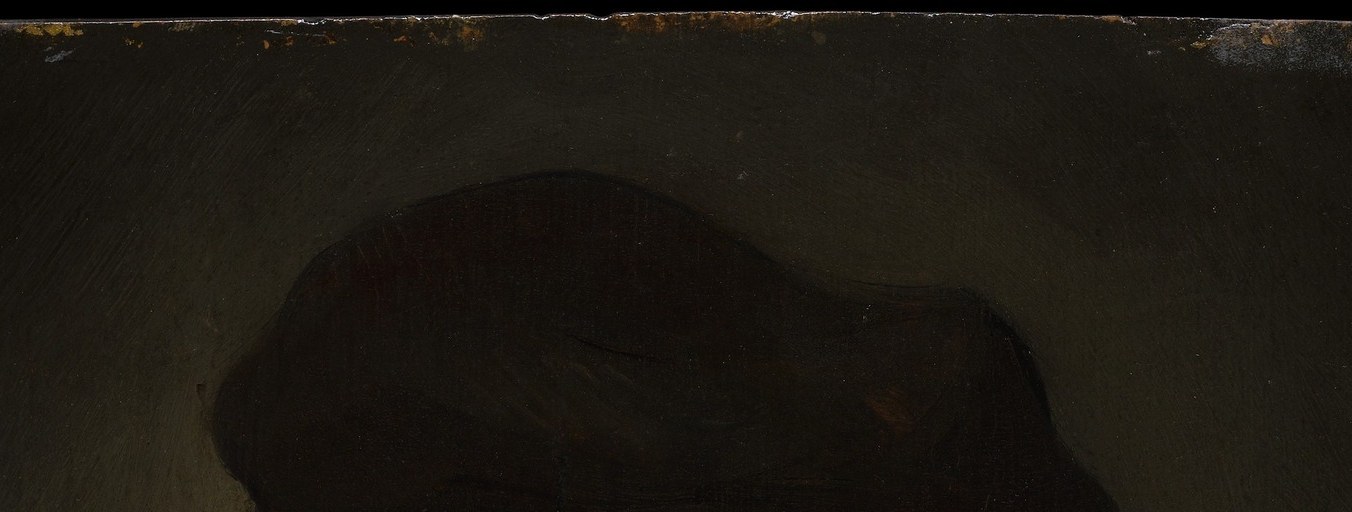
Rembrandt painted himself obsessively throughout his life, around 80 self-portraits survive in paint, etching, and drawing, and the early ones were laboratory experiments. He couldn't afford professional models, so his own face, with its uneven features and unruly hair, became the test site. In this painting the props are minimal: a wide hat to block overhead light, a dark background to eliminate distraction, and a single strong source raking across his features. Every texture is treated differently: the curly hair is loose, almost scribbled brushwork; the skin on the forehead is smooth and luminous; the highlight on the nose tip is one confident stroke.
Rembrandt would later say that the truest portrait required capturing not just a likeness but 'the greatest and most natural movement.' Here, at the very start, you can see him learning that movement comes from what you withhold. Which part of the face do you feel the most strongly in this painting, the lit side, or the shadowed one?
Details

Transcript
You could almost walk past this young man. But stop and look at the dark side of his face. The shadow is a shape. A deliberate, cut-out void. The painter was about 24. He used his own face to test this. That deep shadow pushes the lit cheek forward. One stroke of highlight rides the tip of the nose. The whole head becomes solid, built from what he left out.