Saint Anthony Leaving His Monastery by Master of the Osservanza
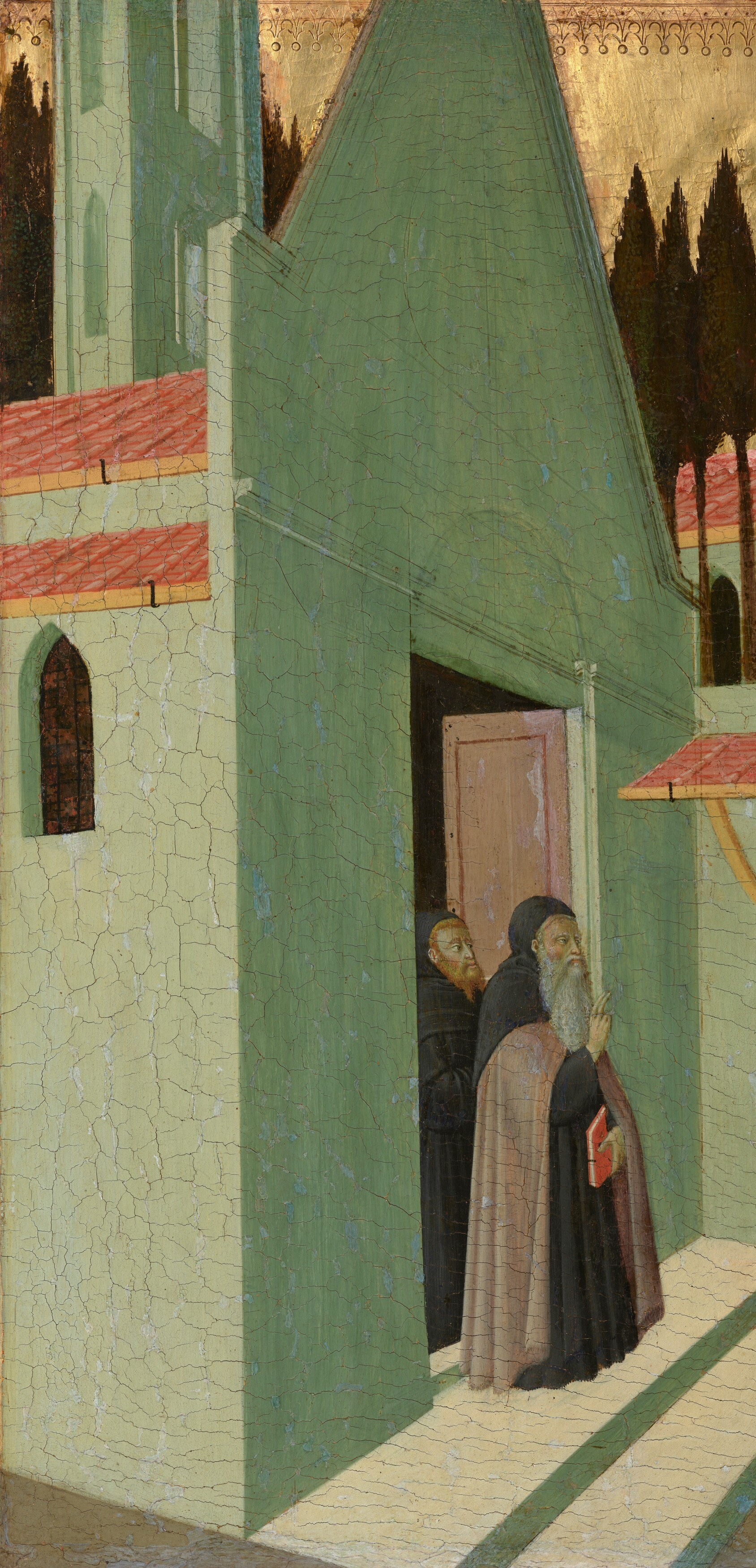
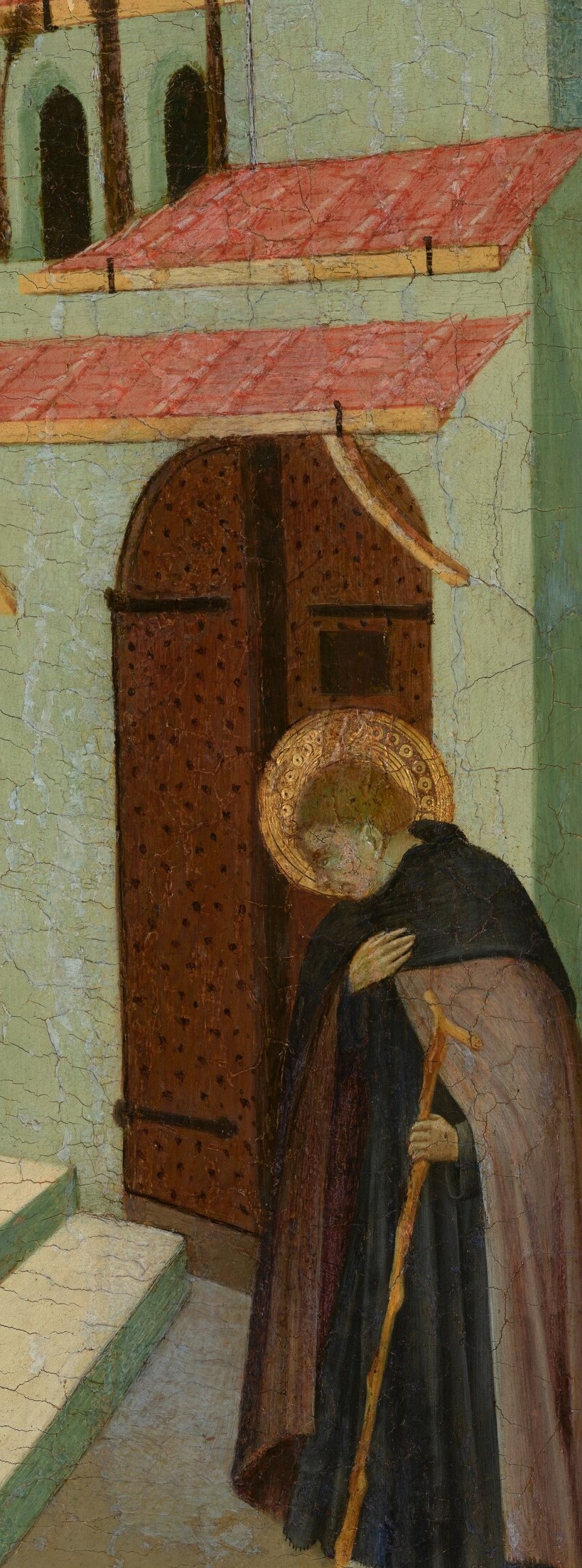
Saint Anthony Leaving His Monastery, painted around 1432 by the artist known only as the Master of the Osservanza, hangs today as both a devotional object and a forensic puzzle. It shows Anthony the Great walking away from communal monastic life and into the desert, a donkey carrying his few possessions. But the story of the painting itself has its own drama: for much of the twentieth century, scholars fought bitterly over who made it.
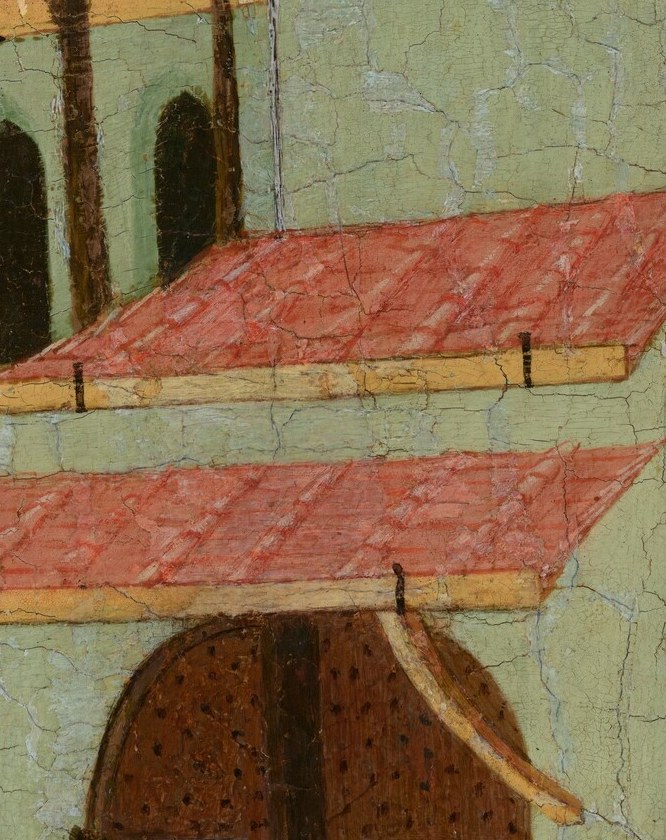
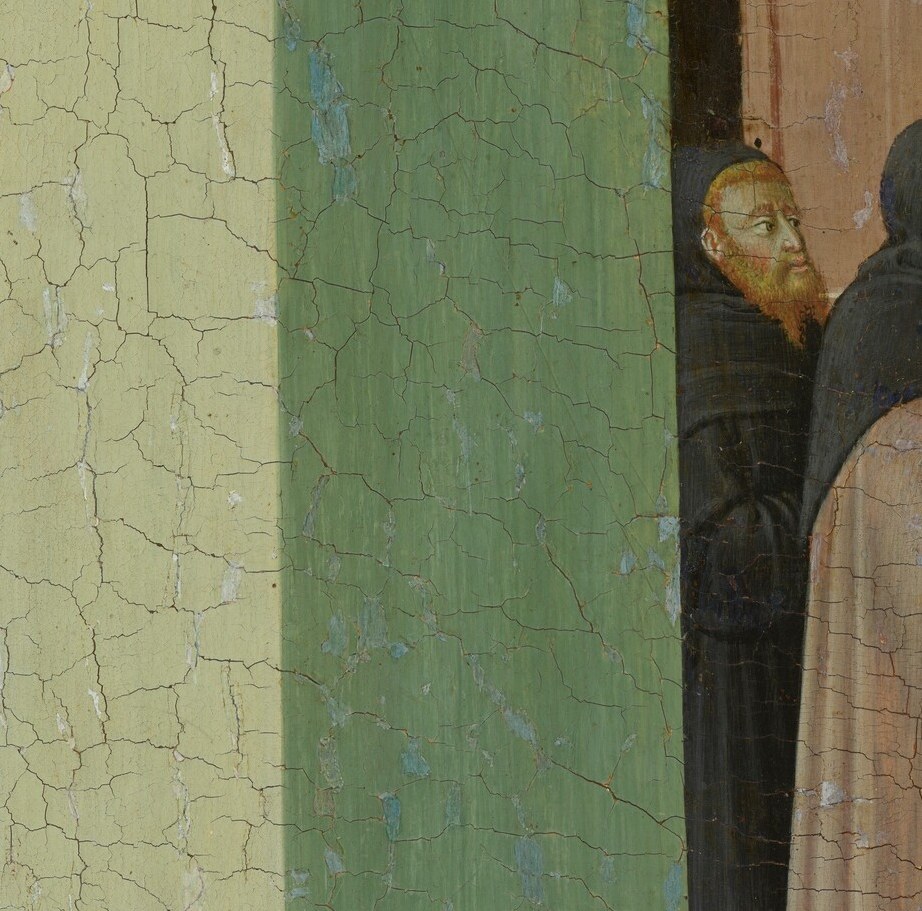
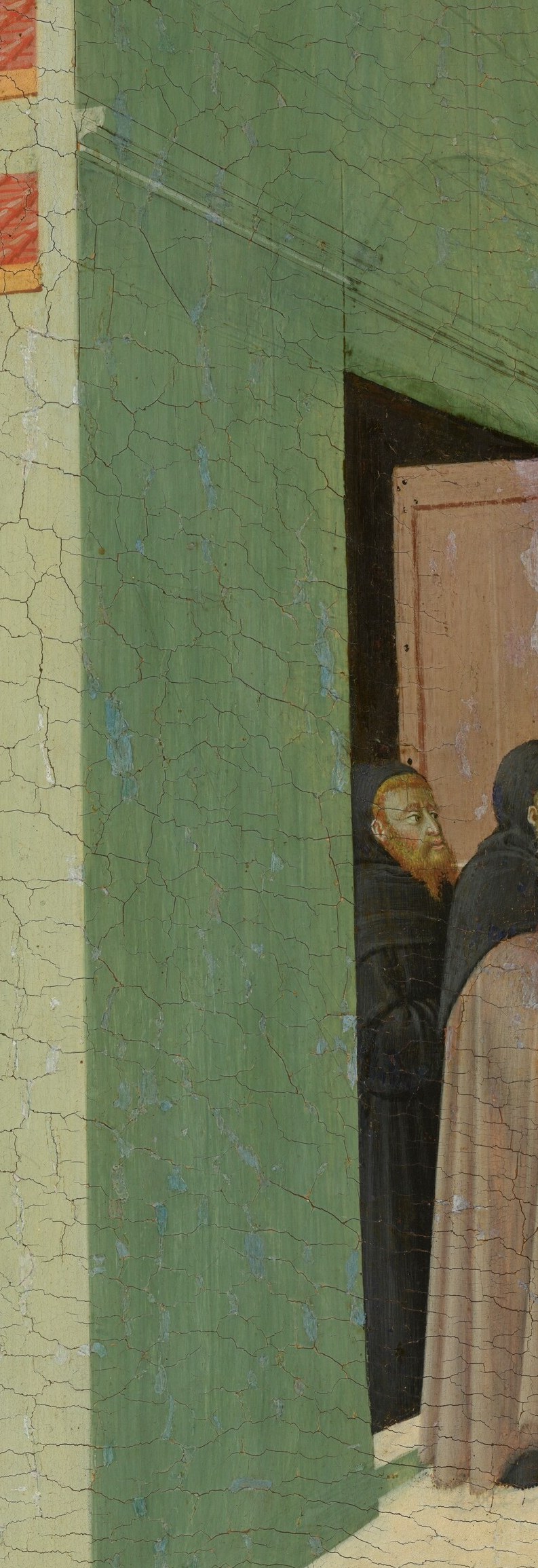
Watch the saint's face. Most departure scenes in early Renaissance art read as serene or sorrowful. Here, the expression is harder to settle, the set of the jaw and the turn of the body away from the monk in the doorway suggest something closer to resolve edged with anger. The green wall behind him is an unusually bold, nearly abstract slab of malachite that functions as both architecture and symbol: the enclosure he is escaping, painted as a flat refusal.
The painting was long attributed to Stefano di Giovanni, called Sassetta, the leading Sienese painter of the generation. But a group of works from the same hand kept resisting that name. Stylistic tics, modeling, and a particular use of green didn't match. By the mid-twentieth century, the argument had grown so loud that Roberto Longhi proposed a compromise: give the unknown painter a working name. He called him the Maestro dell'Osservanza, after a church in Siena that held two of the panels. The field agreed to disagree, and the name stuck.
So the painting carries a double identity: a saint leaving one kind of life for another, and an artist whose real name we lost to an argument nobody quite won. What do you see in his face?
Details
Transcript
He was the father of all monks, and he is leaving. Look at his face. This is not a peaceful goodbye. The knot in his rope belt marks his vows of poverty and obedience. For decades, nobody could agree who painted this panel. Some said Sassetta. Others said a young unknown copying him. The argument split an entire field in two. Now they call him the Master of the Osservanza, and leave it at that.