The Visitation Panel from Saint John Retable by Domingo Ram
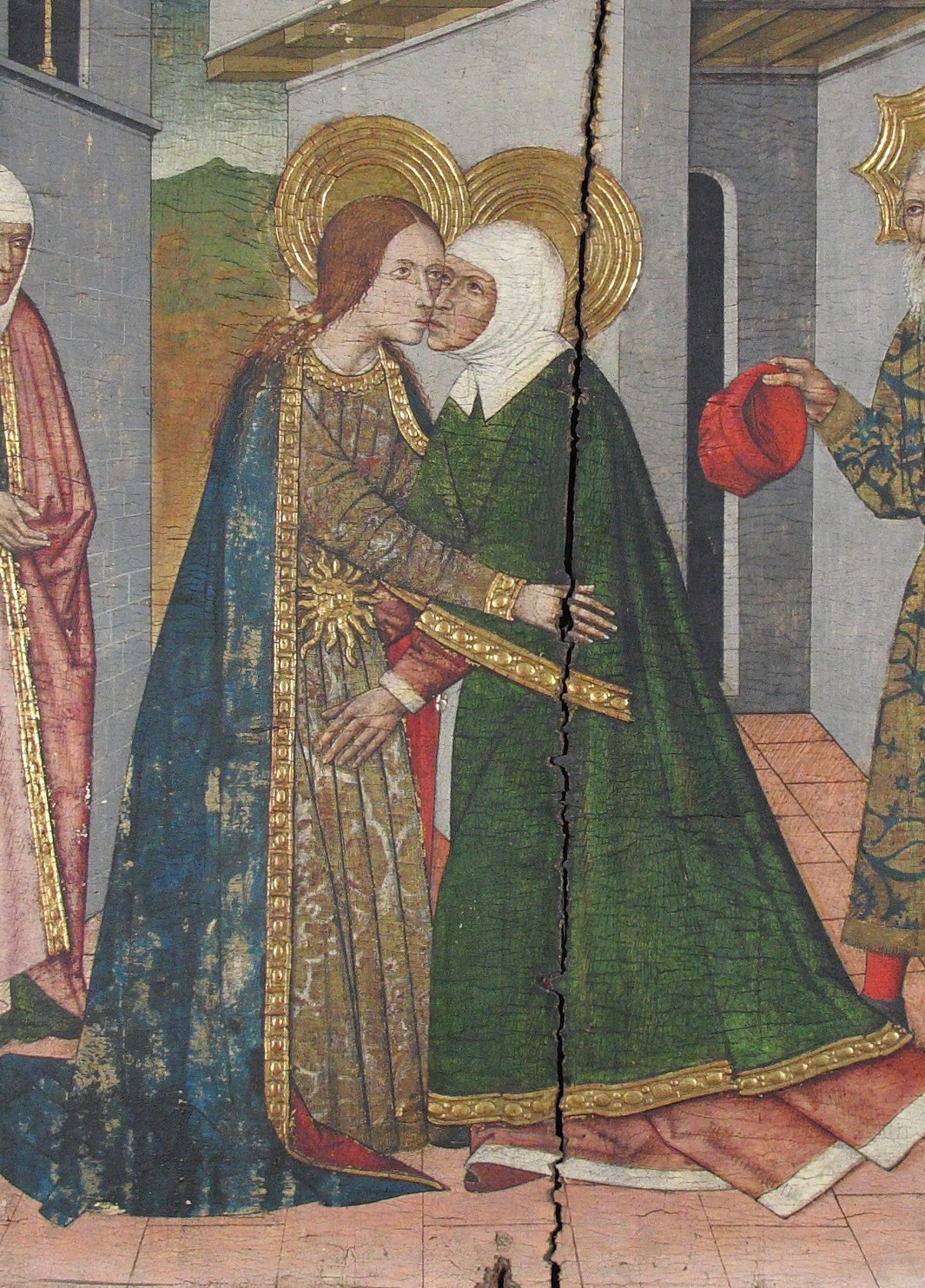
This is a fragment of a lost world. The Visitation Panel by Domingo Ram, painted around 1450, is a work of tempera on wood that once belonged to a much larger altarpiece dedicated to Saint John the Baptist. Time broke the altarpiece apart, and this single scene of two pregnant women greeting each other eventually found its way to The Metropolitan Museum of Art, where it is held today. What remains is a small miracle of survival.
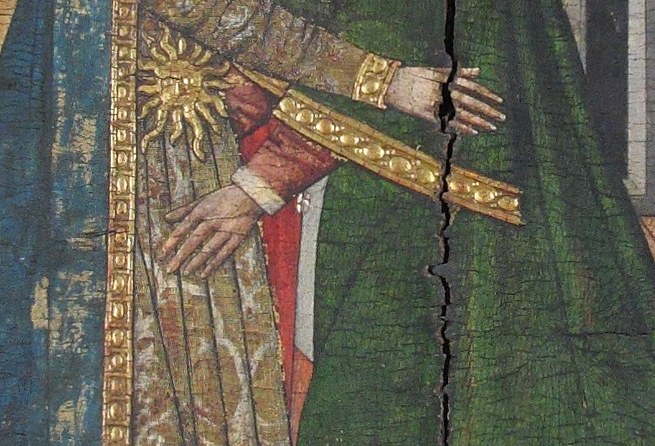
Look closely at the center of the panel. A vertical crack runs straight through the image, bisecting the joined hands of Mary and Elizabeth. This is not damage to the paint layer. It is a separation in the wood support underneath, caused by centuries of the planks expanding and contracting with changes in humidity. The crack is the physical record of the object's age, a fracture that no restorer has tried to erase.
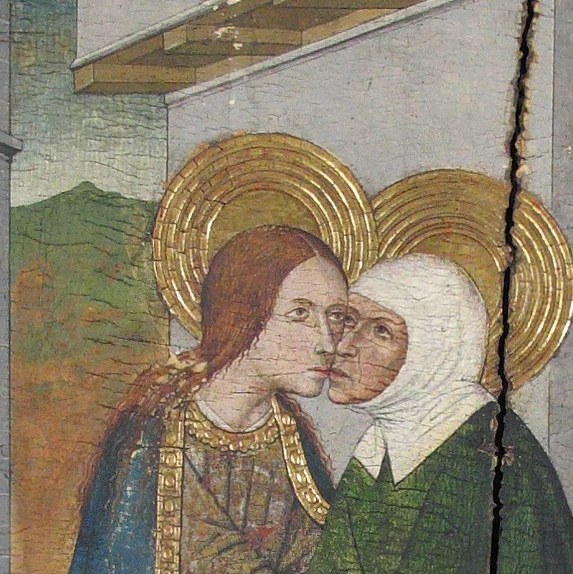
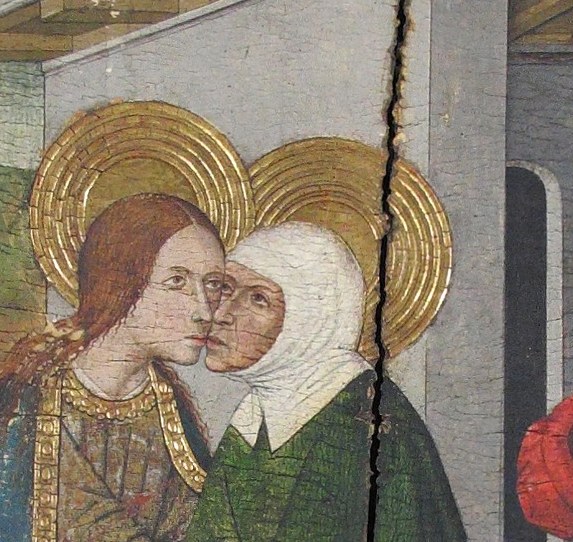
The painting itself uses tempera, a fast-drying medium of pigment mixed with egg yolk. The technique allowed Domingo Ram to build up the intricate gold brocade on Zacharias's robe and the vivid blue-green of Mary's mantle with precision. The two women lean their heads together, their halos overlapping, their hands clasped at the exact point where the wood has split. The artist placed the painting's most intimate gesture on the very seam that would later open.
Every old painting carries its history on its surface. This panel is not unbroken, but it is whole. What other scars in museum paintings do you walk past without noticing?
Details

Transcript
They call it the Visitation, a quiet, sacred meeting. Mary, pregnant with Christ, visits her cousin Elizabeth. Now look at the center of the panel. A vertical crack splits the image straight down the middle. This is a wound in the wood, not the paint. Over five centuries, the joined planks expanded and shifted. The panel was once part of a vast altarpiece dedicated to Saint John. Time dismantled the altarpiece, but this fragile scene survived.