The Sacrifice of Iphigenia by Gaetano Gandolfi
Gaetano Gandolfi's "The Sacrifice of Iphigenia" (1789) is a Baroque depiction of one of Greek myth's most harrowing detours. Agamemnon must kill his own daughter to appease the goddess Artemis, allowing the Greek fleet to finally sail for Troy. Gandolfi chooses the instant before the blade falls, when mortal anguish is still the whole story.
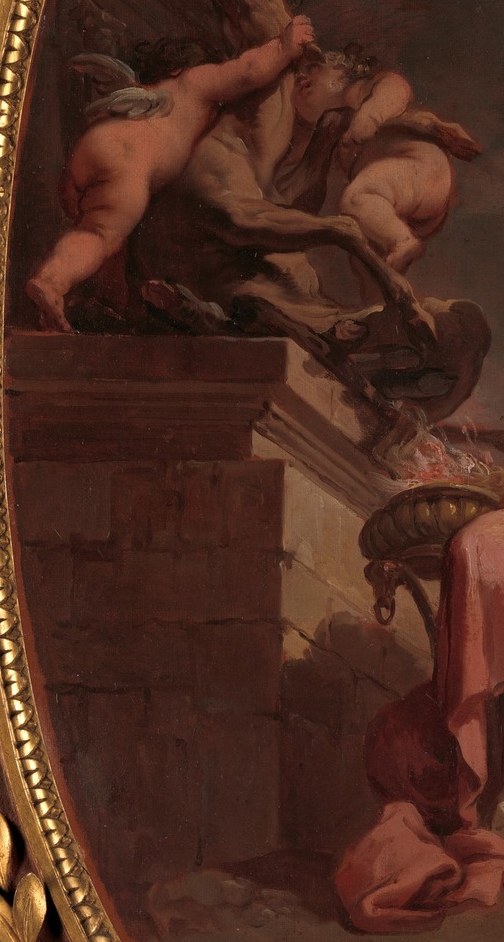
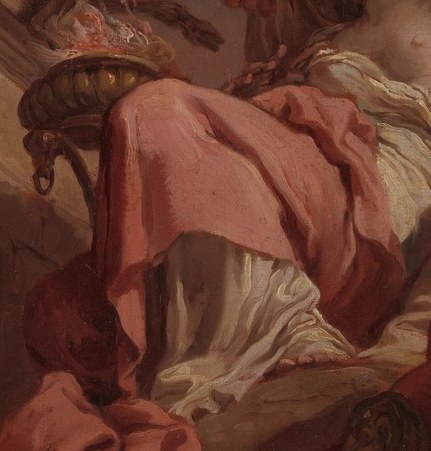
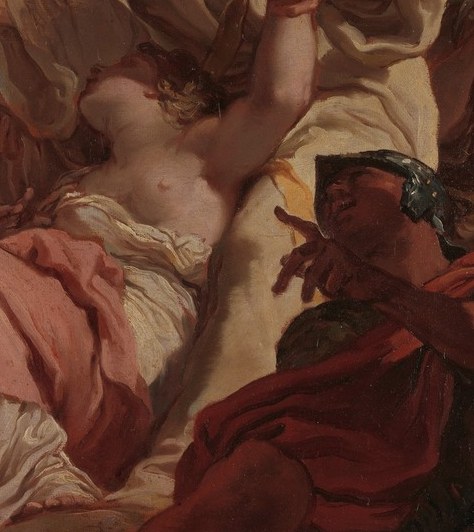
The painting is built on a stark divide: the dark heavy mass of Agamemnon turning away on the left, and the bright exposed figure of Iphigenia on the right. Her throat is tilted back, open to the knife. A tangle of reaching hands from the crowd frames her, but none of them can close the distance. Above, a cluster of putti echo the distress below; these are not rejoicing angels, but witnesses in grief.
Gandolfi, a Bolognese painter of the late Baroque, was known for exactly this kind of dynamism, biblical and mythological subjects pushed to their emotional limit. He came from a family of artists who dominated commissions across Italy in their time, and this painting shows why: the light is designed to hit the parts of the story that hurt the most.
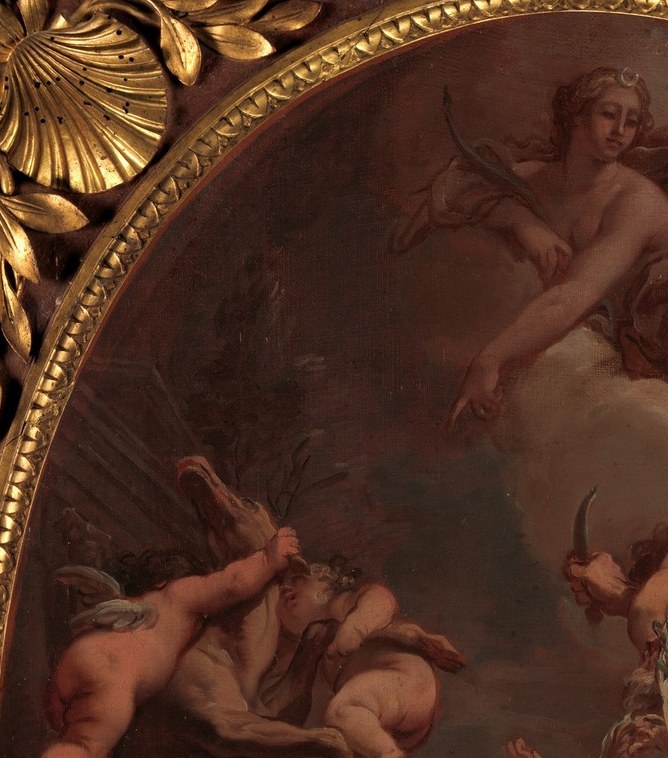
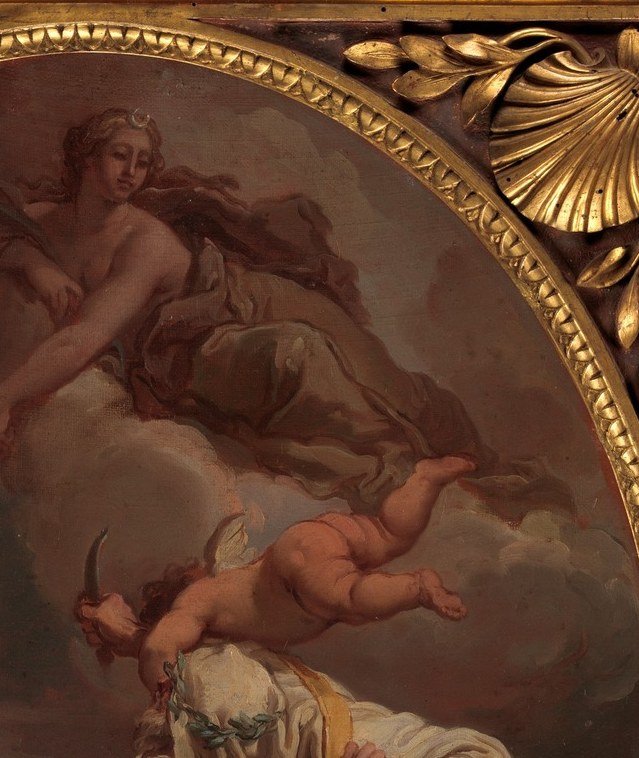
Only in the final beat does Artemis appear, a small bright figure in the clouds. The myth promises rescue. The painting leaves you in the seconds before it arrives.
Details
Transcript
A father has ordered his daughter's death. Agamemnon turns away. He cannot watch. Look at his daughter's face. Her throat is exposed. The blade is waiting. The crowd reaches out, unable to stop it. Gandolfi painted this in 1789. The myth was already two thousand years old. But even the putti aren't celebrating. No one is saved until the goddess appears.