A Mosque by Alberto Pasini
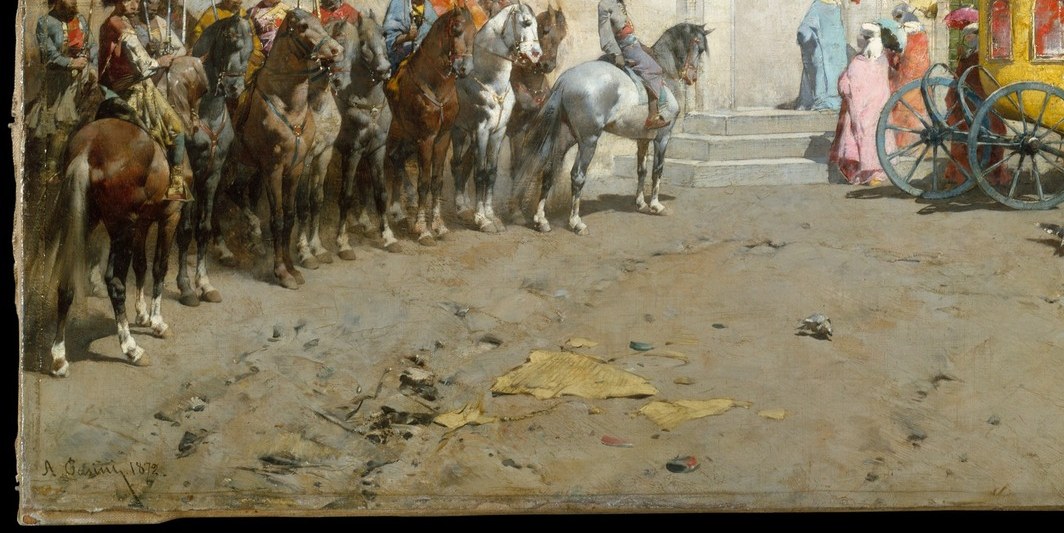
Alberto Pasini painted “A Mosque” in 1872, and it is not a fantasy. It is a memory.
Pasini trained in Paris but spent decades in Istanbul and Tehran as a diplomat and painter. He made multiple journeys east, and eventually, he simply stayed. His paintings, unlike many Orientalist contemporaries, were built from real observation. This canvas is a dense, true record of an Ottoman courtyard the painter knew well.
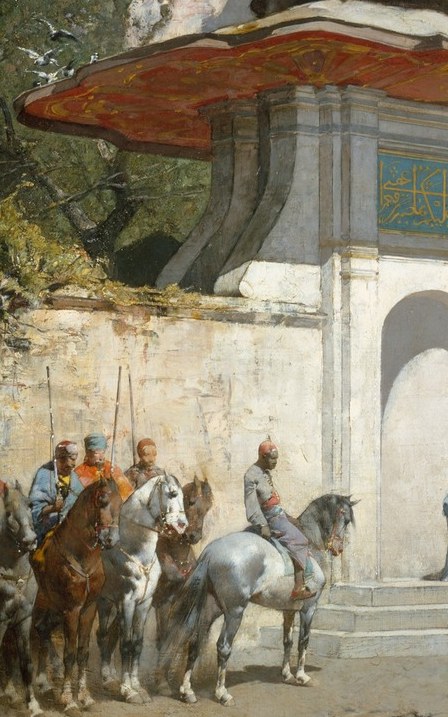
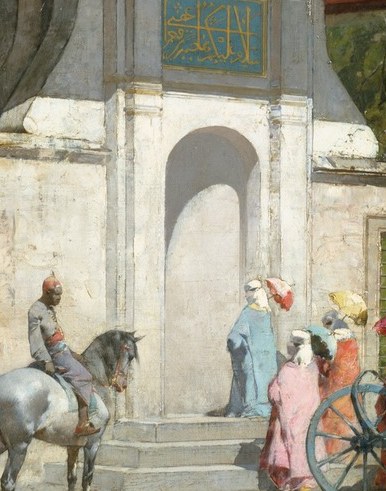
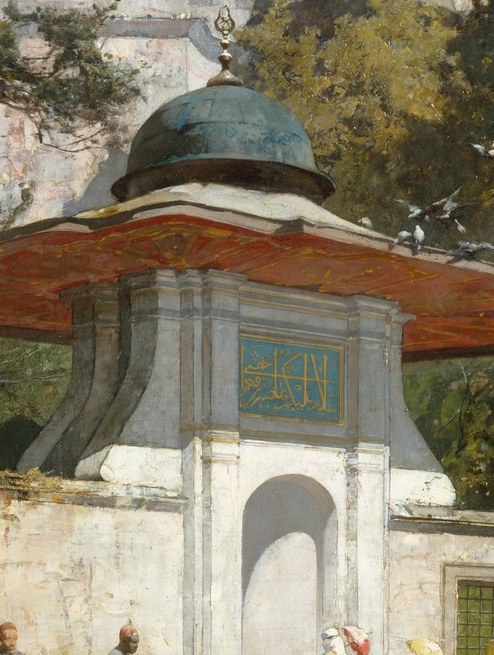
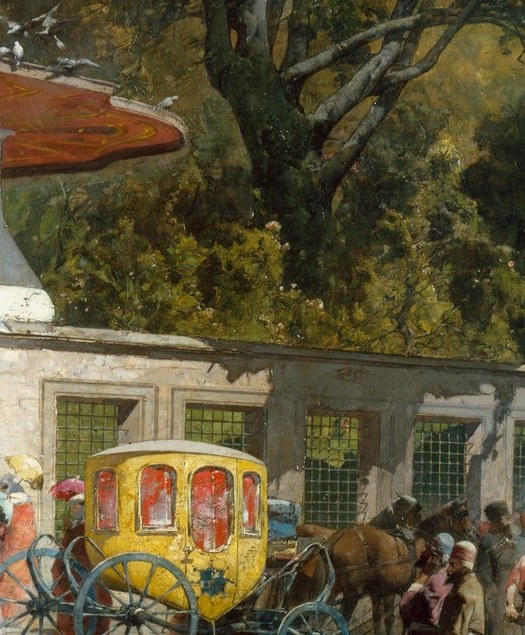
Look at the green fountain at center, a şadırvan where the faithful wash before entering the mosque. The white-robed figures moving under the stone arch catch the strongest light in the whole composition: Pasini guides you straight to the act of devotion. And waiting silently on the right, a bright yellow carriage marks the presence of a diplomat, perhaps one the painter himself arrived in.
Pasini never varnished his Eastern scenes with melodrama. He trusted the architecture, the light, and the daily rhythm of a culture he had quietly joined. The painting is now held in a private collection, but it remains one of the truest windows into a European painter who learned to look, and then chose to belong.
What do you notice first: the stillness of the crowd, the weight of the minaret, or that single luminous patch of sun on the ground?
Details
Transcript
It looks like a travel postcard from 1872. But the painter was not a tourist. He was an Italian diplomat who refused to come home. Look at the white-robed figures: passing through the stone arch. They walk toward the fountain to wash before prayer. And here, waiting in the bright sun: a diplomatic carriage. Pasini served in Istanbul and Tehran, then stayed for twenty years. He knew this courtyard. He lived this light.