The Forest in Winter at Sunset by Théodore Rousseau
Théodore Rousseau's "The Forest in Winter at Sunset," painted around 1846, is a masterful example of landscape art at The Metropolitan Museum of Art. Rousseau, a key figure in the Barbizon school, dedicated his artistic life to capturing the nuances of natural environments.
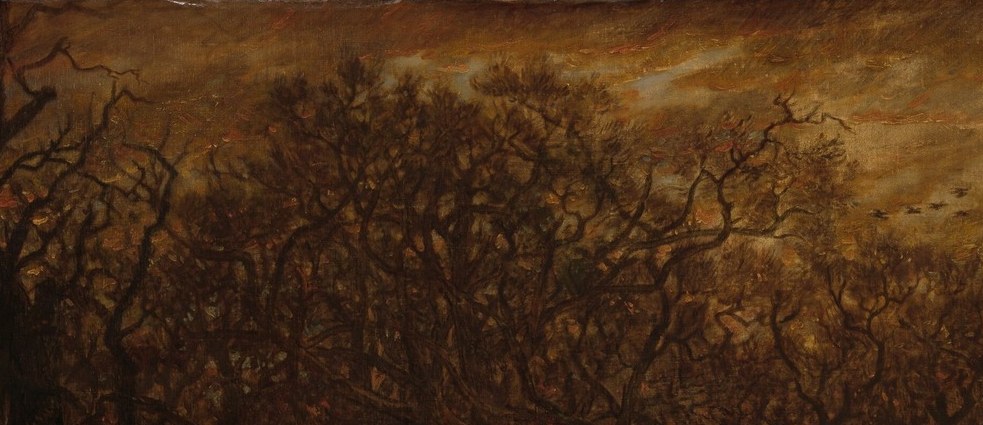
Observe how Rousseau uses a predominantly dark palette to evoke the mysterious atmosphere of a forest at twilight in winter. Yet, subtle touches of light, like the faint sunset glow or the unexpected patch of warm light on the forest floor, are rendered with breathtaking realism.
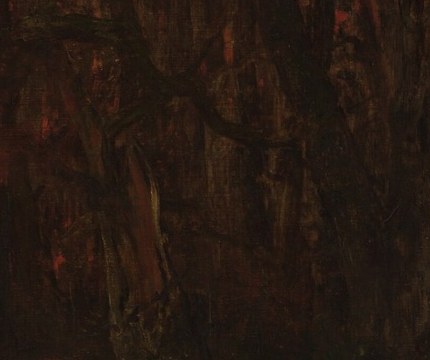
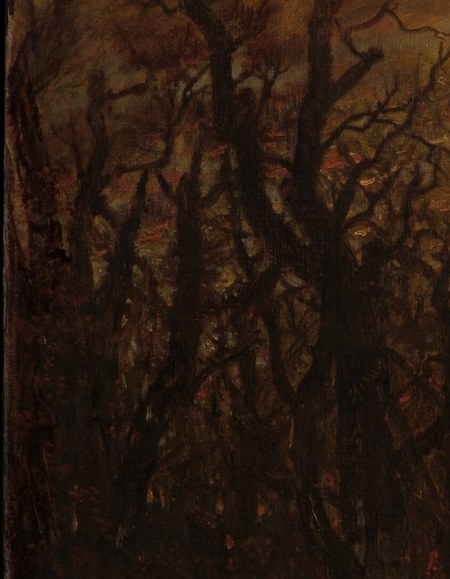
His technique, particularly the use of impasto, creates a tactile quality in the rough bark and gnarled branches, making the trees feel almost tangible. This dedication to texture and light allowed him to bring the quietude and stillness of the winter woods to life.
How does this play of light and shadow draw you into the depth of the painting?
Details

Transcript
This painter devoted his life to forests. He found beauty in their stark winter light. His thick brushstrokes make the bark almost tangible. Look closely at this patch of light on the ground. It feels impossibly real, almost glowing. The way light falls here is pure paint magic.