Telemachus and the Nymphs of Calypso by Angelica Kauffmann
View the artwork: Telemachus and the Nymphs of Calypso →
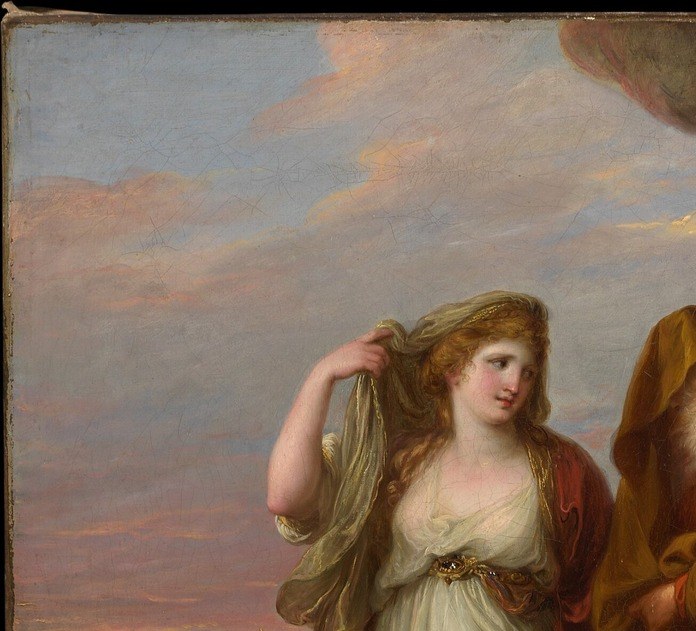
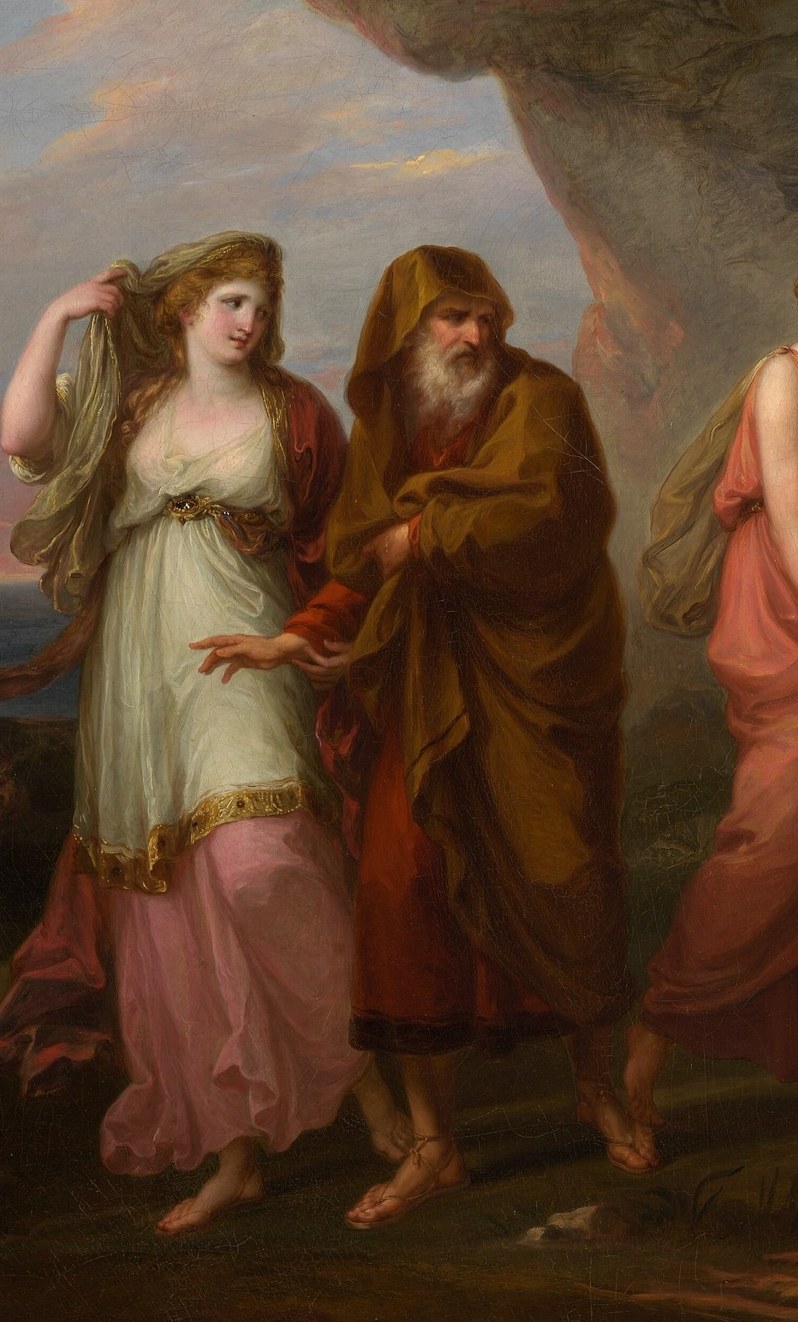
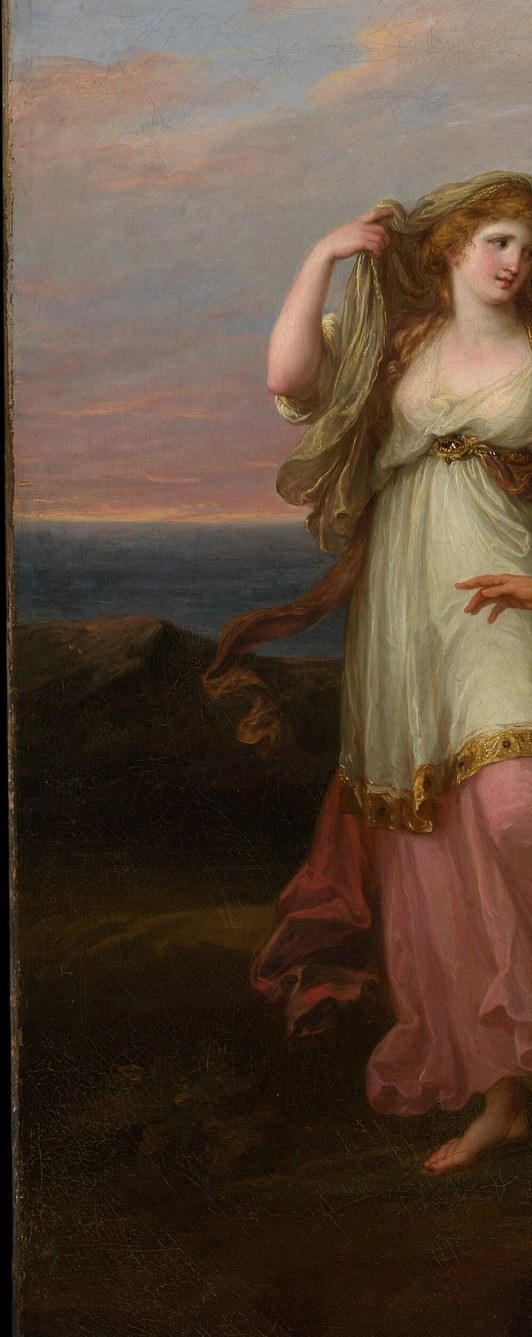
In Angelica Kauffmann's 1782 painting at the Metropolitan Museum of Art, Telemachus has just washed ashore on Calypso's island and is being greeted by a circle of nymphs. It looks like a classical scene of courtesy and calm, but Kauffmann was painting an episode from Fénelon's novel where this welcome is the beginning of a long, enforced stay. Every gift the nymphs extend carries a double meaning.
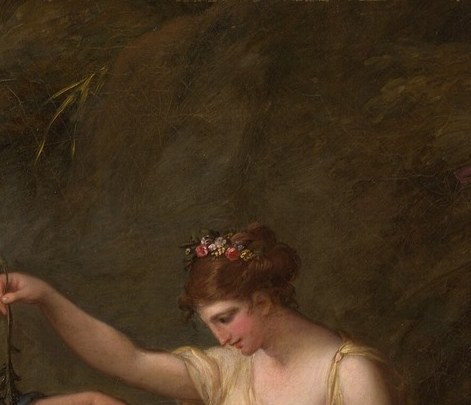
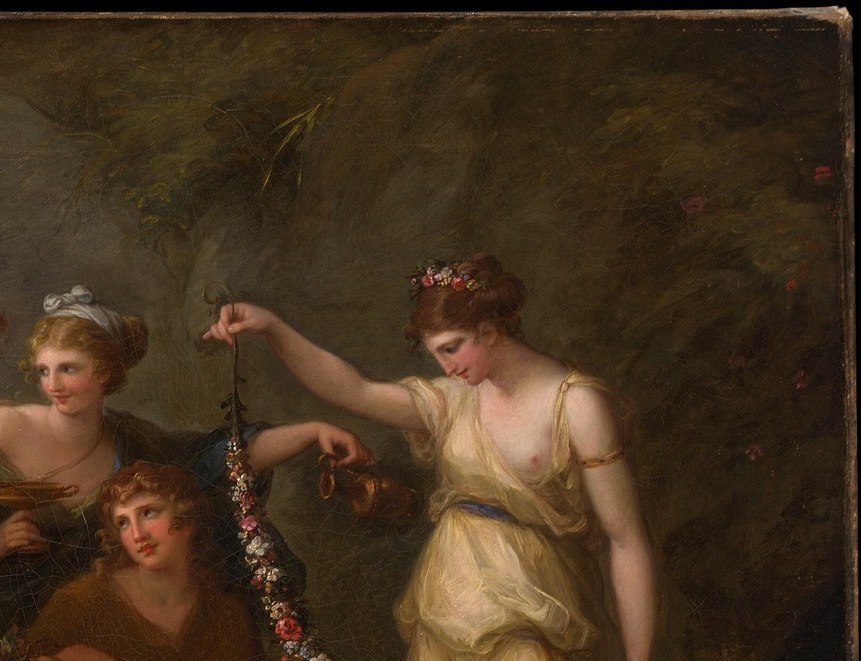
Look first at the floral garland being offered in the center group. On Ogygia, garlanding a guest meant enchantment, not mere hospitality. Beside it, the nymph holding an instrument signals Calypso's principal method of control: music as enticement. Telemachus's expression captures the tension, half wonder and half wariness, while the open sea visible over his shoulder is the life he has just been separated from.
The painting was commissioned in Rome by Monsignor Onorato Caetani as the first of a two-part series. Its companion, The Sorrow of Telemachus, followed a year later and shows the aftermath. Kauffmann herself was a founding member of the Royal Academy in London, one of only two women among its original members, and a celebrated history painter at a time when that door was barely open to women.
Kauffmann composed five figures' overlapping drapery across this canvas without a single awkward fold, a virtuoso passage of neoclassical painting. Once you see the garland, the instrument, and the dark grotto not as decoration but as deliberate warnings, the whole scene shifts from politeness to quiet captivity.
#arthistory #angelicakauffmann #neoclassical
Details
Transcript
They look like a welcoming party. Fénelon's novel sends Telemachus shipwrecked onto Calypso's island. Look at the floral crown. On Ogygia, a garland spelled enchantment, not just hospitality. The nymph beside her holds an instrument. Music was Calypso's tool of enticement. His face reads as a mortal measuring an unfamiliar divine world. The open sea behind him is the world he cannot return to. Every gift here is a link in a chain. The welcome is the captivity.