Artwork
Telemachus and the Nymphs of Calypso
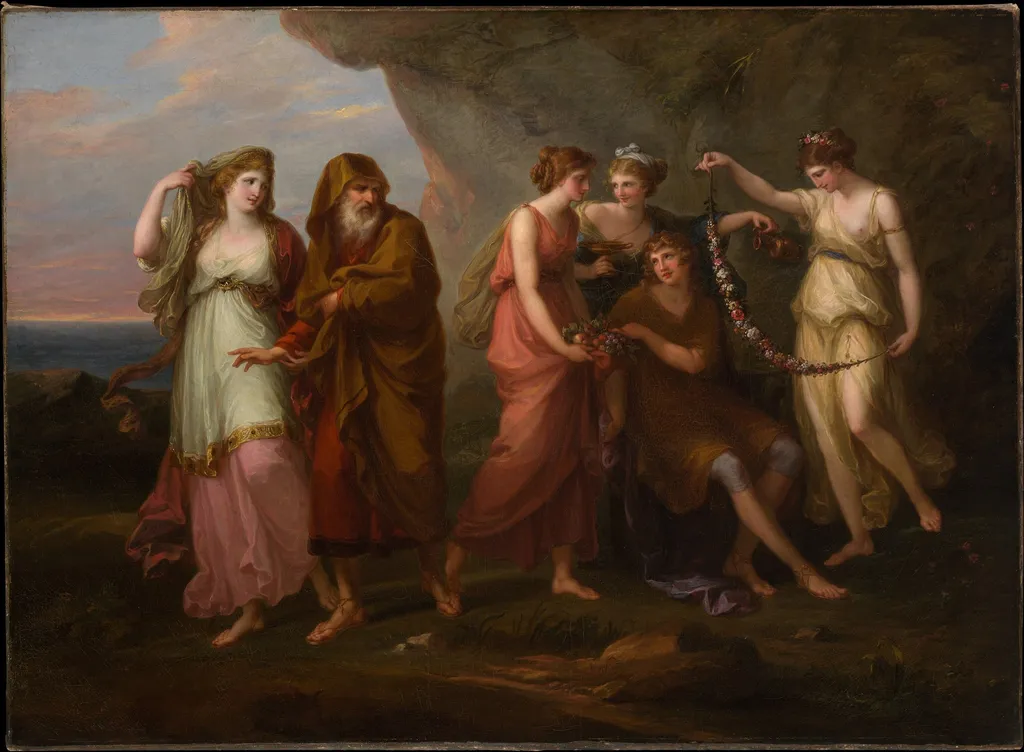
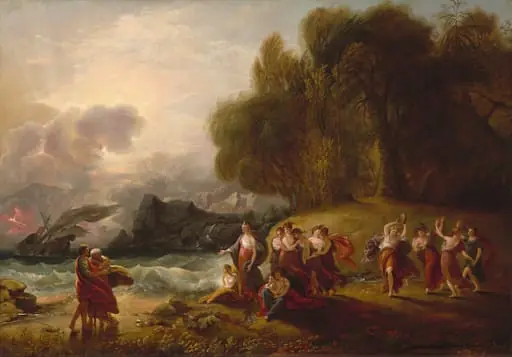
Telemachus and the Nymphs of Calypso is an oil painting by the Rococo painting artist Angelica Kauffmann. It dates from 1792 and is held in the collection of the Metropolitan Museum of Art.
About this work
Angelica Kauffmann placed Telemachus on the shore of Calypso's island, where the nymphs greet the shipwrecked son of Odysseus.
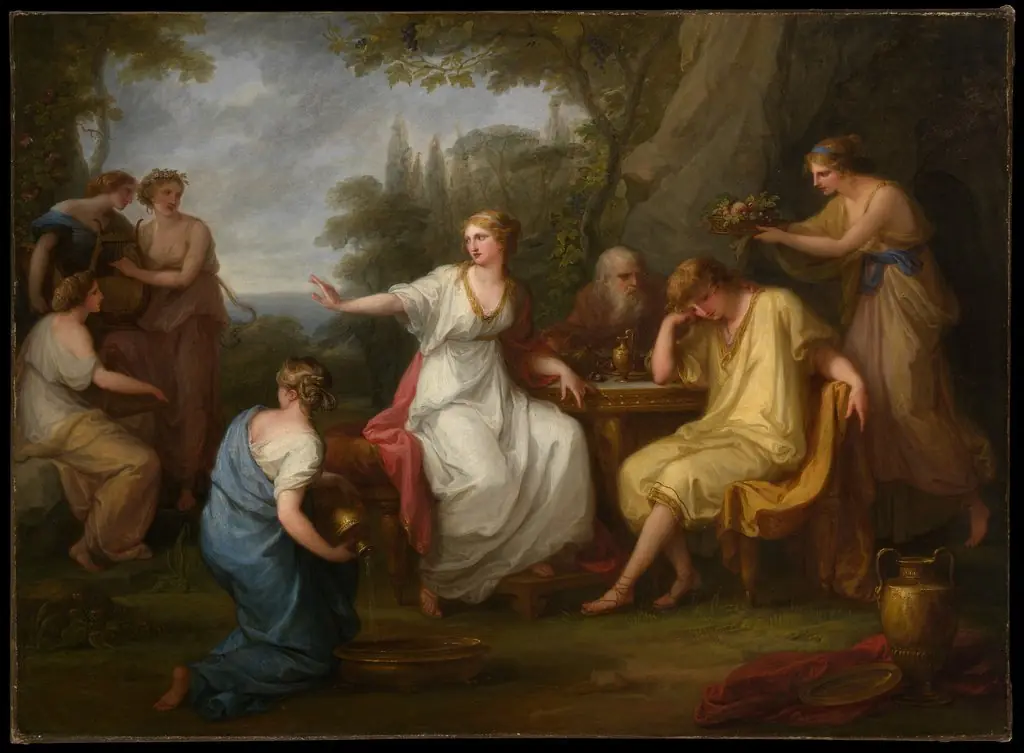
Angelica Kauffmann placed Telemachus on the shore of Calypso's island, where the nymphs greet the shipwrecked son of Odysseus. Painted in Rome for Monsignor Onorato Caetani, it is the first of a pair drawn from Fénelon's novel The Adventures of Telemachus; its companion, The Sorrow of Telemachus, followed a year later. Both entered the Metropolitan Museum of Art in 1900 through the bequest of Collis P. Huntington.
Subject & Meaning
The painting depicts the arrival of Telemachus on the island of Ogygia, home of the nymph Calypso, as described in François Fénelon's 1699 novel The Adventures of Telemachus. Three nymphs welcome Telemachus with fruit, wine, and a garland of flowers, while Calypso herself engages his disguised guide, the goddess Athena (appearing as Mentor). The scene captures a moment of hospitality and temptation within Telemachus's journey toward maturity.
Fénelon's narrative, a didactic and utopian tale written for the instruction of Louis XIV's grandson, explores themes of wise counsel, self-discovery, and the perils of passion, the painting visually condenses the episode's moral and emotional tensions.
Technique & Style
The painting is executed in oil on canvas, measuring 82.6 by 112.4 cm. Kauffmann works within a rigorous classicism, yet the composition is lyrical and emotional, set against luminous, broad landscapes. A modeling light from the left softly caresses the nymphs' arms and shoulders, emphasizing their curvaceous forms. The male figures, including Telemachus, appear effeminate and unheroic, contrasting with the women, who are depicted with corporeal, distinct femininity.
History & Provenance
Angelica Kauffmann painted Telemachus and the Nymphs of Calypso in 1792, commissioned by Monsignor Onorato Caetani (1742–1797) as one of a pair with The Sorrow of Telemachus. The two works illustrate episodes from François Fénelon's 1699 novel Les Aventures de Télémaque. After Caetani, the painting entered the collection of Eugene Fischoff, then passed to Collis Potter Huntington, his wife Arabella Huntington, and their son Archer Milton Huntington.
Ultimately it became part of the Metropolitan Museum of Art in New York, where it remains in the collection.
Context
Angelica Kauffmann painted Telemachus and the Nymphs of Calypso in 1792 upon commission from Onorato Caetani, duke of Sermoneta, as part of a diptych with The Sorrow of Telemachus, illustrating episodes from Fénelon's novel Les Aventures de Télémaque. Kauffmann's style in this period, rigorous classicism with lyrical, emotional compositions set in luminous landscapes, reflects the influence of contemporary French painting and places the work within the neoclassical tradition. The diptych traces Telemachus's transition from adolescence to maturity, a narrative that resonated with Enlightenment ideals of education and moral development. The painting is now in the Metropolitan Museum of Art, New York.
Overview
Painted in 1792 in Rome for Monsignor Onorato Caetani, Telemachus and the Nymphs of Calypso depicts a scene from François Fénelon's novel The Adventures of Telemachus. The composition illustrates the moment the shipwrecked son of Odysseus arrives on the island of Calypso, where he is greeted by the goddess's attendant nymphs. This oil on canvas serves as the first part of a commissioned pair, with the companion piece depicting the subsequent narrative events.
Kauffmann, a Swiss artist who achieved significant acclaim in London and Rome, frequently drew upon classical literature and mythology to explore themes of virtue and education. In this work, she employs the neoclassical style characteristic of her mature period, utilizing a balanced arrangement and clear narrative focus to convey the emotional encounter between the young hero and the divine figures. The painting reflects the artist's continued engagement with literary sources popular among the Grand Tour clientele of the late eighteenth century, demonstrating her ability to translate complex textual narratives into visual form.
Own this work as a print
Artist & collection

Artist
Maria Anna Angelika Kauffmann, usually known in English as Angelica Kauffman, was a Swiss painter who had a successful career in London and Rome.

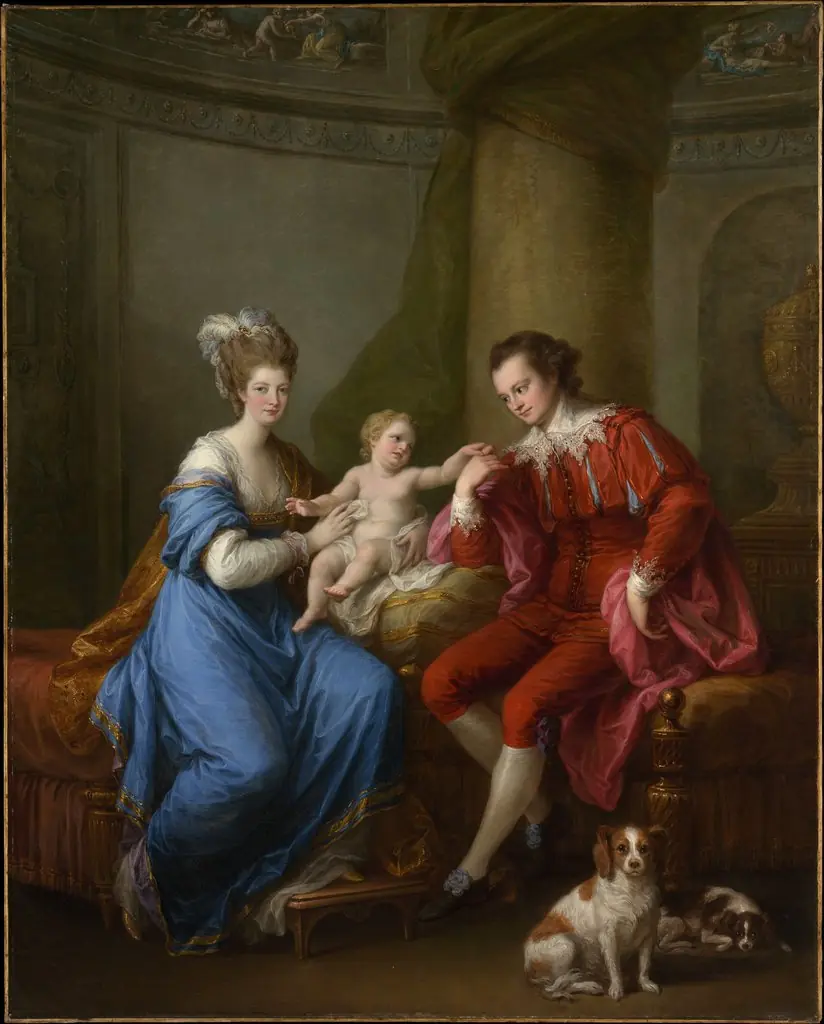 Edward Smith Stanley (1752–1834), Twelfth Earl of Derby, with His First Wife (Lady Elizabeth Hamilton, 1753–1797) and Their Son (Edward Smith Stanley, 1775–1851)
- The Sorrow of Telemachus
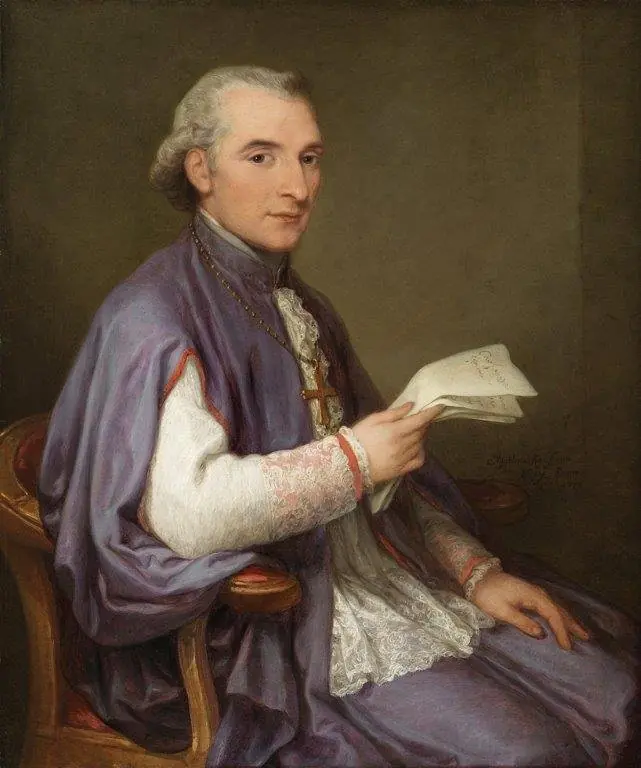 Monsignor Giuseppe Spina (1756–1828)
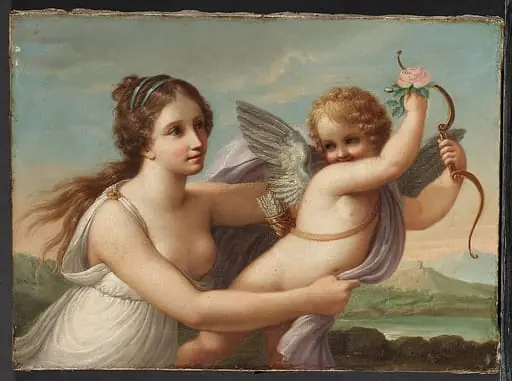 The Victory of Eros
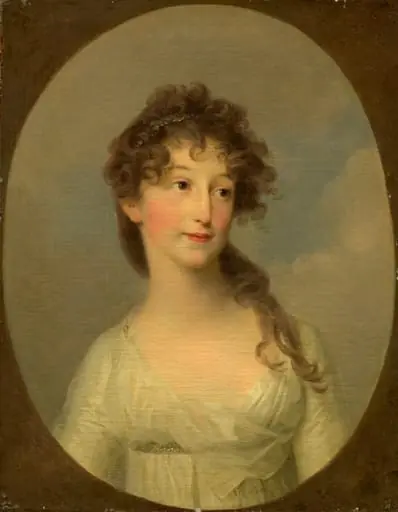 Possibly Franciska Krasinska, Duchess of Courland
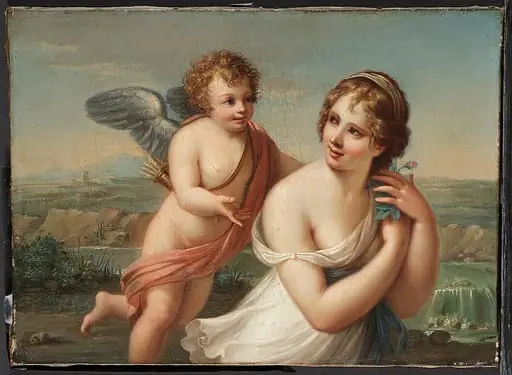 The Temptation of Eros
 Portrait of Countess A.S. Protasova with her Nieces
 Venus Induces Helen to Fall in Love with Paris