明 (舊傳)王振鵬 大明宮圖 卷|The Daming Palace by Wang Zhenpeng
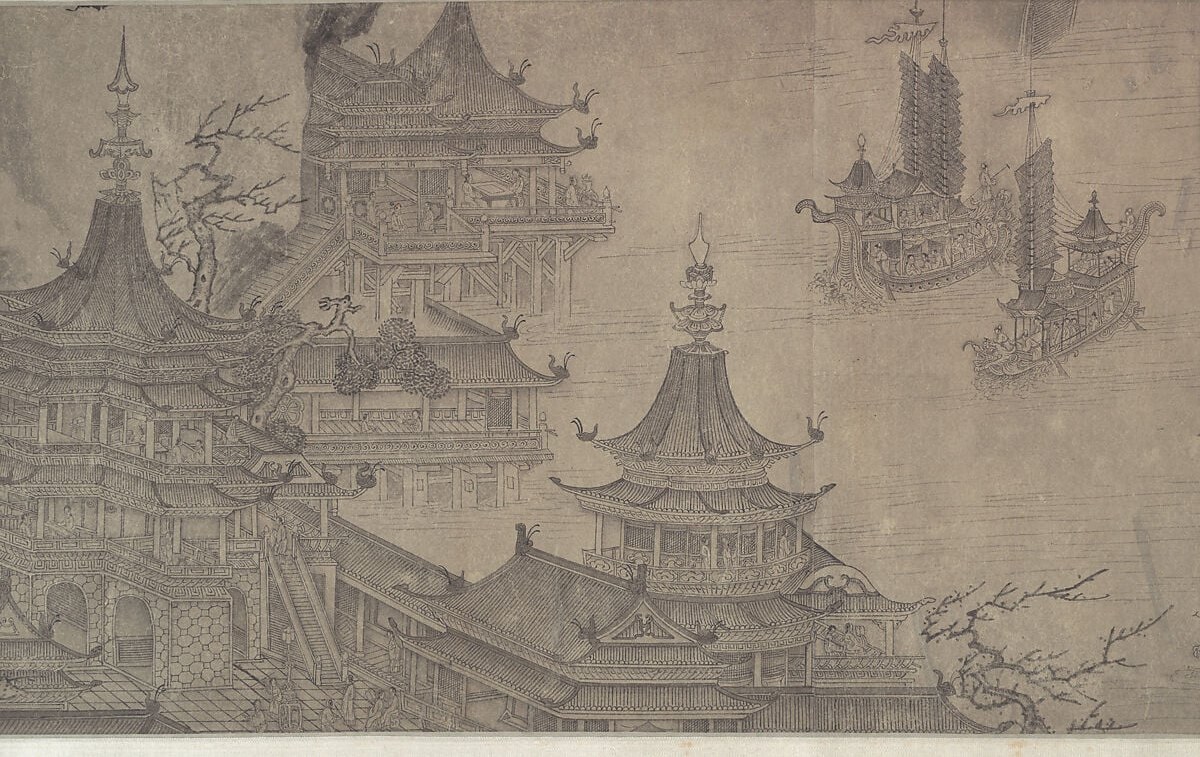
Step into the grandeur of imperial China with *The Daming Palace*, a captivating ink-on-paper handscroll from 1416. Traditionally attributed to the Yuan Dynasty court painter Wang Zhenpeng, this extensive work, held in a prominent museum collection, offers a detailed view of a vast imperial complex.
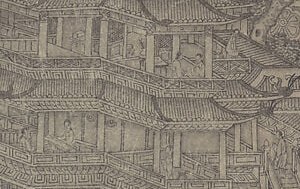
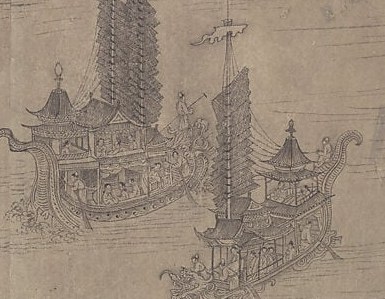
Notice the incredible detail: every roof tile, every tree, rendered with thousands of fine lines from a single brush. From the ornate, multi-tiered pavilions to the intricate bridges and the bustling waterways, the artist meticulously crafts a complex and vibrant world, emphasizing the grandeur of imperial power and daily life within the palace.
What makes this painting particularly fascinating is its attribution. Though dated to the Ming Dynasty (1416), it is linked to Wang Zhenpeng, a master active in the preceding Yuan Dynasty. This suggests either a later work created in his renowned style, or a Ming-era painting associated with his name over time, highlighting the enduring continuity of artistic influence across dynastic shifts.
The Daming Palace is more than an architectural illustration; it's a visual narrative of an empire's might and a testament to remarkable draftsmanship. What details catch your eye first in this monochrome masterpiece?
Details
Transcript
This isn't just a palace, it's a statement of imperial power. Each roof tile and tree was rendered with a single brush. Thousands of fine lines build this complex, vibrant world. This immense ship symbolizes the empire's maritime reach and trade. Look closely, tiny figures on deck show daily life. The painting is dated 1416, in the Ming Dynasty. Yet it's attributed to a Yuan Dynasty master, Wang Zhenpeng. This shows artistic influence continued across dynastic changes.