Samson by Valentin de Boulogne
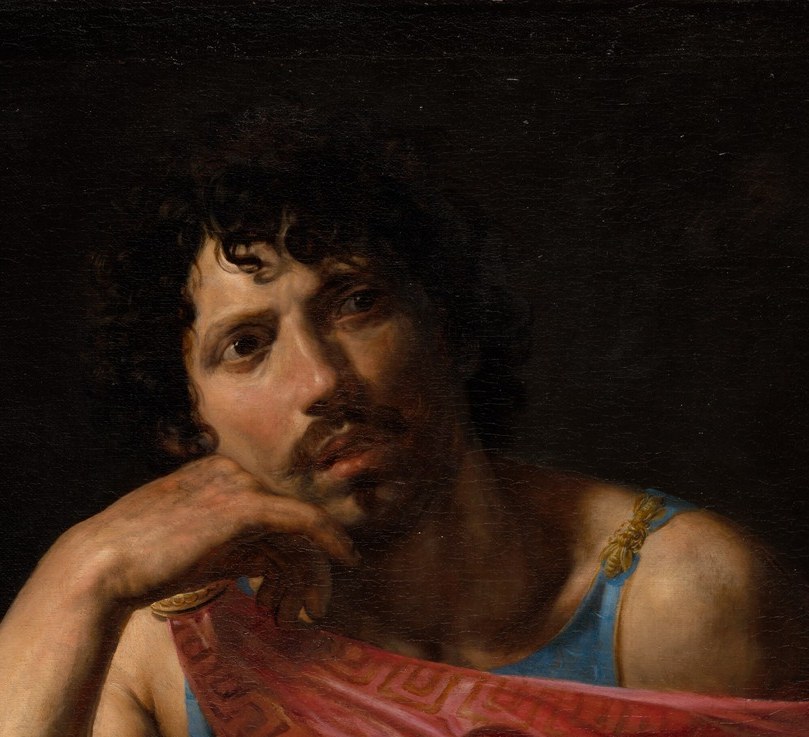
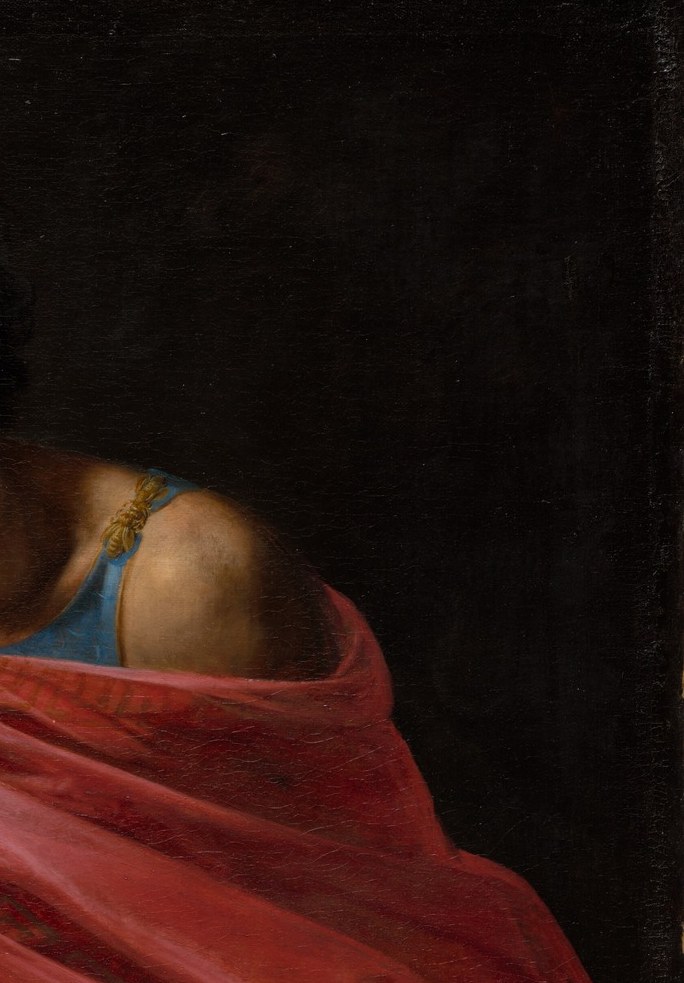
This is Valentin de Boulogne's Samson, painted around 1618-1620. It now hangs in the Cleveland Museum of Art. At first glance you see a defeated man in a red cloak, chin resting on his hand, lost in thought. The French painter has taken one of the Bible's great strongmen and stripped him of all his glory.
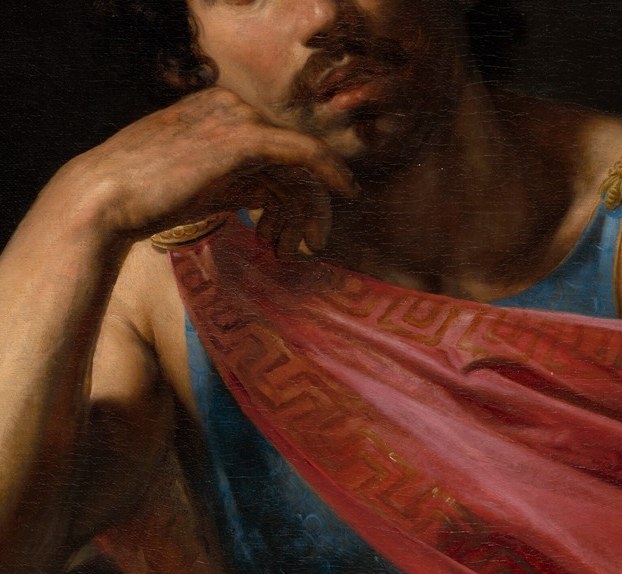
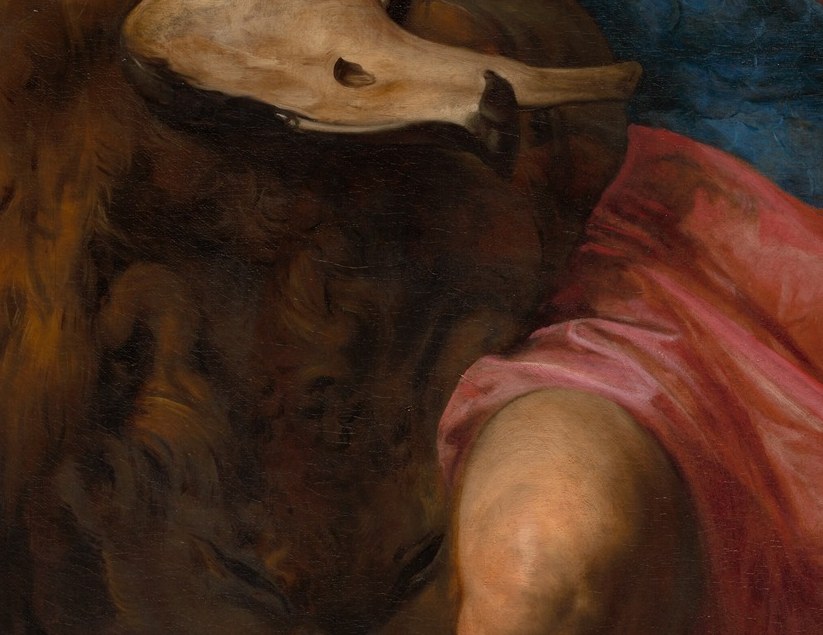
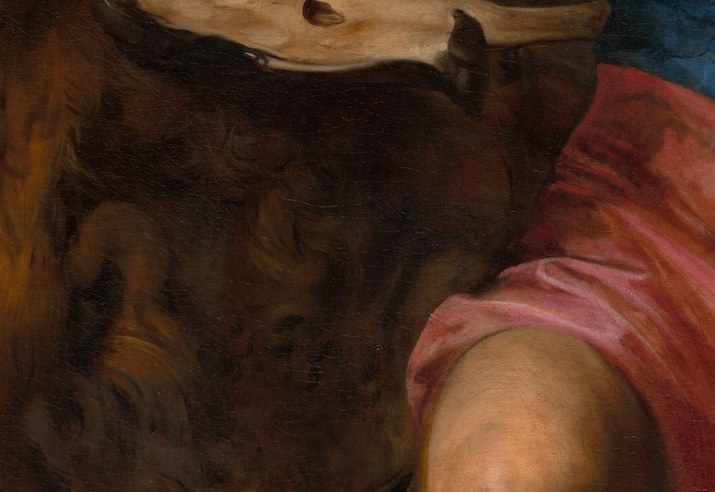
Look for the lion's jawbone in his left hand. That is Samson's signature attribute, with it he famously slew a thousand Philistines. But his grip on it now is slack, his fingers barely wrapped around the bone. The painting's real surprise is in the upper-right background. There, nearly swallowed by shadow, hangs the pelt of the very lion whose jawbone he now holds. Valentin gave you the whole narrative in two objects.
The posture is borrowed directly from Dürer's Melencolia I: the chin resting on the hand, the averted gaze. Valentin was the most prominent French painter in Caravaggio's Roman circle, and the harsh tenebrism here, that void-like black backdrop pressing hard against the lit figure, is pure Caravaggist drama. He died young, at 41, said to have passed after a night of hard drinking.
Next time you look at a painting of a hero, scan the shadows. The whole story is often stashed right behind him.
Details
Transcript
He looks nothing like a biblical strongman. Chin in hand. Downcast eyes. A man who has lost everything. This jawbone killed a thousand Philistines. Now his fingers barely hold it. But the jawbone came from a lion he killed with his bare hands. And its skin is right here. Valentin painted both: the weapon, and the beast that provided it.