Untitled by Kano Tan'yū
This is an untitled album leaf by Kano Tan'yū, the official painter to the Tokugawa shoguns, made around 1650. You're looking at a painting meant to be held in the hands, not hung on a wall. This kind of intimate leaf was created for personal contemplation in a quiet room.
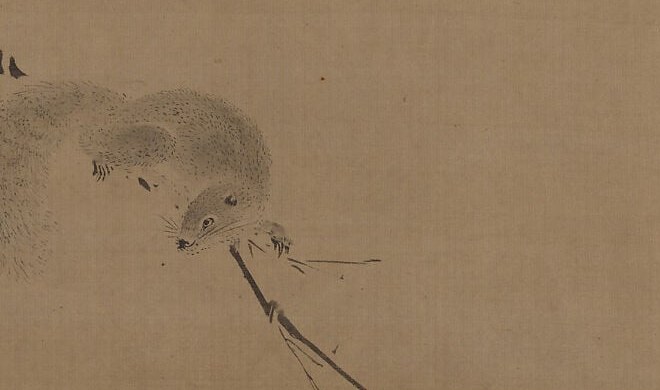
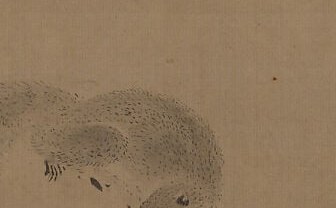
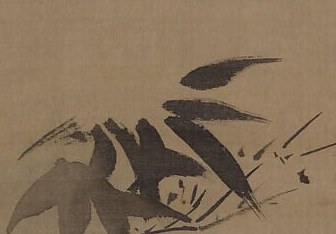
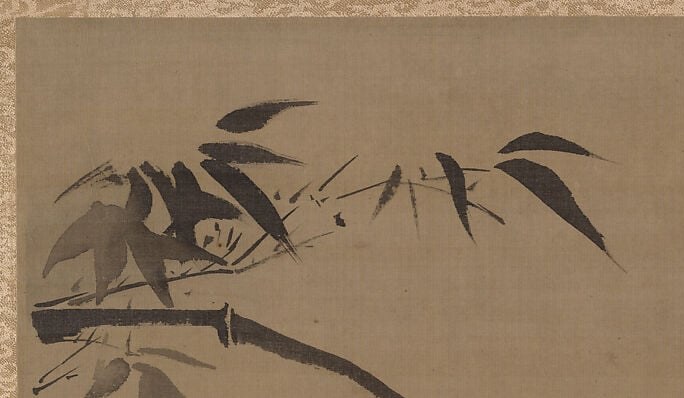
Look at the squirrel's fur first. Tan'yū used hundreds of tiny, directional strokes with a controlled bleed into the silk. The darkest ink anchors the body; the palest lifts the illusion of dense fur. Then shift your eye to the brushwork on the bamboo leaves: each is a single loaded swipe, dark at the base where the brush touched down, vanishing to nothing at the tip.
The real key is the red berries. They are the only warm color in an ink-and-wash world. In East Asian iconography, red berries frequently signify good fortune and prosperity. The painting's meaning is essentially a wish: the squirrel's vitality, married to an auspicious splash of red, set against the enduring bamboo.
Kano Tan'yū was the eldest son of the Kyoto branch of the Kanō school, the dominant artistic line in Japan for centuries. His work defined the look of Edo-period taste, and yet a leaf this intimate still feels like a private thought he never expected a crowd to see.
Details

Transcript
A squirrel clings to a stalk of bamboo. This is a page from a personal album, painted around 1650. The fur is built from hundreds of tiny, rapid ink strokes. Wet ink bled into the silk, creating a soft, living texture. Its tiny black eye transforms a study into an encounter. But the single most important detail is this. Red berries. In East Asian tradition, a symbol of good fortune.