The Swing by Fragonard, Jean Honoré
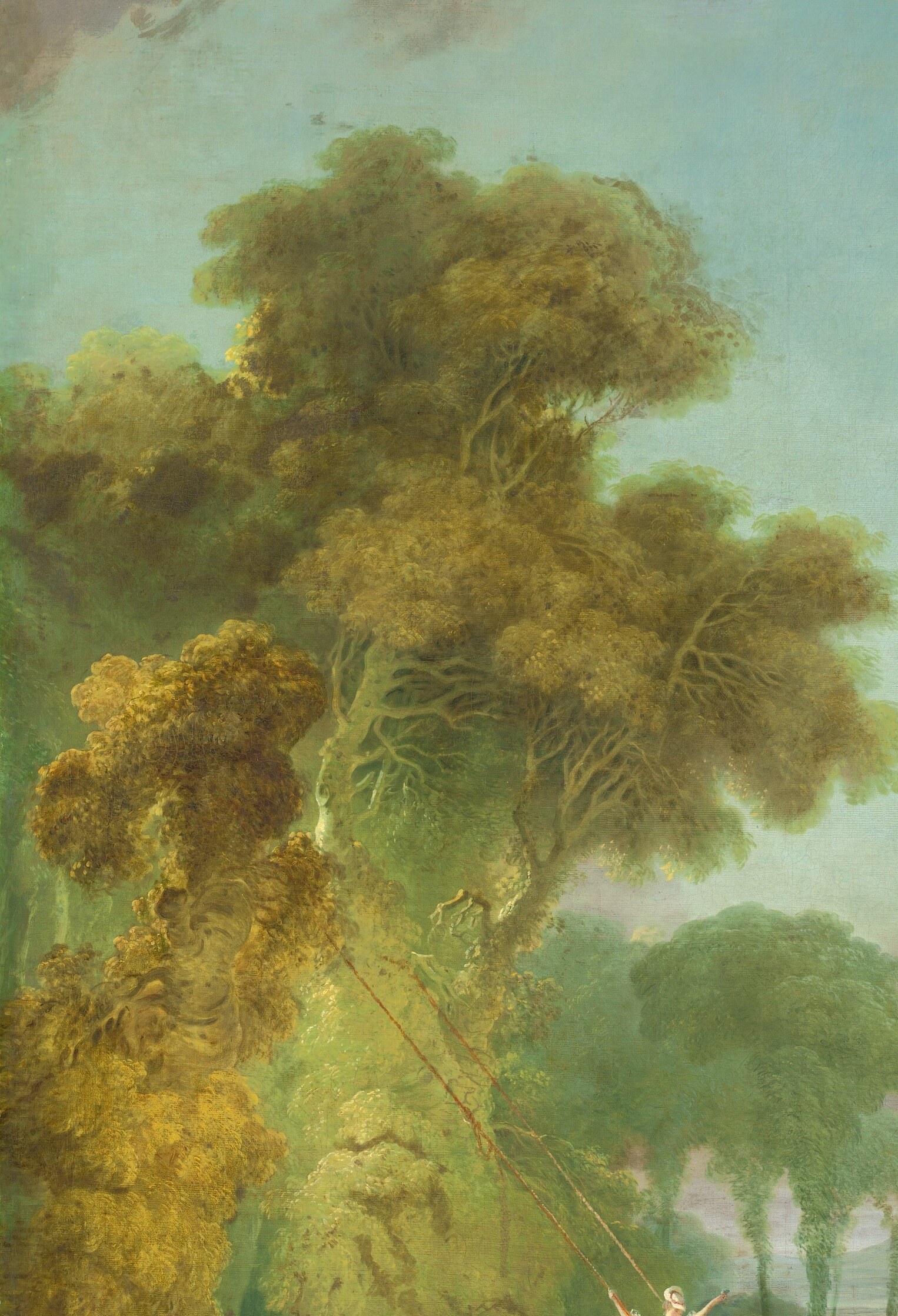
Jean-Honoré Fragonard's 'The Swing' (c. 1778) is a masterpiece of Rococo art, held in a private collection. While it appears to be a delightful scene of leisure, a closer look reveals a story of flirtation and hidden desires.
The central figure, a woman in a vibrant pink dress, is caught mid-swing, her skirt billowing. However, the painting's true narrative unfolds when you notice the subtle details: a cherub statue on the left, an ancient symbol of love and mischief, and a man concealed in the bushes below, gazing up at her.
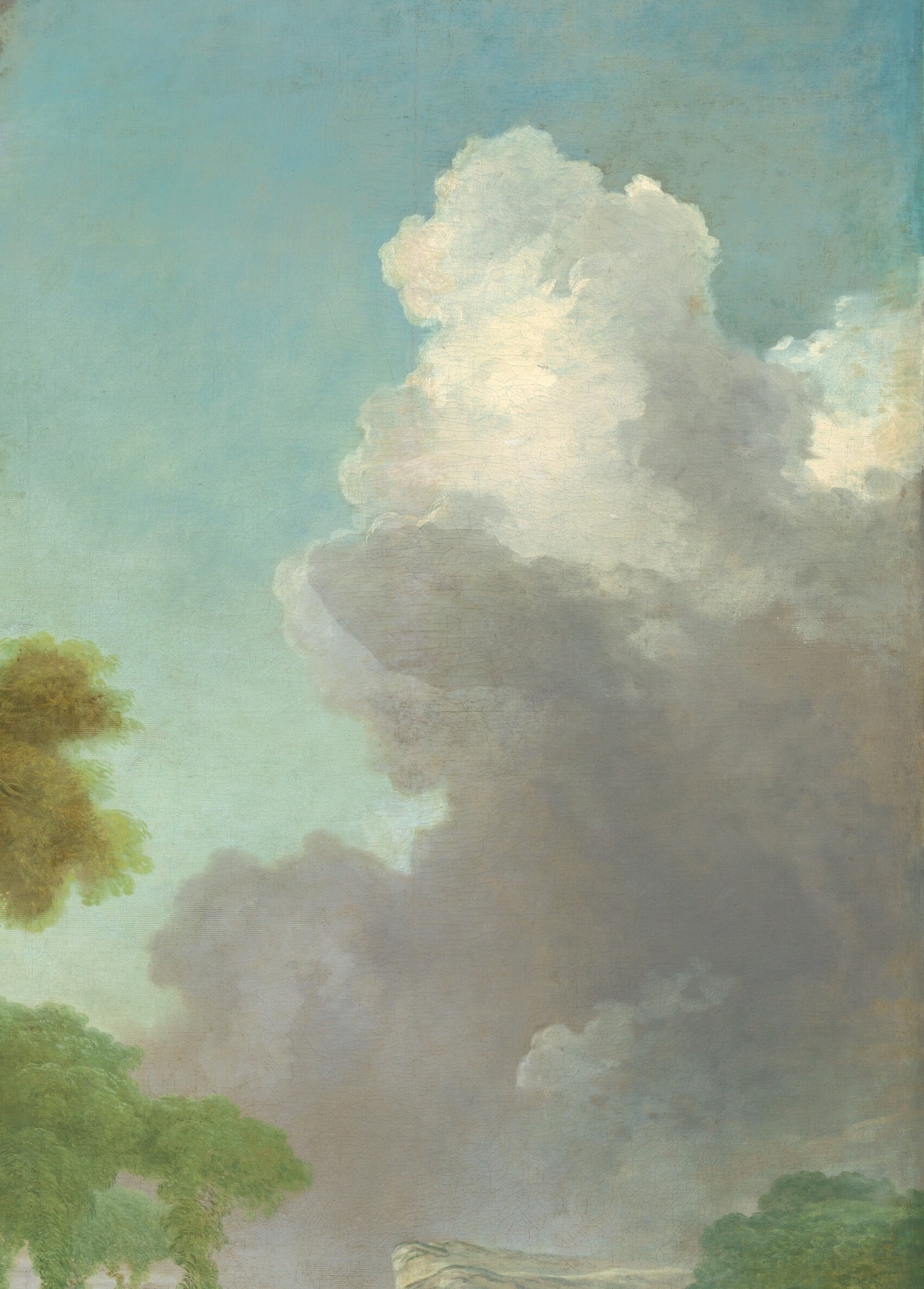
Fragonard, known for his playful and sensual subjects, created this work for a private commission, perfectly capturing the era's fascination with romantic intrigues and pastoral settings. His loose brushwork and luminous palette bring a sense of immediacy and life to this intimate scene.
This painting invites us to look beyond the obvious, revealing the charming secrets held within its vibrant foliage. What other stories do you think it tells?
Details
Transcript
This painting by Fragonard seems like a carefree scene. A woman on a swing, surrounded by lush gardens. But look closely at the statue on the left. A cherub statue signals secrecy and voyeurism. Now, find the man hidden in the bushes below her. He is the true subject of her playful swing. The painting was made around 1778, for a private commission.