Catlin Painting the Portrait of Mah-to-toh-pa - Mandan by Catlin, George
George Catlin, a lawyer turned painter, dedicated his life to documenting the lives of Plains Indians. In "Catlin Painting the Portrait of Mah-to-toh-pa - Mandan," from 1861, he captures a powerful moment of cultural exchange. This oil on card mounted on paperboard is part of the Smithsonian American Art Museum collection.
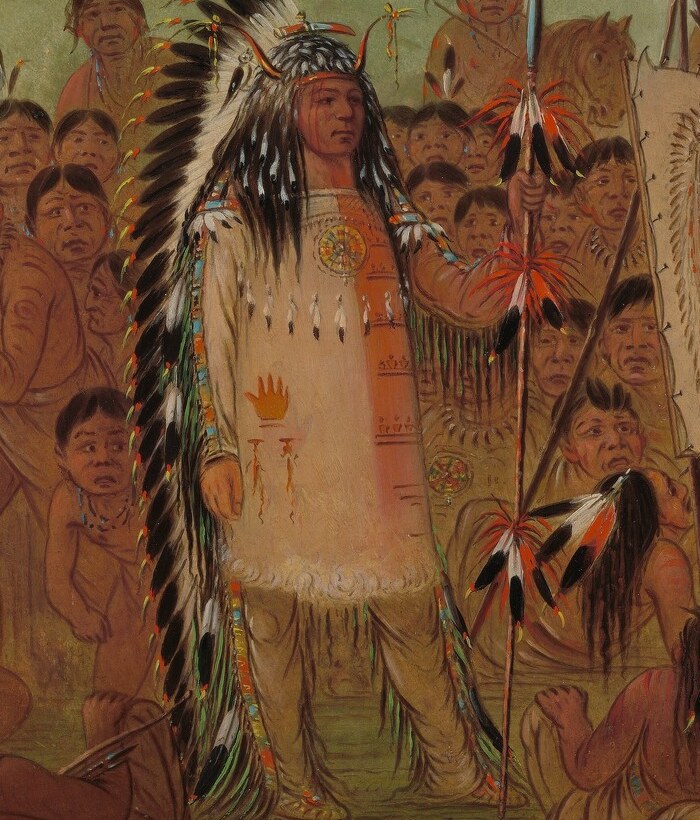
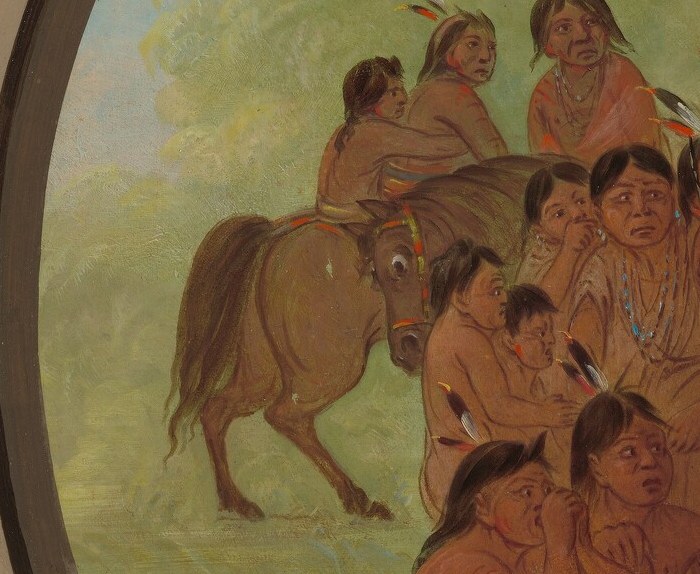
The painting shows Catlin at his easel, portraying Mah-to-toh-pa, a prominent chief of the Mandan people. Notice the intricate details of the chief's feathered headdress and decorated robe, which are not just adornments but symbols of his status and the rich Mandan culture. Even the horse in the background serves as a visual cue to the chief's standing.
Catlin embarked on extensive journeys across the American West in the 1830s, creating numerous portraits and written accounts of Native American communities. He saw his work as a crucial record, preserving images of these cultures for a wider audience at a time of significant change.
This artwork stands as a testament to Catlin's mission and offers a window into a specific encounter between artist and subject. What aspects of this historical record resonate with you most?
Details
Transcript
This painter traveled the American West to document Native cultures. Here he paints Mah-to-toh-pa, a chief of the Mandan people. The Chief's feathered headdress signifies his status and identity. His decorated robe reflects the richness of Mandan culture. Even the horse on the left indicates status in Plains Indian life. Catlin aimed to record these lives before they were lost.